
Car Ownership Costs Most Drivers Underestimate

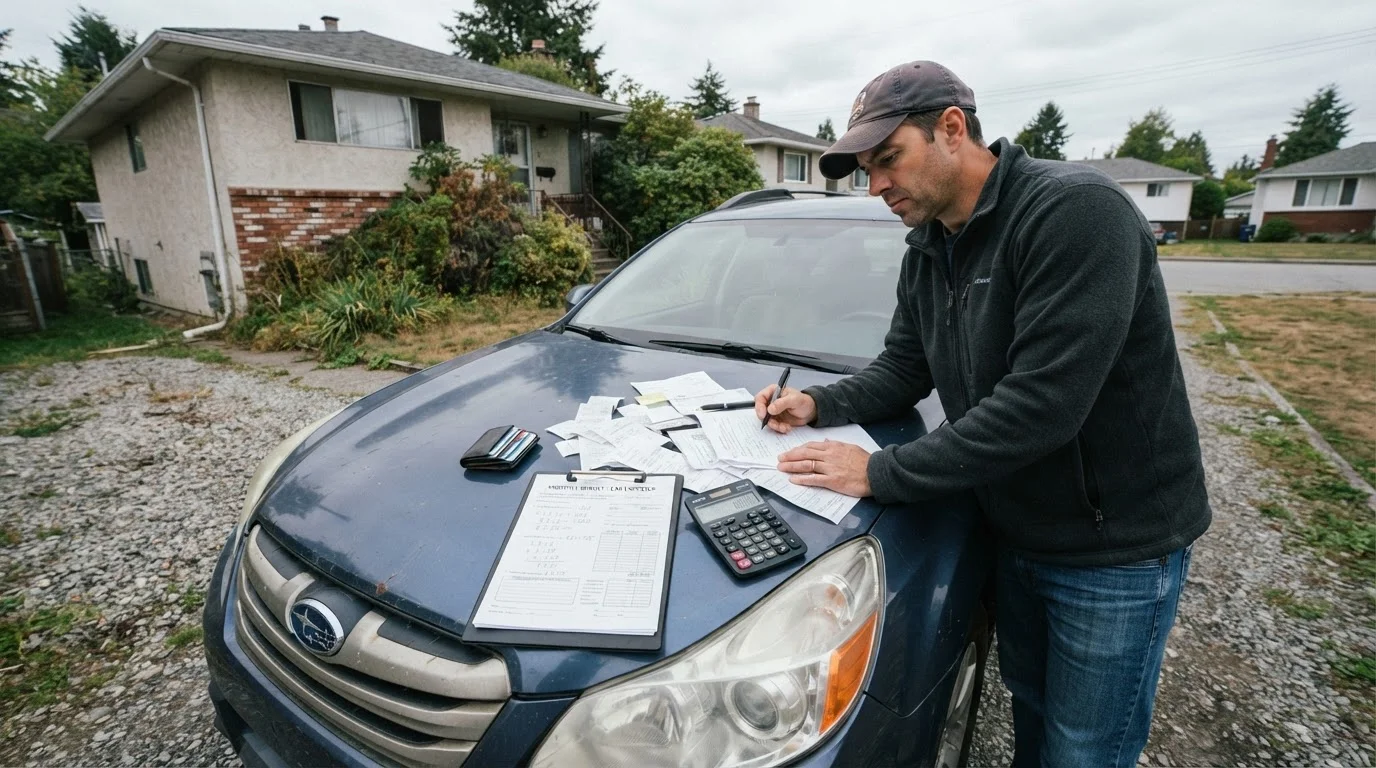
Photo: TargetReads.com | Explore Engaging Reads editorial
Key Takeaways
- The monthly car payment is typically a fraction of your total ownership cost.
- Depreciation, insurance, and maintenance are often the biggest surprise expenses.
- Building a realistic car budget means accounting for both fixed and variable costs.
- Skipping routine maintenance usually leads to far more expensive repairs down the road.
- Registration fees and taxes vary significantly by state and vehicle type.
What You Agreed To When You Drove Off the Lot
Most drivers walk into a dealership focused on one number: the monthly payment. That figure is real, but it captures only a portion of what owning a vehicle actually costs over time. The gap between "what I pay each month" and "what my car actually costs me" can run into thousands of dollars per year — and for many households, that gap goes unbudgeted entirely.
Understanding the difference between fixed and variable expenses is the first step toward building a car budget that holds up in the real world. Some car costs, like your loan payment, stay constant. Others — fuel, repairs, tolls — shift month to month and are easy to underestimate when things are going smoothly.
The costs below aren't rare or unlucky. They're standard features of vehicle ownership that every driver should plan for from day one.
Depreciation
Depreciation is the single largest cost of car ownership for most drivers — and the least visible. A new vehicle can lose a significant portion of its value in the first few years simply by being driven and aging. This isn't a fee you write a check for, but it is a real economic loss that shows up when you go to sell or trade in the vehicle.
Even used car buyers aren't immune. Depreciation slows as a vehicle ages, but it continues throughout the car's life. When budgeting for a vehicle, factoring in expected value loss over your ownership period gives you a clearer picture of the true cost of ownership, not just the transaction cost.
Depreciation is invisible on your monthly statement but can be the single biggest ownership cost you face.
Insurance Premiums
Auto insurance is legally required in nearly every U.S. state, and premiums vary widely based on factors including your driving history, location, vehicle type, and the coverage levels you carry. Many drivers choose minimum required coverage to keep costs low — but minimum coverage may leave significant financial exposure in the event of a serious accident.
Premiums also aren't static. They can increase at renewal due to claims, changes in your zip code's risk profile, or broader market conditions. Reviewing your policy annually — and actually understanding what it covers — is an important part of managing this cost. For a closer look at coverage misconceptions, see our article on auto insurance myths that cost drivers money.
Minimum coverage keeps premiums low but can leave you seriously exposed after a major accident.
Routine Maintenance
Oil changes, tire rotations, air filters, brake pads, wiper blades — none of these are glamorous, but collectively they represent a consistent and necessary cost of keeping a vehicle roadworthy. Many drivers budget loosely for "maintenance" without accounting for how quickly these services add up across a year.
Your owner's manual outlines the manufacturer's recommended service intervals for your specific vehicle. Following that schedule tends to prevent the kind of deferred-maintenance damage that turns a $60 oil change into a $2,000 engine repair. If you've never spent time with your manual, our guide on reading your owner's manual highlights the sections that matter most for everyday ownership.
Skipping a $60 oil change can quietly lead to repair bills ten or twenty times higher.
Unexpected Repairs
Even well-maintained vehicles break down. Tires blow out. Alternators fail. Water pumps leak. These are not fringe events — they're normal parts of a vehicle's lifecycle, and the costs can arrive without warning. A single unplanned repair can easily run several hundred to several thousand dollars depending on the component and labor involved.
Building a modest emergency reserve specifically for vehicle repairs — separate from your general emergency fund — is a practical way to absorb these costs without derailing your broader budget. Before authorizing any significant repair, it also helps to understand how estimates work. Our article on understanding a mechanic's estimate explains what to look for and which questions to ask.
A dedicated vehicle repair fund prevents a single breakdown from becoming a financial crisis.
Fuel Costs
Fuel is a variable cost that shifts with your driving habits, local prices, and the fuel efficiency of your vehicle. It's also one of the most underestimated line items for drivers who only think about gas costs at the pump rather than totaling them across a month or year. A vehicle with lower fuel economy driven primarily on highway miles and one driven in stop-and-go city traffic can have dramatically different annual fuel bills, even if both drivers fill up at the same station.
Tracking your actual monthly fuel spend — even roughly — is one of the quickest ways to find hidden room in a household budget. Understanding whether your costs are fixed or variable helps you plan for months when driving increases, like holidays or summer travel.
Fuel costs look small per fill-up but can total thousands of dollars annually when tracked carefully.
Registration Fees and State Taxes
Vehicle registration fees are required in every state and must be renewed periodically — typically annually. What many drivers don't anticipate is how much these fees can vary. Some states base registration costs on vehicle value, weight, or age, meaning a newer or heavier vehicle can carry a substantially higher fee than an older, lighter one.
Some states also assess personal property taxes on vehicles each year, which can add hundreds of dollars to annual ownership costs depending on the state and vehicle value. These charges are predictable and worth building into an annual car-cost estimate rather than treating them as an unexpected bill.
Registration fees and vehicle taxes vary widely by state and can add hundreds annually to ownership costs.
Building a Budget That Reflects Reality
Once you see all the costs laid out, the practical step is to work them into your monthly budget — not just mentally note them. A useful starting point is adding a dedicated "car" category that captures the loan or lease payment, an estimated monthly insurance premium, a fuel average based on your typical driving, and a maintenance reserve.
Build a Monthly Car Cost Estimate
For insurance specifically, it's worth knowing that many assumptions drivers carry about what affects their premium aren't accurate. Our look at auto insurance myths breaks down what actually does — and doesn't — drive your rate.
Car ownership is one of the largest recurring expenses most American households carry. Approaching it with a complete, honest picture of costs isn't pessimism — it's the foundation for making confident ownership decisions and avoiding financial surprises that could have been planned for from the start.
This article is for general informational purposes only and does not constitute financial, legal, or mechanical advice. Costs vary significantly based on location, vehicle type, driving habits, and individual circumstances. Consult a qualified financial adviser or licensed mechanic for guidance specific to your situation.
The content on this site is for informational purposes only and is not a substitute for professional advice. Always consult a qualified professional for guidance specific to your situation.