
How Circuit Breakers Work and What Tripping Patterns Mean

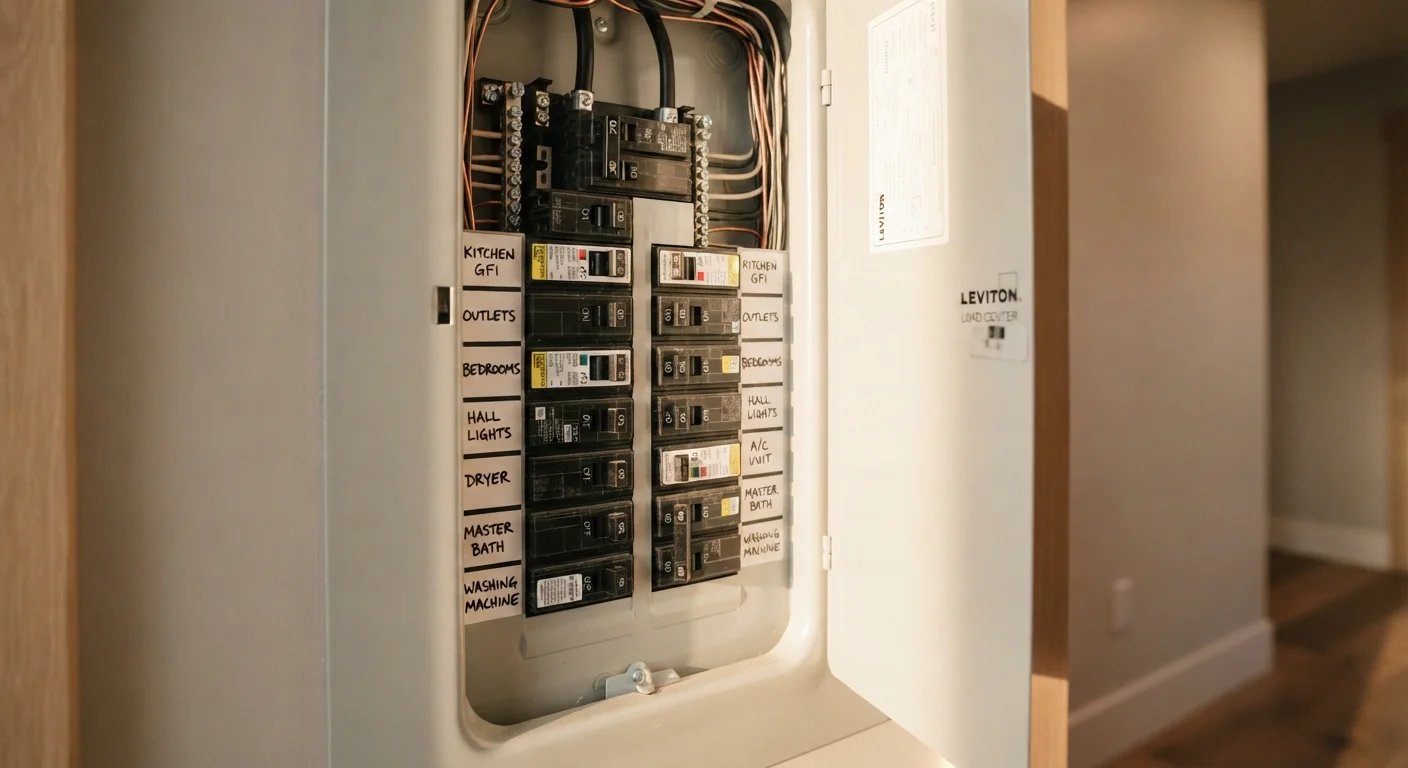
Photo: TargetReads.com | Explore Engaging Reads editorial
Key Takeaways
- A circuit breaker trips to protect your home's wiring from overheating and potential fire.
- A single trip after overloading an outlet is usually not a cause for alarm.
- Repeated tripping on the same circuit signals an underlying problem that needs attention.
- Some issues — like a faulty breaker or wiring problem — require a licensed electrician.
- Never replace a breaker with one rated higher than your wiring can safely handle.
How a Circuit Breaker Actually Works
Your home's electrical panel is the hub where power from the utility line gets divided into individual circuits — one for the kitchen, one for the bedrooms, one for the HVAC, and so on. Each circuit runs through a breaker, which acts as its gatekeeper.
Inside every standard breaker is a bimetal strip that bends when current causes it to heat up. If the current exceeds the breaker's rated limit (typically 15 or 20 amps for household circuits), the strip bends enough to trigger the switch mechanism and cut power. For sudden, severe surges — like a short circuit — a magnetic coil trips the breaker almost instantly. This two-part response handles both gradual overloads and abrupt faults.
When a breaker trips, the handle moves to a middle or full OFF position. To reset it, push it firmly to OFF first, then back to ON. Skipping the OFF step is the most common reset mistake homeowners make.
GFCI and AFCI Breakers Behave Differently
What Different Tripping Patterns Mean
A single trip is rarely alarming on its own. But the pattern of tripping is where your panel communicates something meaningful.
~51,000
Home electrical fires annually in the US
According to the U.S. Fire Administration, electrical failures or malfunctions are among the leading causes of residential structure fires each year.
15–20A
Typical residential circuit breaker rating
Most general household circuits are rated at 15 or 20 amps; large appliances like dryers or ranges use dedicated 30–50 amp circuits.
- Tripped once after heavy use: You likely overloaded the circuit — too many appliances running simultaneously. Unplug some devices, reset, and redistribute the load. This is the most common and most benign cause.
- Trips repeatedly on the same circuit: Either the circuit is chronically overloaded (a sign you need a dedicated circuit added) or there is a fault somewhere — damaged wiring, a failing outlet, or a defective appliance. Identify the culprit by unplugging everything on that circuit before resetting.
- Trips immediately after reset with nothing plugged in: This points to a short circuit in the wiring itself or a failing breaker. Do not keep resetting — call a licensed electrician.
- Multiple breakers tripping together: Could indicate a problem with a shared neutral wire or an issue at the main breaker level. Professional diagnosis is essential.
Just as your car's dashboard warning lights signal specific system conditions — not just generic trouble — tripping patterns in your panel each carry distinct meaning. The same diagnostic mindset applies: don't ignore the pattern, trace it.
When to Call a Licensed Electrician
Many tripped breakers can be handled by resetting after reducing load. But certain situations are outside safe DIY territory, and attempting repairs on live electrical panels carries real risk of shock or fire.
Map Your Panel Before You Need To
Contact a licensed electrician when you notice:
- A breaker that trips immediately or within minutes of reset
- Any burning smell, scorch marks, or discoloration around the panel or outlets
- A breaker that feels warm or hot to the touch
- Lights flickering without a clear cause
- A breaker that won't stay in the ON position
- Your panel is more than 25–30 years old and has never been inspected
Working inside an electrical panel — replacing breakers, adding circuits, or upgrading capacity — requires a licensed electrician in most US jurisdictions and typically needs a permit. This is not a task for DIY experimentation, regardless of how straightforward it may appear.
This article is for general informational purposes only and does not constitute electrical or safety advice. Always consult a licensed electrician for panel inspections, repairs, or upgrades, and verify local permit requirements before any electrical work is performed in your home.
Frequently Asked Questions
The content on this site is for informational purposes only and is not a substitute for professional advice. Always consult a qualified professional for guidance specific to your situation.