
Saving and Debt Management: A Complete Framework for Everyday Americans

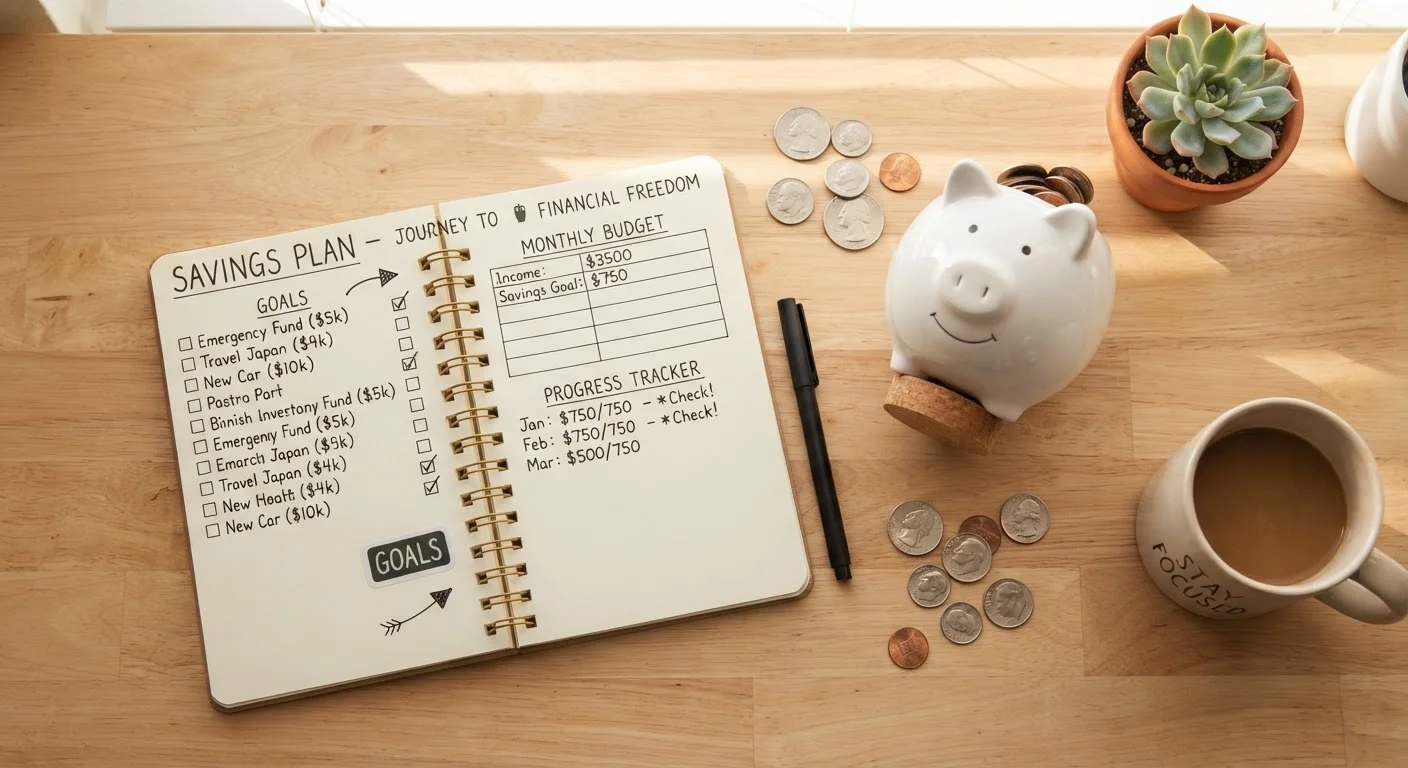
Photo: TargetReads.com | Explore Engaging Reads editorial
Key Takeaways
- A small emergency fund should come before aggressive debt payoff to prevent new debt from setbacks.
- The avalanche method saves the most interest; the snowball method builds momentum through quick wins.
- Employer retirement matches are generally worth capturing even while paying down debt.
- Automating transfers to savings and debt payments reduces the risk of spending those funds.
- Reviewing your plan every three months keeps your strategy aligned with your actual finances.
Why Saving and Debt Management Must Work Together
Most personal finance advice treats saving and debt payoff as competing priorities — you're told to do one or the other. In practice, treating them as an either/or choice often backfires. People who pour every spare dollar into debt with no savings buffer frequently end up borrowing again after an unexpected car repair or medical bill, resetting their progress.
A more durable framework treats saving and debt management as two sides of the same coin. The goal is not to maximize speed on one front but to build a system that is resilient enough to survive real life. Familiarizing yourself with core terminology is a useful starting point — see our glossary of saving and debt terms for plain-English definitions of concepts like APR, amortization, and net worth.
~$8,000
Median U.S. household credit card debt
According to Federal Reserve data, credit card balances remain a significant burden for many American households.
57%
Americans without a three-month emergency fund
A Federal Reserve report on the economic well-being of U.S. households found more than half of Americans could not cover three months of expenses from savings alone.
20%+
Average credit card APR in recent years
Federal Reserve data shows average credit card interest rates have reached historically high levels, making high-interest debt costly to carry.
Build Your First $1,000 Emergency Buffer
Before attacking debt with full force, most financial educators recommend establishing a small emergency fund — commonly cited as $1,000. This amount is not a full emergency fund (three to six months of expenses is the traditional target), but it serves as a circuit breaker. Without it, a single unexpected expense forces you back onto credit, undoing weeks of payoff progress.
To reach $1,000 faster, consider temporarily pausing non-essential subscriptions, selling unused items, or redirecting a tax refund. Once this buffer is in place, you can redirect attention to debt with far greater confidence.
Automate Your Buffer Savings
If you haven't yet built a budget that tracks where your money goes each month, that foundation is essential. Our guide on building your first monthly budget from scratch walks through income tracking and expense categories step by step.
Choosing a Debt Payoff Strategy
Two well-established methods dominate personal finance guidance on debt elimination:
- Avalanche method: Pay minimums on all debts, then direct extra funds toward the balance with the highest interest rate (APR) first. This approach minimizes total interest paid over time.
- Snowball method: Pay minimums on all debts, then focus extra funds on the smallest balance first regardless of rate. Each paid-off account provides a psychological win that many people find motivating.
Neither method is universally superior — the right choice depends on your personality, your interest-rate spread across accounts, and how motivated you remain when progress feels slow. Research on behavioral economics consistently shows that adherence matters more than mathematical optimality: the best plan is the one you will actually follow.
Before committing to the avalanche or snowball method, list all your debts and calculate how long each would take to pay off under both approaches using a free online amortization calculator — seeing the actual timeline often makes the decision clearer.
When you receive a windfall — a tax refund, bonus, or gift — split it intentionally: a defined portion to debt, a defined portion to savings, before any discretionary spending.
For a deeper understanding of how credit utilization and payment history interact with your debt strategy, explore our Credit & Banking hub.
Minimum Payments Alone Are Costly
Balancing Debt Repayment and Long-Term Savings
Once your $1,000 buffer is funded and a payoff method is selected, the next question is whether to contribute to long-term savings — particularly a workplace retirement plan — while still carrying debt.
A widely used rule of thumb: if your employer offers a matching contribution to a 401(k) or similar plan, contribute at least enough to capture the full match before directing extra dollars to debt. An employer match is effectively a 50% to 100% return on those dollars before any investment growth, a rate that typically exceeds even high-interest debt. Beyond the match, the calculation becomes more nuanced and depends on your specific interest rates, tax situation, and retirement timeline.
This is general educational information, not personalized financial advice. For decisions about your own retirement contributions and debt strategy, consulting a licensed financial adviser or certified financial planner is strongly recommended.
“The foundation of financial security isn't choosing between saving and paying off debt — it's building a system where you're doing both, even if the amounts are small at first.”
— Money & Finance Editorial Team, Personal finance editorial collective
Putting It All Together: Your Action Plan
A practical framework for everyday Americans can be summarized in a clear sequence:
- Build a $1,000 emergency buffer before accelerating debt payments.
- List all debts with balances, minimum payments, and interest rates. Choose the avalanche or snowball method intentionally.
- Capture any employer retirement match if available — don't leave that compensation on the table.
- Automate payments and transfers. Set up automatic minimum payments on all debts and automatic transfers to your savings account on payday to remove friction and temptation.
- Redirect freed cash flow. Each time a debt is eliminated, redirect that payment amount toward the next debt or toward growing your emergency fund toward the three-to-six-month target.
- Review every quarter. Life changes — income, expenses, and interest rates shift. A brief quarterly review keeps your plan accurate and your motivation intact.
For broader budgeting strategies that support this framework, visit our Budgeting Basics hub.
Don't Skip an Emergency Fund Entirely
This article is for general informational and educational purposes only and does not constitute personalized financial, tax, or legal advice. Individual financial situations vary significantly. Please consult a qualified, licensed financial professional before making decisions about debt repayment, savings strategies, or investments.
The content on this site is for informational purposes only and is not a substitute for professional advice. Always consult a qualified professional for guidance specific to your situation.