
Meditation vs. Mindfulness: Clearing Up the Confusion

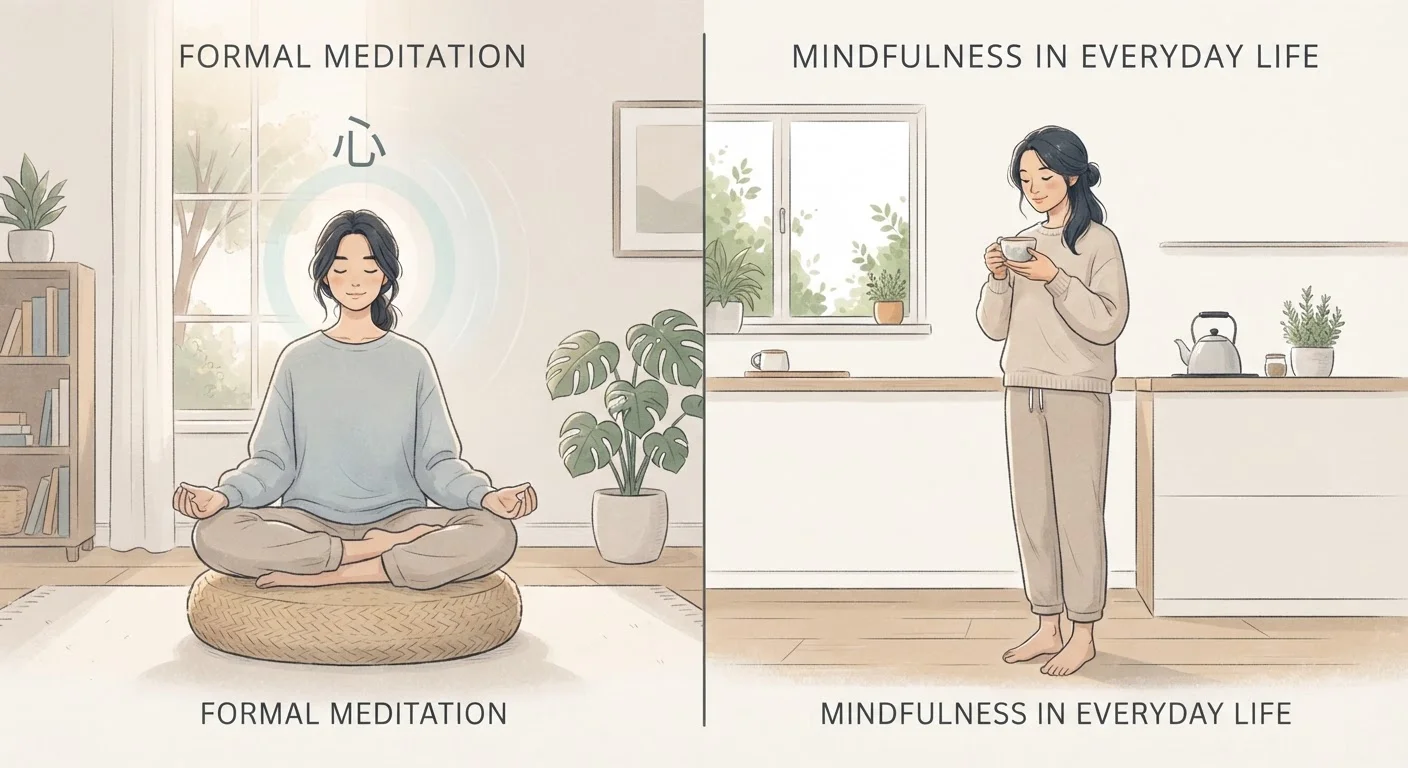
Photo: TargetReads.com | Explore Engaging Reads editorial
Key Takeaways
- Meditation is a formal practice with a set structure; mindfulness is a quality of awareness applicable anytime.
- All meditation involves mindfulness, but mindfulness does not require formal meditation sessions.
- Both practices are supported by research showing benefits for stress reduction and emotional regulation.
- Neither requires special equipment, beliefs, or prior experience to begin.
- The two approaches work well together and can complement each other effectively.
Why the Confusion Exists
The terms meditation and mindfulness appear so frequently together - in wellness apps, clinical settings, and popular culture - that many people treat them as synonyms. They are closely related, but they describe different things. Understanding the distinction helps you choose the approach that actually fits your life, rather than assuming one automatically includes the other.
Part of the overlap comes from the fact that mindfulness is a core component of many widely practiced meditation styles. Programs like Mindfulness-Based Stress Reduction (MBSR), developed at the University of Massachusetts Medical School, blend both concepts - which has blurred the line for a generation of practitioners. For a broader look at how mental wellness terms are used and sometimes misused, see the working glossary of mental wellness terms assembled by our editorial team.
What Each One Actually Is
Meditation refers to a deliberate, time-bound practice in which a person directs their attention according to a specific technique. Common forms include focused-attention meditation (concentrating on the breath or a single object), open-monitoring meditation (observing thoughts without attachment), and loving-kindness meditation (cultivating compassion toward self and others). Each has a defined structure: you sit down, apply the technique, and practice for a set duration.
Mindfulness, by contrast, is a mental quality - the capacity to pay attention to present-moment experience with openness and without judgment. It can be practiced formally during meditation, but it can also be applied informally throughout the day: noticing the sensation of water while washing your hands, or observing your emotional state during a difficult conversation, without trying to change it.
A useful way to think about it: meditation is one method of training mindfulness, but mindfulness itself is a skill that extends far beyond the meditation cushion.
| Criterion | Meditation | Mindfulness |
|---|---|---|
| Nature | A structured practice or activity | A quality of awareness or attention |
| When it happens | During a dedicated session | Any time, including daily tasks |
| Time required | Set aside - typically 5-30+ minutes | No extra time needed for informal practice |
| Technique needed | Yes - breath focus, body scan, etc. | No formal technique required |
| Relationship to the other | Trains and deepens mindfulness | The quality meditation cultivates |
| Research support | Studied in controlled trials | Studied formally and in behavioral therapy |
| Best entry point | Guided apps or structured programs | Paying attention to one ordinary task |
What the Research Says
Both practices have a growing body of evidence supporting their role in mental wellness, though research quality varies and findings should not be overstated.
~47%
Time minds wander from the present
A Harvard University study found that people spend nearly half their waking hours thinking about something other than what they're currently doing.
8 weeks
Typical MBSR program duration
Mindfulness-Based Stress Reduction programs, widely studied in clinical settings, are standardly delivered over an eight-week structured course.
Moderate
Effect size for anxiety reduction
Meta-analyses of mindfulness-based interventions, including a 2014 review in JAMA Internal Medicine, characterize anxiety and stress reduction effects as moderate on average.
Clinical reviews, including analyses published in journals such as JAMA Internal Medicine and Psychological Medicine, suggest that mindfulness-based interventions can meaningfully reduce symptoms of anxiety, depression, and perceived stress in some populations. The effects are generally described as moderate - meaningful for many people, but not a replacement for professional treatment where that is needed.
Formal meditation practice has been associated with changes in self-reported attentional control and emotional regulation, particularly with consistent practice over weeks or months. Informal mindfulness, while harder to study in controlled settings, is supported by evidence from cognitive-behavioral approaches that incorporate present-moment awareness techniques. For context on how physical activity intersects with these mental health benefits, the research on physical activity and mental health offers a complementary evidence-based perspective.
This article is for informational purposes only and does not constitute medical advice. If you are experiencing mental health difficulties, please consult a qualified healthcare professional.
Choosing Between Them - or Using Both
There is no requirement to choose one over the other. Many people find that a short daily meditation session reinforces the mindful awareness they then carry into the rest of their day. Others, particularly those with demanding schedules, find informal mindfulness more sustainable as a starting point.
If you're curious about pairing mental wellness practices, journaling for mental wellness is another evidence-informed option that can complement both meditation and everyday mindfulness. And if you've encountered skepticism - from yourself or others - about whether these practices are legitimate or accessible, our piece on mental health myths that keep people from seeking support addresses common misconceptions with care.
The most important factor is consistency rather than perfection. A few minutes of intentional attention each day, whether formal or informal, is more beneficial than an occasional lengthy session. Start where you are, with what fits your routine - and adjust from there.
A Note on Special Populations
The content on this site is for informational purposes only and is not a substitute for professional advice. Always consult a qualified professional for guidance specific to your situation.