
A Working Glossary of Mental Wellness Terms Worth Knowing

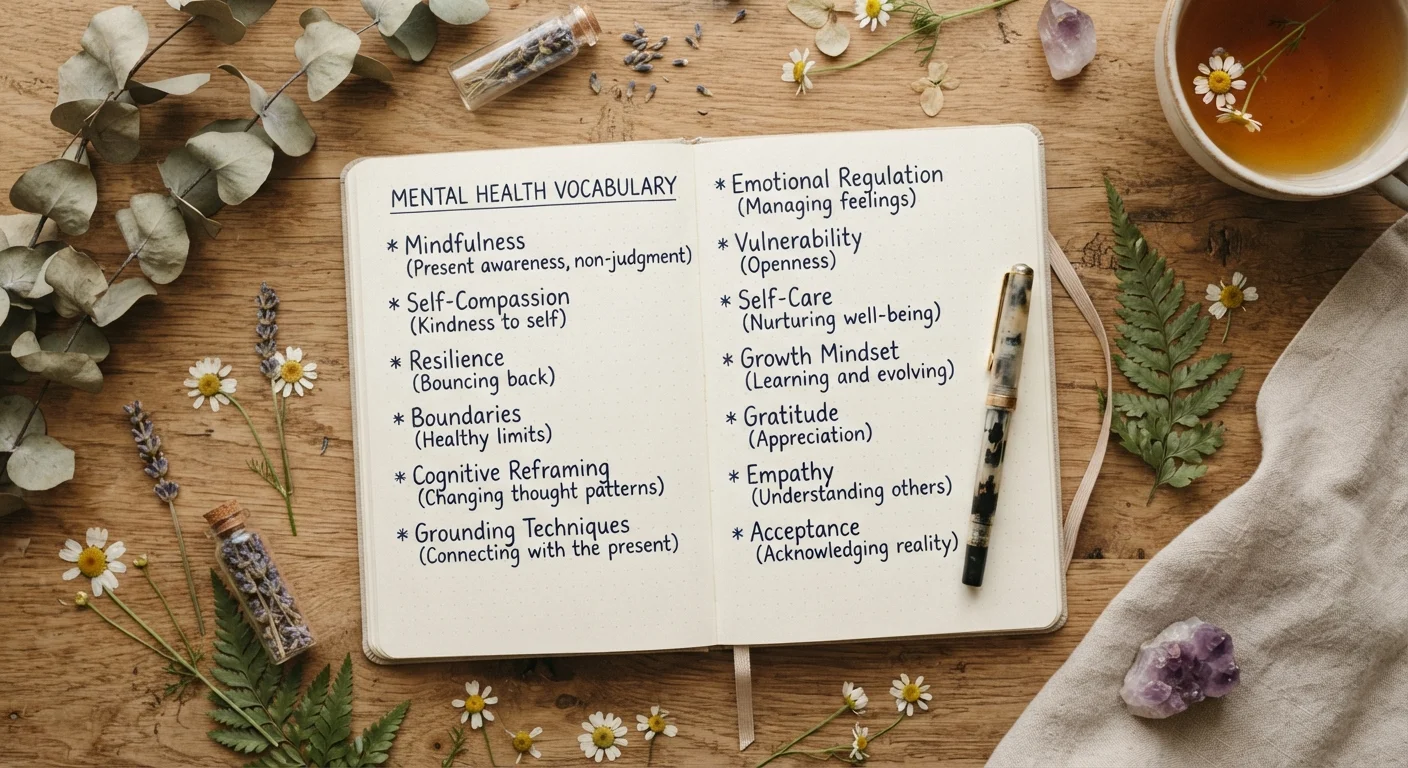
Photo: TargetReads.com | Explore Engaging Reads editorial
Why Vocabulary Matters in Mental Wellness
When you read about therapy, emotional health, or psychological research, unfamiliar terms can create distance between you and the information you're trying to use. Words like dysregulation or rumination carry specific meanings that, once understood, can genuinely help you recognize your own patterns and communicate more clearly with a professional.
This glossary defines the terms you're most likely to encounter - in articles, therapy sessions, or mental wellness apps - using plain language and without clinical jargon. It is a reference tool, not a diagnostic guide. If you have concerns about your mental health, please consult a licensed mental health professional.
For readers who want to go deeper, our introduction to emotional resilience covers the foundational skills that many of these concepts support.
Cognitive distortion
An inaccurate or exaggerated thought pattern that leads to unhelpful emotional responses. Common examples include catastrophizing, mind-reading, and black-and-white thinking.
Rumination
The tendency to dwell repetitively on distressing thoughts, feelings, or past events. Chronic rumination is linked to heightened risk of depression and anxiety disorders.
Window of tolerance
The psychological zone in which a person can experience and process emotions without becoming overwhelmed or shutting down. Developed from trauma research by Dr. Daniel Siegel.
Dysregulation
Difficulty managing emotional responses so that they feel disproportionate or out of control. Often reflects the nervous system moving outside its window of tolerance.
Grounding
A set of techniques used to anchor attention in the present moment - often through sensory awareness or controlled breathing - to interrupt distress or dissociation.
Psychotherapy
A structured, evidence-based treatment involving therapeutic conversation between a licensed professional and a client. Includes modalities such as CBT, DBT, and ACT.
Therapeutic alliance
The collaborative and trusting working relationship between a client and their therapist. It is consistently identified in research as a key predictor of positive treatment outcomes.
Trauma-informed care
A service delivery approach that acknowledges the pervasive impact of trauma and prioritizes physical and emotional safety, trustworthiness, and client empowerment.
Allostatic load
The cumulative physical and psychological wear caused by chronic stress over time. Elevated allostatic load is associated with increased health risks across multiple body systems.
Mindfulness
Intentional, non-judgmental awareness of one's present-moment experience. It is a mental stance that can be cultivated through practices such as meditation, but is not itself synonymous with meditation.
HPA axis
The hypothalamic-pituitary-adrenal axis - a central biological system governing the body's stress response, including the release of cortisol. Chronic activation is associated with multiple health effects.
Affect
In clinical and psychological contexts, 'affect' refers to the outward expression of emotion - including facial expressions, voice tone, and body language - as observable by others.
Key Terms Explained
The terms below represent a cross-section of vocabulary from cognitive-behavioral therapy (CBT), trauma-informed care, mindfulness traditions, and general psychiatric practice. They are grouped by theme rather than alphabetical order, so related ideas sit together.
Thinking Patterns
Cognitive distortions are habitual, inaccurate ways of interpreting events - such as catastrophizing (assuming the worst outcome is inevitable) or all-or-nothing thinking (seeing situations in absolutes). Identifying them is a core CBT technique.
Rumination refers to repetitively dwelling on distressing thoughts or memories rather than processing and moving past them. Research consistently links chronic rumination to elevated risk of depression and anxiety.
Mindfulness is the practice of intentional, non-judgmental awareness of the present moment. It is distinct from meditation, which is one method of cultivating mindfulness. Our article on meditation versus mindfulness explains the difference clearly.
Emotional Regulation
Window of tolerance describes the zone of arousal in which a person can function effectively - neither overwhelmed (hyperarousal) nor shut down (hypoarousal). Staying within this window allows for learning, connection, and problem-solving.
Dysregulation occurs when emotional responses feel difficult to manage or disproportionate to the situation - often a signal that the nervous system has moved outside its window of tolerance.
Grounding refers to techniques that redirect attention to the immediate physical environment to interrupt distressing thought spirals. Examples include controlled breathing, sensory observation exercises, or contact with a physical object.
Therapy and Treatment
Psychotherapy is a broad category covering structured, evidence-based talk-based treatments delivered by licensed professionals. CBT, dialectical behavior therapy (DBT), and acceptance and commitment therapy (ACT) are among the most researched forms.
Therapeutic alliance describes the collaborative, trust-based relationship between a client and their therapist. Research consistently identifies a strong therapeutic alliance as one of the best predictors of positive treatment outcomes.
Trauma-informed care is an approach - in therapy, healthcare, and other settings - that recognizes the widespread impact of trauma and prioritizes safety, trust, and client autonomy.
These Terms Describe Patterns, Not Diagnoses
Stress and the Body
Allostatic load is the cumulative toll that chronic stress places on the body and brain over time. High allostatic load is associated with increased risk for cardiovascular, immune, and mental health conditions.
HPA axis (hypothalamic-pituitary-adrenal axis) is the biological stress-response system that regulates cortisol release. Understanding it helps explain why chronic stress has physical as well as psychological effects.
Building daily habits that protect this system is addressed in our guide to daily habits for long-term mental wellness.
| Number of recognized therapy modalities | More than 400 (American Psychological Association) |
| Term for the study of mental disorders | Psychopathology |
| DSM current edition | DSM-5-TR (2022 revision) (American Psychiatric Association) |
| U.S. adults experiencing mental illness annually | Approximately 1 in 5 (National Institute of Mental Health (NIMH)) |
| Evidence base for CBT | One of the most studied psychotherapy forms globally (American Psychological Association) |
| Window of tolerance concept origin | Trauma neuroscience and interpersonal neurobiology (Research by Daniel J. Siegel, M.D.) |
Putting These Terms to Practical Use
Knowing this vocabulary won't replace professional support, but it can help you engage more actively with resources you already have access to. When you recognize a pattern - say, noticing that you're catastrophizing before a difficult conversation - naming it accurately is a useful first step toward addressing it.
Consider using structured self-check-in questions to notice how these patterns show up in your own daily experience. Mental wellness is a lifespan-long process, and your needs will evolve; our article on how mental wellness changes across life stages can help you stay oriented as circumstances shift.
This article is for general informational and educational purposes only and is not a substitute for professional mental health advice, diagnosis, or treatment. If you are experiencing mental health difficulties, please reach out to a qualified mental health professional or contact an appropriate crisis resource in your area.
The content on this site is for informational purposes only and is not a substitute for professional advice. Always consult a qualified professional for guidance specific to your situation.