
DIY Home Repairs Homeowners Often Underestimate

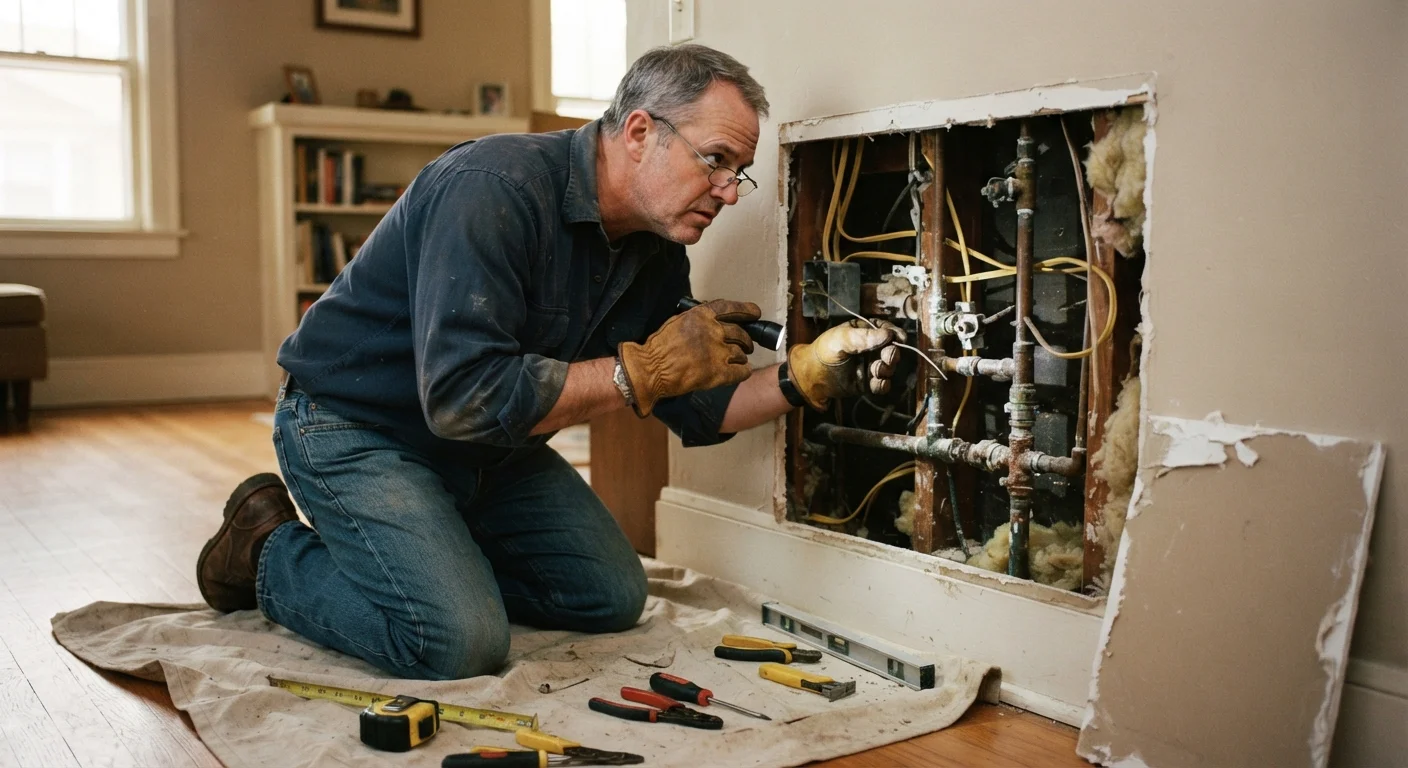
Photo: TargetReads.com | Explore Engaging Reads editorial
Key Takeaways
- Several common DIY repairs involve hidden permit requirements or safety risks most homeowners don't anticipate.
- Skipping permits or proper technique can void home insurance coverage and complicate future home sales.
- Knowing your limits — and when to call a licensed professional — protects both your home and your finances.
- Small deferred repairs often escalate into significantly more expensive problems over time.
Why Some Repairs Are Trickier Than They Appear
Plenty of home repairs look manageable from the outside — a leaking pipe, a tripped breaker, a few cracked tiles. But the gap between what a repair appears to involve and what it actually requires can be surprisingly wide. Hidden structural connections, local building codes, and safety systems all add layers that aren't visible until a homeowner is already partway through the job.
The repairs below are ones that commonly catch homeowners off guard — not because they're always beyond a DIYer's ability, but because they carry risks or requirements that deserve careful thought before you pick up a tool. Understanding what's actually involved helps you decide whether to proceed yourself, brush up on the necessary skills, or bring in a licensed professional. For a full picture of what should happen at your house throughout the year, see your home's annual maintenance calendar.
Deferred Repairs Compound Over Time
Repairs That Commonly Surprise Homeowners
Replacing a bathroom or kitchen faucet
Swapping a faucet sounds like a straightforward afternoon project, and often it is — until you discover corroded supply lines, outdated shutoff valves that won't fully close, or drain configurations that don't match the new fixture. Shutoff valves that have sat unused for years can fail when turned, turning a faucet swap into a plumbing emergency. Before starting, know exactly where your water shutoffs are and confirm they work properly. If any valve leaks or won't budge, address that first.
Shutoff valves that haven't moved in years can fail at the worst possible moment.
Patching drywall near electrical boxes
Small drywall patches are genuinely DIY-friendly — until the hole is adjacent to an electrical outlet, switch box, or light fixture. Inside those walls, wires may be stapled to studs at irregular intervals, and cutting or sanding without knowing their location risks nicking insulation or the conductor itself. Before cutting into any wall near an outlet, use a non-contact voltage tester and a stud finder with wire-detection capability. If you find aluminum wiring (common in homes built between the mid-1960s and mid-1970s), consult a licensed electrician before disturbing anything nearby.
Cutting drywall near electrical boxes without a voltage tester is a genuinely dangerous shortcut.
Replacing a toilet
Toilets are heavy, awkward, and connected to a drain flange that may be corroded, cracked, or set at the wrong height for a new fixture. A poorly seated wax ring — the seal between the toilet base and the floor drain — leads to slow leaks that can rot the subfloor before you notice any visible damage. Check the flange condition carefully before installing a new toilet. If the flange sits below the finished floor level, a flange extender is needed; skipping this step is one of the more common sources of bathroom moisture problems. For a broader look at moisture risks beneath your home, see what homeowners need to know about crawl space moisture.
A poorly set wax ring can cause hidden subfloor rot long before any visible leak appears.
Adding an electrical outlet
Running a new outlet from an existing circuit feels like a logical extension of changing a receptacle — but it typically requires a permit in most US jurisdictions, and for good reason. Overloading an existing circuit, using incorrect wire gauge, or failing to ground the outlet properly creates fire and shock hazards. Code requirements around arc-fault circuit interrupters (AFCIs) and ground-fault circuit interrupters (GFCIs) vary by location and room type. Unless you have documented experience with residential electrical work and have verified local permit requirements, this is one repair where hiring a licensed electrician is the prudent default.
Adding a new outlet almost always requires a permit — and skipping it creates real fire risk.
Repairing or replacing roof shingles
Replacing a handful of obviously damaged shingles seems like a focused, manageable task — but roofwork carries fall-risk hazards that demand proper safety equipment, including roof jacks, non-slip footwear, and ideally a second person present. Beyond safety, improper shingle installation can compromise the waterproofing of adjacent areas, and many manufacturers require professional installation to maintain shingle warranties. A thorough inspection from ground level or a safely positioned ladder often reveals whether damage is genuinely limited to a few shingles or points to a larger issue. For guidance on keeping your roof in good shape over time, see roof maintenance that extends shingle life.
Roofwork carries serious fall hazards — proper safety equipment is non-negotiable before stepping onto any slope.
Clearing a slow or blocked drain beyond the trap
A drain snake handles most clogs in the P-trap (the curved pipe directly below a fixture), but blockages deeper in the drain line — particularly in older cast-iron stacks — require either a longer power auger or professional hydro-jetting. Forcing a drain snake aggressively into older pipes can crack or dislodge corroded sections. If multiple fixtures drain slowly simultaneously, the blockage is likely in the main stack or the sewer lateral, not in a single fixture's trap. That pattern is a clear signal to call a plumber rather than continue with a consumer-grade snake. The connection between drainage and structural damage is worth understanding as part of your home's overall water management picture.
Simultaneous slow drains across multiple fixtures point to a main-stack problem — not a DIY snake job.
Check Before You Start: Permits Save Problems
Before You Start Any Repair
A useful rule of thumb: if a repair touches your home's electrical panel, main plumbing stack, structural framing, gas lines, or roof decking, check with your local building department before starting. Many jurisdictions require permits for work that homeowners routinely assume is permit-free. Unpermitted work can complicate a future sale and may affect insurance claims — the gaps in standard homeowners policies are already wider than most people expect, and DIY errors can widen them further.
None of this is meant to discourage you from maintaining your own home — quite the opposite. Homeowners who understand what's involved make smarter calls, complete safer repairs, and avoid the costly surprises that come from underestimating a job. When in doubt, a consultation with a licensed contractor often costs far less than undoing a repair that went sideways.
This article is for general informational purposes only and does not constitute professional construction, legal, or financial advice. Always verify local permit requirements and consult a licensed professional for work involving electrical, plumbing, structural, or other regulated systems.
The content on this site is for informational purposes only and is not a substitute for professional advice. Always consult a qualified professional for guidance specific to your situation.