
The Plumbing Shutoffs Every Homeowner Should Be Able to Find

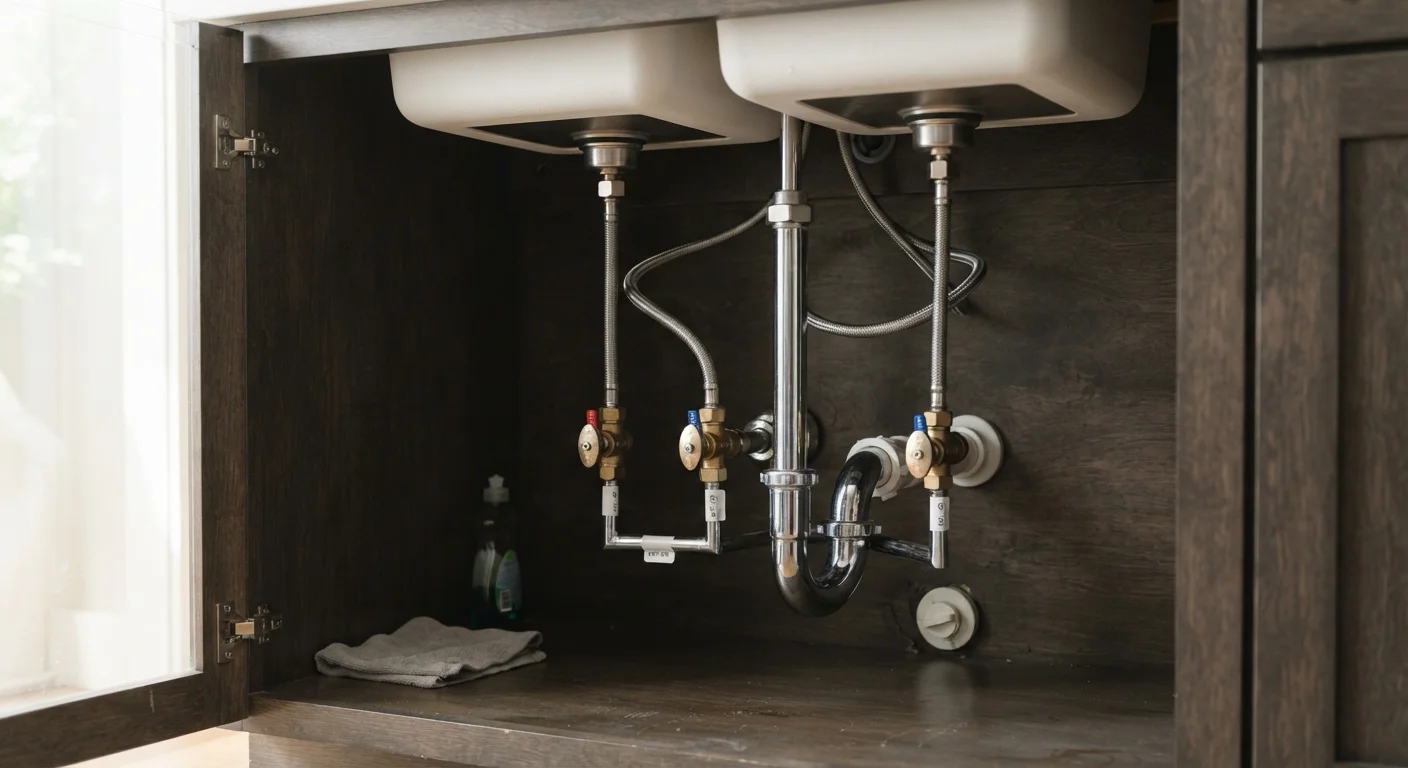
Photo: TargetReads.com | Explore Engaging Reads editorial
Why Shutoff Valves Matter
A burst pipe, a leaking toilet supply line, or a washing machine hose that lets go can release dozens of gallons of water per minute. The difference between a minor cleanup and a major renovation often comes down to one question: Do you know where to turn the water off?
Every home in the US has multiple shutoff points — from a master valve at the street all the way down to individual fixtures. Finding them before an emergency, and confirming they actually work, is among the most valuable twenty minutes you can spend as a homeowner. If you've ever wondered which repairs are worth tackling yourself, see our guide to DIY repairs homeowners often underestimate for helpful context on knowing your limits.
| Gallons per minute from a burst ½-inch pipe | ~50 GPM (Approximate figure based on standard residential water pressure ranges) |
| Typical main shutoff location | Basement wall nearest the street |
| Tool needed for curb-stop valve | Curb key (meter key) |
| Recommended valve test frequency | Once per year |
| Quarter-turn valve type | Ball valve |
| Multi-turn valve type | Gate valve |
The Main Shutoffs: Street Valve and House Valve
Your home has two master-level valves that cut water to the entire property.
Street-Side (Curb Stop) Valve
Located at the property line, usually inside a metal or plastic box set into the ground and labeled "Water." This valve is controlled by your municipal water utility. You can turn it in an emergency, but most utilities ask that only their personnel operate it. A special tool called a curb key (or meter key) is required — it is not a standard household tool.
Main House Shutoff
This is the valve you should know by heart. It cuts all water flow to your home's internal plumbing. Common locations include:
- Basement or crawl space — on the wall closest to the street, usually near where the supply pipe enters the foundation
- Utility room or mechanical closet — near the water heater or furnace
- Garage wall — in warmer-climate homes where pipes aren't run through a basement
- Outside the home — along an exterior wall in warm climates, often in a protective box
The valve is typically a gate valve (round wheel handle) or a ball valve (lever handle). Ball valves are faster — a quarter-turn closes them. Gate valves require multiple full rotations.
Ball valve
A shutoff valve controlled by a lever handle. Rotating the lever 90 degrees (a quarter-turn) fully opens or closes the valve. Ball valves are fast to operate and reliable over time.
Gate valve
An older style of shutoff valve with a round wheel handle that requires multiple full rotations to open or close. Gate valves can seize or fail to fully seal after years of non-use.
Curb stop (curb valve)
The shutoff valve installed at the property line by the water utility. It requires a special tool called a curb key to operate and is generally intended for utility use.
Supply line
The flexible or rigid pipe that carries pressurized water from a shutoff valve to an individual fixture such as a toilet, faucet, or appliance.
Hose bib
A threaded faucet connection point on a wall, used to attach hoses or appliance supply lines. Washing machine valves are a common example.
Fixture-Level Shutoffs to Locate in Every Room
Individual fixture shutoffs let you isolate one problem without cutting water to the whole house. Walk through your home and locate each of these.
Bathroom
- Toilet: The oval or football-shaped valve on the wall or floor behind the toilet base. Turn clockwise to close.
- Sink: Two valves (hot and cold) under the vanity, on the supply lines running up to the faucet.
- Shower/Tub: Many do not have individual shutoffs; you'll use the main house valve or an access panel behind the wall, if one exists.
Kitchen
- Sink: Two valves inside the cabinet under the sink — one on each supply line.
- Dishwasher: Usually shares the hot water shutoff under the kitchen sink.
- Refrigerator (with ice maker): A small valve, often behind the refrigerator or under the sink, on a thin copper or braided line.
Laundry Room
- Washing machine: Two valves (hot and cold) on hose bibs mounted to the wall behind the machine. Many plumbers recommend shutting these off after every wash cycle to reduce hose stress over time.
Water Heater
There is a cold-water supply shutoff on the pipe entering the top of the tank. This lets you service or drain the heater without losing water to the rest of the house.
Outdoor Hose Bibs Have Shutoffs Too
Testing Your Valves — and What to Do When They Fail
A valve that hasn't been operated in years may be seized or corroded. Test each shutoff once a year by turning it off, checking for flow at a nearby fixture, then turning it back on slowly. Do not force a stuck valve — excessive torque can break older valve stems or crack galvanized fittings.
Signs a valve needs professional attention:
- It won't turn or requires significant force
- It leaks around the stem when operated
- Water still flows after the valve is fully closed
Replacing a faulty shutoff valve is a task for a licensed plumber, especially if the valve is on a main line or near the water meter. For fixture-level valves in good working order, many homeowners are comfortable making the swap — but always close the main shutoff first and have towels and a bucket on hand.
Label every shutoff valve you find. A strip of waterproof tape marked with a permanent marker, or a small adhesive label, is all it takes. Future-you — and any plumber who comes to your home — will be grateful.
This article provides general home maintenance information for educational purposes. For work involving main supply lines, permits may be required in your jurisdiction. Always consult a licensed plumber for repairs beyond your experience level.
The content on this site is for informational purposes only and is not a substitute for professional advice. Always consult a qualified professional for guidance specific to your situation.