
Renting vs. Buying a Home: How to Think Through the Decision

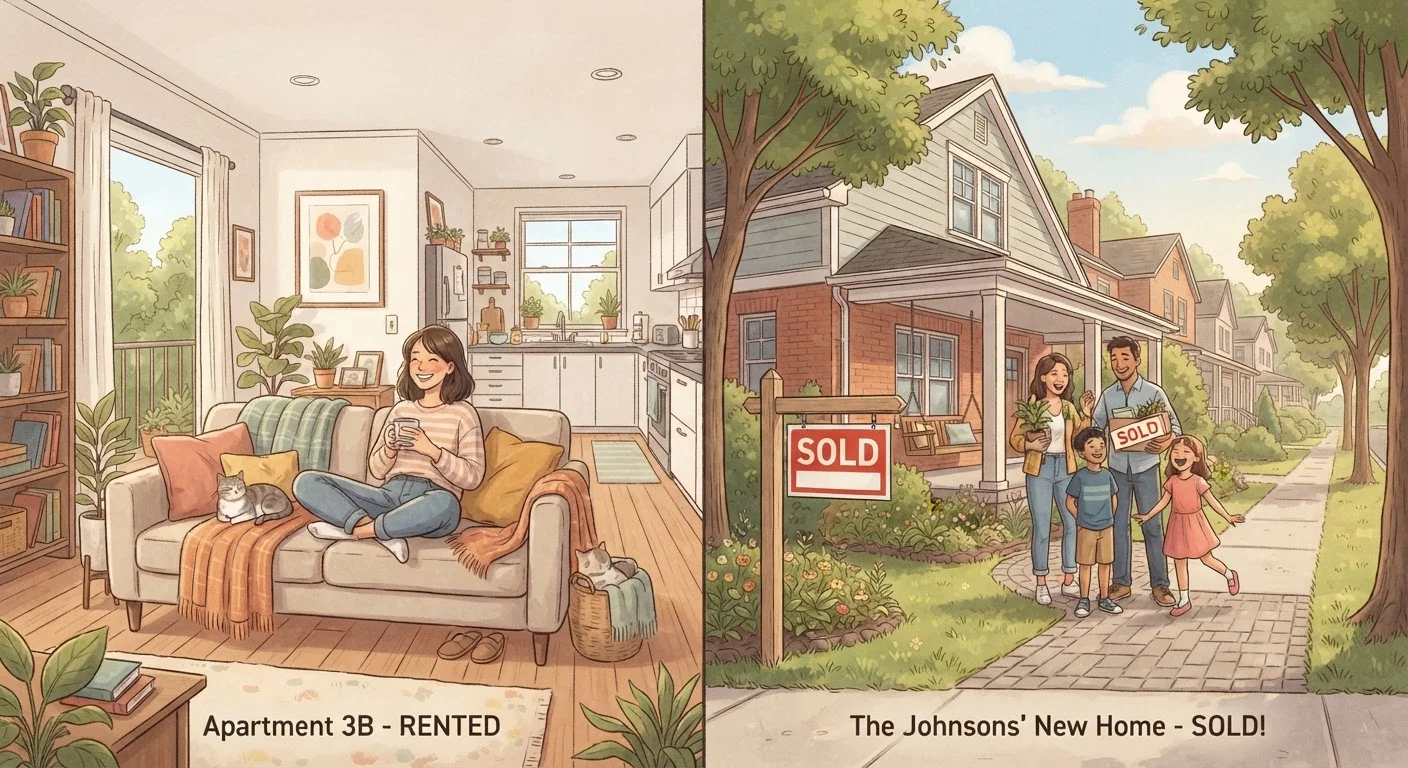
Photo: TargetReads.com | Explore Engaging Reads editorial
Key Takeaways
- Renting offers flexibility and lower upfront costs but builds no ownership equity over time.
- Buying involves significant upfront expenses — down payment, closing costs — beyond the monthly mortgage.
- How long you plan to stay in one place is one of the most important factors in this decision.
- Neither option is universally better; your financial stability and life stage matter most.
- Maintenance costs and property taxes add ongoing expenses that renters don't directly bear.
- Both renters and homeowners need appropriate insurance coverage to protect themselves.
The Core Trade-Off: Flexibility vs. Equity
The renting-vs.-buying question is really a question about two different relationships with a home — and with your money. Renters pay for the right to occupy a property without taking on ownership responsibilities. Buyers take on debt and costs in exchange for eventual ownership and the potential to build equity over time.
Equity — the portion of your home's value that you actually own, as opposed to what you still owe on your mortgage — grows as you pay down your loan and, in many markets, as property values rise. But equity isn't liquid. You can't spend it the way you can a savings balance, and accessing it usually means selling the home or borrowing against it.
Renters, by contrast, have lower financial commitments at the outset and greater freedom to move. That flexibility has real value — especially if your job, family situation, or preferred location is likely to change. See our first-time renter's walkthrough for a closer look at what the renting process involves from start to finish.
| Criterion | Renting | Buying |
|---|---|---|
| Upfront cost | Security deposit + first/last month | Down payment + closing costs (often 12–25% of price) |
| Monthly predictability | Fixed until lease renewal | Fixed mortgage; taxes/insurance vary |
| Equity building | None | Yes, over time |
| Maintenance responsibility | Landlord's responsibility (typically) | Owner's full responsibility |
| Flexibility to move | High — lease terms, usually 12 months | Low — selling takes time and money |
| Customization | Limited by lease terms | Full control (within local codes) |
| Insurance needed | Renters insurance | Homeowners insurance |
| Property tax exposure | None directly | Yes, ongoing |
The Real Costs on Both Sides
Monthly rent is visible and straightforward. The true cost of buying is more layered. Beyond the mortgage payment itself, buyers typically pay:
- Down payment: Conventionally 10–20% of the purchase price, though some loan programs allow less with additional insurance requirements.
- Closing costs: Generally 2–5% of the loan amount, covering lender fees, title insurance, appraisal, and more.
- Property taxes: Vary widely by location and are paid ongoing, either directly or through an escrow account built into your mortgage payment.
- Homeowners insurance: Required by lenders and distinct in scope from renters insurance — see our comparison of renters vs. homeowners insurance to understand the difference.
- Maintenance and repairs: A commonly cited rule of thumb is budgeting 1–2% of a home's value annually for upkeep, though actual costs vary significantly.
Renters avoid most of these costs but still benefit from carrying their own insurance. Renters insurance protects your personal belongings and provides liability coverage — and is typically quite affordable.
2–5%
Typical closing cost range for home buyers
According to the Consumer Financial Protection Bureau, closing costs on a home purchase generally fall between 2% and 5% of the loan amount.
1–2%
Annual home maintenance budget rule of thumb
Housing experts commonly suggest setting aside 1–2% of a home's purchase price each year for routine maintenance and unexpected repairs.
5–7 years
Minimum stay often needed to break even on buying
Many housing analysts suggest buyers need to stay at least five to seven years to recoup upfront transaction costs through equity and appreciation.
How Time and Stability Factor In
One of the most reliable guides for this decision is how long you expect to stay in one place. Buying comes with substantial upfront costs that take years to recoup through equity building. If you sell a home after just two years, those transaction costs — closing fees when you bought, agent commissions when you sold — can easily outweigh any appreciation in value.
Most housing analysts suggest a general rule of thumb: if you're confident you'll stay in a home for at least five to seven years, the financial case for buying becomes considerably stronger. Shorter than that, and renting may be the more economical path.
Your employment and income stability matter too. Mortgage lenders evaluate debt-to-income ratios and credit histories carefully. If your income varies significantly or your credit score needs work, taking time to rent while building financial stability is a sound approach. Resources on saving and managing debt can help you prepare for a future purchase.
HUD-Approved Housing Counseling Is Free
Lifestyle Considerations That Numbers Don't Capture
Financial spreadsheets don't capture everything. Some of the most important factors in this decision are personal rather than mathematical.
Control and customization: Homeowners can paint, renovate, and modify their space freely (within local codes). Renters typically need landlord approval for changes.
Responsibility: When a pipe bursts in a rental, the landlord handles it. When you own, you do — or you hire and pay someone who does. That responsibility can be stressful or satisfying depending on your temperament.
Community roots: Ownership can encourage deeper ties to a neighborhood, school district, or community — though this is equally possible as a long-term renter.
Life transitions: Major changes — a growing family, a career shift, a move to a new city — are easier to navigate as a renter. Selling a home under time pressure can lead to unfavorable outcomes. Understanding your fixed vs. variable expenses is helpful when assessing how either housing type fits into your broader budget.
There's no universal right answer here. Both renting and buying can be sound decisions depending on your circumstances, goals, and the local housing market you're in. Consult a licensed financial adviser or HUD-approved housing counselor before making a major purchase decision.
This article provides general educational information about housing options and is not financial, legal, or real estate advice. Individual circumstances vary significantly. Readers are encouraged to consult qualified professionals before making home-buying or renting decisions.
The content on this site is for informational purposes only and is not a substitute for professional advice. Always consult a qualified professional for guidance specific to your situation.