
Auto Insurance Coverage Types: A Plain-Language Reference

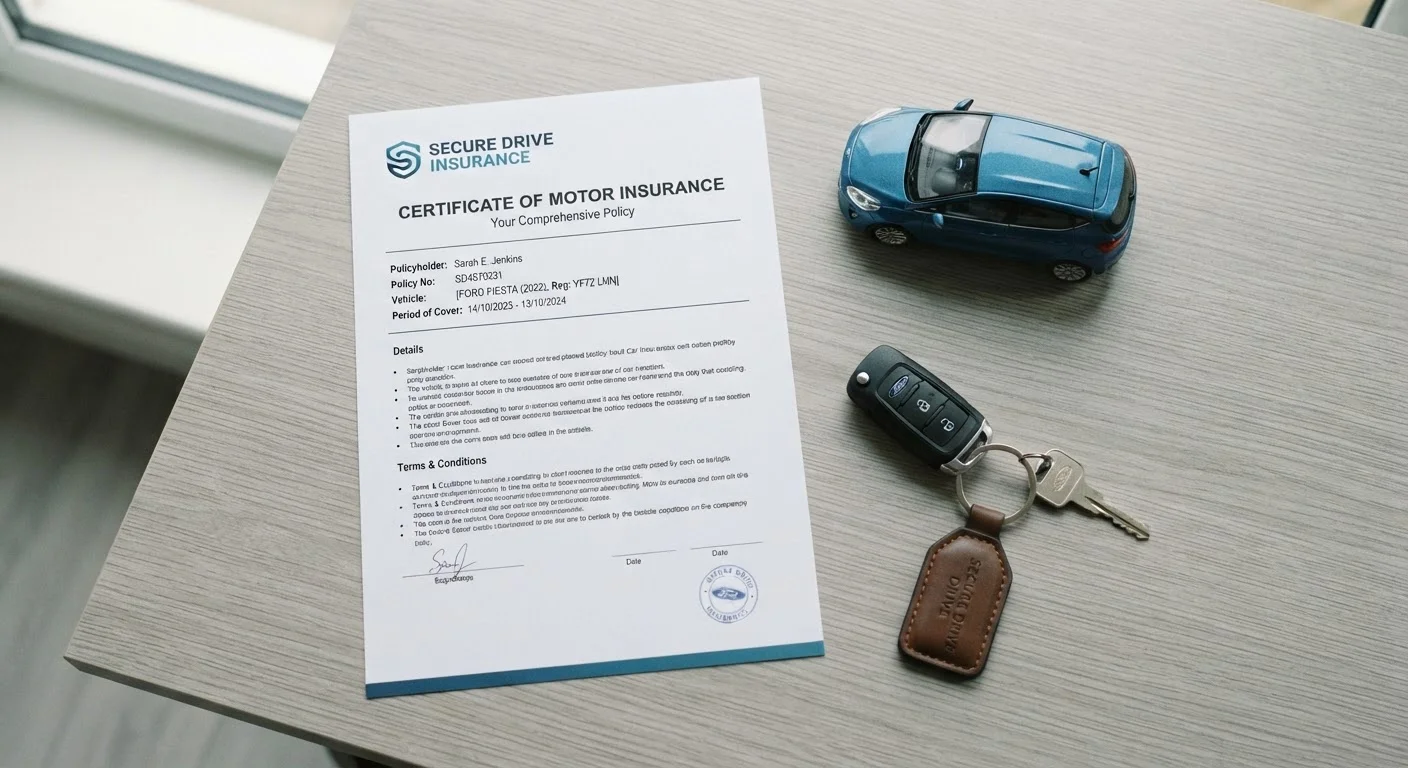
Photo: TargetReads.com | Explore Engaging Reads editorial
Why Coverage Types Matter
Most drivers know they're required to carry auto insurance, but far fewer can explain what each part of their policy actually does. That gap can be costly — especially after an accident, theft, or weather event when you discover a loss isn't covered the way you expected.
Auto insurance isn't a single, uniform product. It's a bundled set of distinct coverages, each designed to address a different type of financial risk. Some are legally required in most states; others are optional but widely recommended. Knowing what each coverage does — and what it doesn't — puts you in a better position to evaluate your policy with clear eyes.
This reference breaks down every standard auto coverage type in plain language. For a broader look at how auto and home policies work together, see our policyholder overview.
| Coverages typically required by state law | Bodily Injury Liability, Property Damage Liability (Requirements vary by state; verify with your state's DMV or insurance regulator.) |
| Coverages usually required by lenders | Collision and Comprehensive (Standard requirement for financed or leased vehicles.) |
| No-fault states (approximate count) | 12 states plus D.C. (PIP requirements and thresholds differ within these states.) |
| Uninsured drivers on U.S. roads | Roughly 1 in 8 (Insurance Research Council estimate; varies significantly by state.) |
| UM/UIM coverage mandate | Required or must be offered in most states (Specific rules differ by state law.) |
The Standard Coverage Types, Defined
The following coverages appear on most personal auto policies in the United States. Not every driver carries all of them, and limits vary widely by state law and individual choice.
Deductible
The amount you agree to pay out-of-pocket before your insurance coverage kicks in on a claim. Higher deductibles typically lower your premium but increase your cost at the time of a loss.
Liability Coverage
Insurance that pays for damage or injury you cause to others in an at-fault accident. It covers the other party's costs — not your own vehicle or medical bills.
No-Fault State
A state where each driver's own insurer pays their initial medical costs after an accident, regardless of who caused it. PIP coverage is mandatory in these states.
Premium
The amount you pay — monthly, semi-annually, or annually — to keep your insurance policy active. Premiums are determined by factors including your driving history, vehicle, location, and chosen coverage limits.
Declarations Page
A summary document at the front of your policy that lists your coverage types, limits, deductibles, and effective dates. It's the quickest way to confirm what protection you have.
Endorsement
An optional add-on or modification to a standard insurance policy. Endorsements can expand, restrict, or clarify coverage beyond the base policy terms.
Collision Coverage
Pays to repair or replace your vehicle when it's damaged in a collision with another car or object — a guardrail, tree, or pole, for example. It applies regardless of who caused the accident. Collision coverage is subject to a deductible, the amount you pay out-of-pocket before the insurer covers the rest. Lenders and leasing companies typically require it until a vehicle is paid off.
Comprehensive Coverage
Covers damage to your vehicle from causes other than a collision — theft, vandalism, hail, flood, fire, falling objects, or animal strikes. Like collision, it carries a deductible. The two are often sold together and collectively referred to as "physical damage" coverage, though each is a separate line on your policy.
Bodily Injury Liability (BI)
Pays for injuries you cause to other people in an at-fault accident — medical bills, lost wages, and legal costs if you're sued. It does not cover your own injuries. Nearly every state requires a minimum amount of BI liability. Policy limits are typically written as two numbers (e.g., 25/50), meaning $25,000 per person and $50,000 per accident.
Property Damage Liability (PD)
Covers damage you cause to someone else's property — most commonly their vehicle, but also fences, buildings, or other structures. This coverage is also required by most states and is separate from the BI limit. Together, BI and PD make up what's commonly called liability coverage.
Uninsured and Underinsured Motorist Coverage (UM/UIM)
Protects you when the at-fault driver either has no insurance or carries limits too low to cover your losses. UM/UIM can cover medical expenses and, in some states, vehicle damage. Many states require it or require insurers to offer it. Given that a significant share of U.S. drivers remain uninsured, this coverage addresses a real and common risk.
Medical Payments (MedPay) and Personal Injury Protection (PIP)
Both coverages pay for medical expenses for you and your passengers after an accident, regardless of fault. PIP is broader — in some states it also covers lost wages and rehabilitation. PIP is mandatory in no-fault states, where each driver's own insurer covers initial medical costs instead of directing claims to the at-fault party's liability insurer.
For a side-by-side look at how these coverages combine into "liability only" versus "full coverage" packages, see our full coverage explainer.
Reading Your Policy and Next Steps
The exact terms, limits, exclusions, and premiums on your policy depend on your insurer, your state's laws, and the choices you or your agent made at enrollment. Two drivers carrying "full coverage" may have significantly different protection based on their deductible amounts and liability limits.
Your declarations page — sometimes called the dec page — is the single-page summary that lists every coverage type, its limit, and its deductible. It's the fastest way to see exactly what you're carrying. Learning to read your declarations page helps you catch coverage gaps before a claim makes them obvious.
Optional add-ons called endorsements or riders can also modify standard auto coverage — for example, roadside assistance, rental reimbursement, or gap coverage for a financed vehicle. For a deeper look at how riders and endorsements work across policy types, see our complete property insurance reference.
This article is for general informational and educational purposes only and does not constitute personalized insurance, financial, or legal advice. Coverage terms, requirements, and availability vary by insurer, policy, and state. Always review your actual policy documents and consult a licensed insurance agent or adviser for guidance specific to your situation.
The content on this site is for informational purposes only and is not a substitute for professional advice. Always consult a qualified professional for guidance specific to your situation.