
Replacement Cost vs. Actual Cash Value in Home Insurance

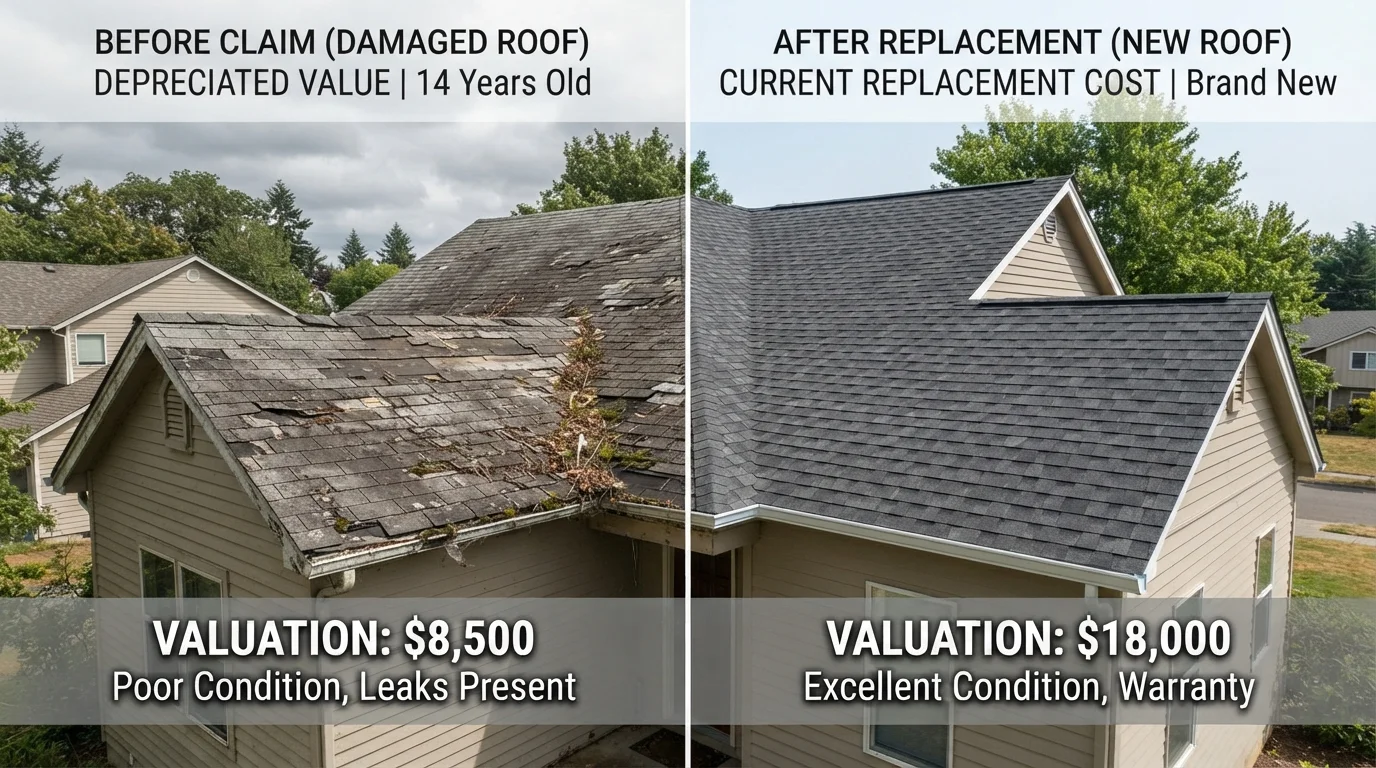
Photo: TargetReads.com | Explore Engaging Reads editorial
Key Takeaways
- Replacement Cost Value pays what it costs to rebuild or replace property with new materials at today's prices.
- Actual Cash Value deducts depreciation, so payouts reflect the item's worn or aged market value at the time of loss.
- RCV policies typically carry higher premiums than ACV policies for the same home.
- The valuation method your policy uses has a direct, significant impact on what you receive after a claim.
- You can often upgrade from ACV to RCV coverage by adjusting your policy — consult a licensed insurance agent.
What These Two Terms Actually Mean
When you file a home insurance claim, your insurer calculates how much to pay you based on one of two valuation methods: Replacement Cost Value (RCV) or Actual Cash Value (ACV). Understanding the difference is essential, because the same covered loss can result in very different payouts depending on which method your policy uses.
Replacement Cost Value pays the full cost to repair or replace damaged property using materials of similar kind and quality at today's market prices — without any deduction for age or wear. If your ten-year-old roof is destroyed, an RCV policy covers what a brand-new roof costs to install.
Actual Cash Value takes that replacement cost and subtracts depreciation — an adjustment for the property's age, condition, and expected useful life. That same ten-year-old roof, depending on its material and condition, might receive a payout that reflects only a fraction of the current replacement cost.
To learn how these valuations fit into the broader structure of a policy, see The Standard Parts of a Home Insurance Policy, Decoded.
| Criterion | Replacement Cost Value (RCV) | Actual Cash Value (ACV) |
|---|---|---|
| Payout basis | Cost to replace with new materials at today's prices | Replacement cost minus depreciation |
| Depreciation deducted | No | Yes |
| Typical premium cost | Higher | Lower |
| Out-of-pocket risk after a claim | Lower | Higher (covers only aged value) |
| Best suited for | Newer homes and belongings; risk-averse homeowners | Older homes; cost-conscious policyholders with savings buffer |
| Complexity at claim time | Simpler — based on current market replacement costs | More variable — depreciation calculations can be disputed |
How Depreciation Changes Your Payout
Depreciation is the core mechanic that separates ACV from RCV. Insurers calculate it using factors like the item's age, expected lifespan, and physical condition at the time of the loss. The result is subtracted from what it would cost to replace the item new.
Consider a straightforward example: a five-year-old refrigerator is destroyed in a kitchen fire. If the same model costs $1,200 today and the insurer determines it has depreciated by 40% over its expected lifespan, an ACV policy pays $720. An RCV policy pays $1,200 — or the cost of a comparable replacement model.
This gap grows larger for structural components like roofing, flooring, or HVAC systems, which have longer expected lifespans and steadily accumulate depreciation. Depreciation is one of the most common reasons homeowners receive a smaller payout than they anticipated. Why Your Home Insurance Claim Might Be Smaller Than You Expected goes deeper into this dynamic.
~50%
Homeowners underinsured for full replacement cost
Industry estimates have consistently suggested that roughly half of insured homes carry coverage limits below their actual rebuilding costs, magnifying the gap when ACV applies.
20–40%
Typical depreciation on a 10-year-old roof
Depreciation percentages vary by material and insurer methodology, but a decade-old asphalt shingle roof commonly carries a 20–40% reduction from replacement cost in an ACV calculation.
Premium Costs and the Trade-Off
RCV coverage offers broader financial protection, but it comes at a higher premium. Because the insurer takes on greater potential liability — agreeing to pay current replacement costs regardless of depreciation — that exposure is priced into your annual cost.
ACV policies carry lower premiums precisely because the insurer's maximum payout is capped by depreciation. For some homeowners, that trade-off is acceptable, particularly if they have savings or other resources to cover any gap between the ACV payout and actual repair costs.
The right choice depends on your financial cushion, the age and condition of your home and contents, and your overall risk tolerance. This is general educational information — for guidance specific to your situation, consult a licensed insurance agent or adviser who can review your actual policy options. Keep in mind that deductibles interact with both valuation types, affecting your net payout; What Deductibles Actually Do Inside an Insurance Policy explains that relationship clearly.
RCV Payments Are Often Issued in Two Stages
Applying This Knowledge Before and After a Claim
The best time to understand your policy's valuation method is before a loss occurs. Review your declarations page — the summary document at the front of your policy — to confirm whether dwelling coverage and personal property coverage are each written on an RCV or ACV basis. Some policies cover the structure on an RCV basis but personal belongings on ACV, or vice versa.
If you discover your coverage uses ACV and you'd prefer RCV, ask your insurer or agent whether an endorsement (an add-on to your policy) is available to upgrade personal property to replacement cost. Such upgrades are commonly available but do affect your premium.
When a claim does occur, document all damaged items thoroughly — with photos, purchase records, and model numbers where possible. This documentation supports accurate valuation and gives you a basis for discussing the insurer's depreciation calculations if you believe they are inaccurate. For a full walkthrough of the claims process, see Filing a Home Insurance Claim Without Undermining Your Payout.
This article is for general informational and educational purposes only and does not constitute personalised insurance, financial, or legal advice. Coverage terms, valuation methods, and eligibility vary by insurer and state. Always read your actual policy documents and consult a licensed insurance professional for guidance on your specific situation.
The content on this site is for informational purposes only and is not a substitute for professional advice. Always consult a qualified professional for guidance specific to your situation.