
Why Your Explanation of Benefits Isn't a Bill — and How to Read It

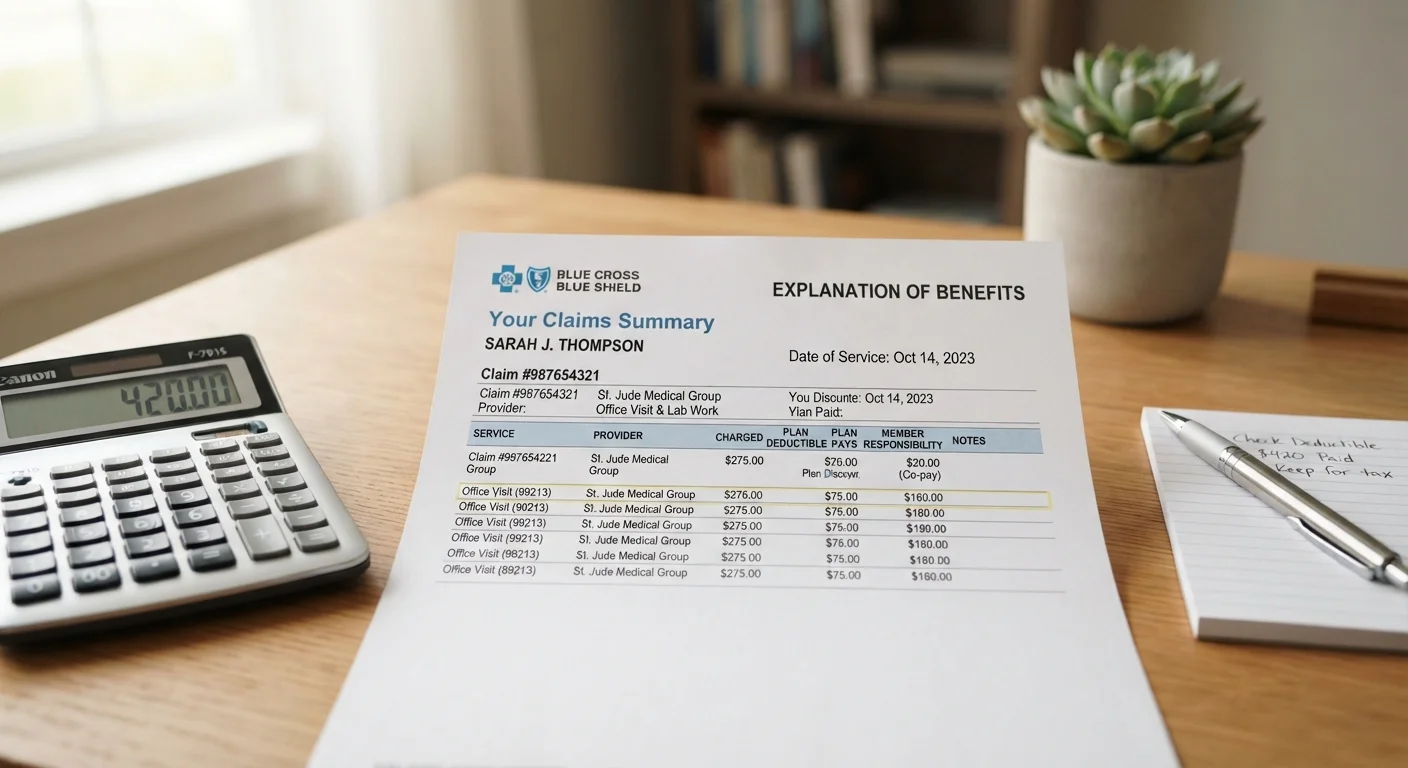
Photo: TargetReads.com | Explore Engaging Reads editorial
Key Takeaways
- An Explanation of Benefits (EOB) is a summary from your insurer, not a bill you must pay.
- EOBs show the billed amount, the insurer's allowed amount, what the plan paid, and your share.
- Errors in EOBs are common — comparing it to your actual bill can save you money.
- You have the right to appeal if your insurer denies or reduces a claim you believe should be covered.
- Keep every EOB until you've paid and reconciled the corresponding provider bill.
What an EOB Actually Is
An Explanation of Benefits (EOB) is a statement your health insurer sends after processing a medical claim. It summarizes how the claim was handled — what was billed, what the plan's negotiated rate allows, how much the insurer paid, and what portion (if any) you owe. It is an informational document, not an invoice.
An EOB Is Not a Bill
EOBs serve as your window into the insurance claim process. Understanding how health insurance actually works from enrollment to claim settlement makes it much easier to interpret what the EOB is telling you. Think of the EOB as a receipt for a transaction you didn't directly participate in — one you should still review carefully.
Store EOBs Digitally for Easy Comparison
How to Read and Act on Your EOB
Reading an EOB isn't complicated once you know the structure. Follow the steps below to move from confusion to clarity every time one arrives. Before you begin, make sure you have the prerequisites in place.
What you will need
Locate and open your EOB
Your insurer sends an EOB after every processed claim — by mail, email, or through an online member portal. Log in to your insurer's website or app, navigate to the claims or EOB section, and pull up the document that matches your recent visit or service.
Identify the key dollar amounts
Every EOB breaks a claim into several figures. Learn what each one means:
- Billed amount: What your provider charged before any adjustments.
- Allowed amount (or negotiated rate): The maximum your insurer has agreed to pay for that service with in-network providers. The difference between billed and allowed is typically written off by the provider.
- Plan paid: The portion your insurer actually paid after applying your deductible, copay, or coinsurance rules.
- Your responsibility: The amount you owe the provider — this is the only number you should pay.
For a deeper look at how these cost-sharing amounts interact, see Deductible, Copay, or Coinsurance — Which Cost Are You Actually Paying?.
Check the claim status and any denial codes
EOBs include a status field for each service line — typically processed, denied, or pending. Denied lines carry a reason code or brief explanation (e.g., "service not covered," "prior authorization required"). Note any codes that apply to your claim and look them up in the explanation key, which is usually printed at the bottom of the EOB or available on the insurer's website.
Confirm the network status of your providers
Your EOB will usually indicate whether each provider was in-network or out-of-network. Out-of-network services are often subject to a separate (higher) deductible and lower plan coverage. If a provider you believed was in-network is listed as out-of-network, contact your insurer immediately — billing errors in network status do occur. Understanding the financial stakes of network tiers is covered in What 'In-Network' and 'Out-of-Network' Really Mean for Your Bills.
Compare the EOB to your provider's bill
When your actual bill arrives from the doctor or hospital, place it next to the EOB. The "your responsibility" amount on the EOB and the amount due on the provider bill should match. If they don't, contact your provider's billing department first — they may have sent the bill before receiving the insurer's payment. If the discrepancy persists, call your insurer. For common billing surprises, see Gaps That Catch People Off Guard When a Medical Bill Arrives.
File an appeal if something looks wrong
If you believe a claim was incorrectly denied or a covered service was underpaid, you have the right to appeal. Start with an internal appeal to your insurer — submit a written request, include supporting documents (the EOB, the provider's bill, any referral or prior authorization paperwork), and keep copies of everything. If the internal appeal fails, you may be entitled to an external review by an independent organization under federal law.
Act Before Appeal Deadlines Pass
This article provides general information about health insurance documents and is not a substitute for advice from a licensed insurance professional. Coverage terms, appeal rights, and claim procedures vary by plan and state. Always consult your plan documents or a licensed agent for guidance specific to your situation.
The content on this site is for informational purposes only and is not a substitute for professional advice. Always consult a qualified professional for guidance specific to your situation.