
How Health Insurance Actually Works: A Plain-English Breakdown

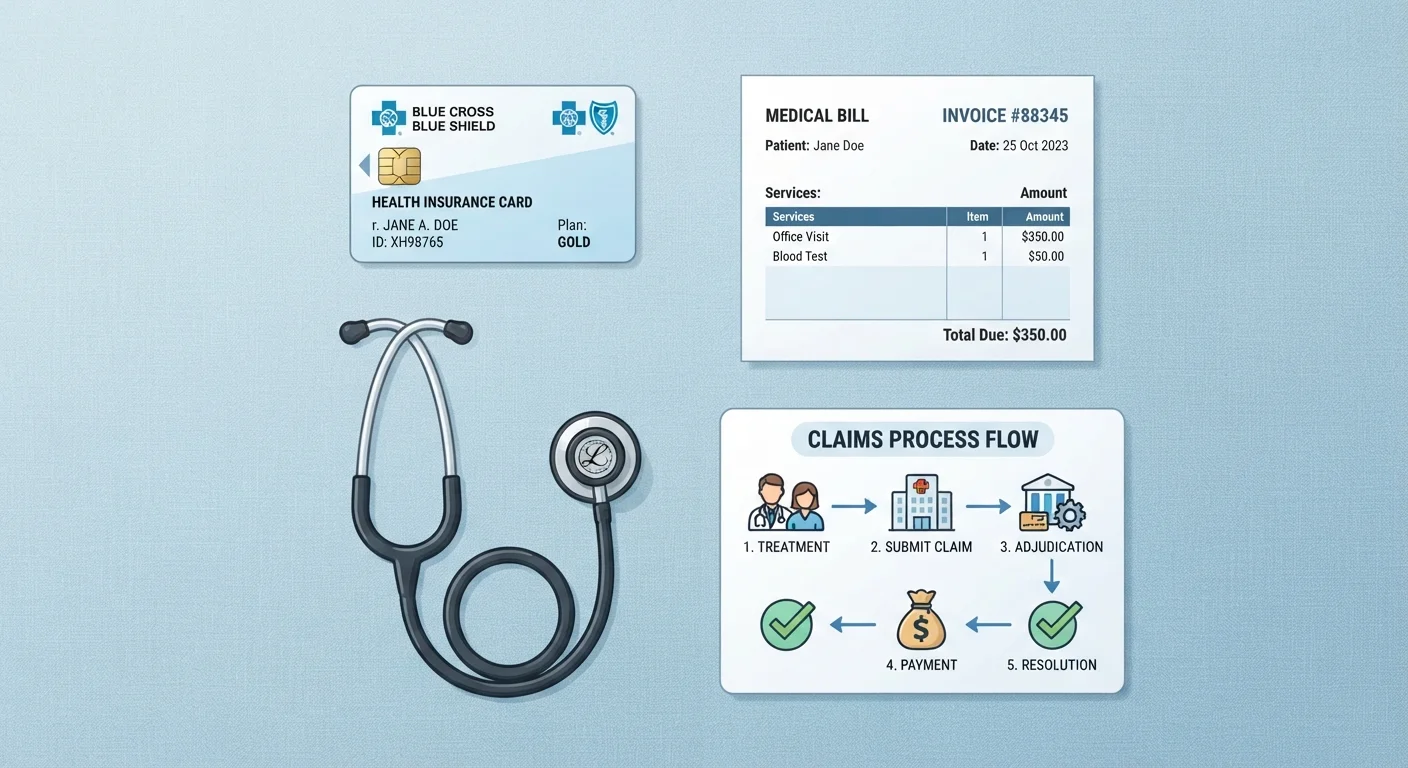
Photo: TargetReads.com | Explore Engaging Reads editorial
Key Takeaways
- Your premium is what you pay every month to keep coverage active, regardless of whether you use any care.
- A deductible is the amount you pay out of pocket before your insurer begins sharing costs.
- Copays and coinsurance are two different ways you split costs with your insurer after the deductible is met.
- The out-of-pocket maximum caps your total annual spending, after which your insurer covers 100% of covered services.
- Claims are submitted to your insurer by providers, and you receive an Explanation of Benefits summarizing what was paid.
- Your plan's network determines which doctors and hospitals will be covered at the best rates.
The Basic Cycle: How Money Actually Moves
Health insurance follows a predictable cycle once you understand the vocabulary. Here's the flow from start to finish:
- You pay your premium. Every month, you pay a premium to keep your coverage active. Think of it as membership dues — it doesn't count toward your deductible.
- You receive care. You visit a doctor, specialist, urgent care center, or hospital. If that provider is in your plan's network, they've agreed to charge negotiated (lower) rates.
- Your provider submits a claim. Your doctor's office sends a claim to your insurer describing the services provided, using standardized billing codes.
- The insurer processes the claim. The insurer reviews the claim, confirms coverage, applies your deductible or cost-sharing rules, and pays its portion directly to the provider.
- You receive an EOB. Your insurer sends you an Explanation of Benefits — a summary showing the billed amount, the allowed amount, what the insurer paid, and what you owe.
- You pay your share. The provider sends you a bill for your portion — the amount confirmed on your EOB. This may be a copay, coinsurance, or deductible payment.
This cycle repeats for every covered service throughout the year.
The Key Cost-Sharing Terms You Need to Know
Four terms define how costs are split between you and your insurer:
- Premium
- The monthly amount you pay to maintain coverage. Employer-sponsored plans often split this cost between you and your employer.
- Deductible
- The dollar amount you must pay each year before your insurer begins sharing costs. A $1,500 deductible means you pay the first $1,500 of covered services yourself. Preventive care is typically covered before the deductible is met under ACA-compliant plans.
- Copay / Coinsurance
- Once your deductible is met, you pay either a copay (a flat fee, such as $30 per visit) or coinsurance (a percentage of the allowed cost, such as 20%). Your insurer pays the remainder.
- Out-of-Pocket Maximum
- The annual ceiling on what you can spend on covered in-network care. After hitting this limit, your insurer covers 100% for the rest of the plan year. For 2024, the ACA set these limits at $9,450 for individuals and $18,900 for families in marketplace plans.
$9,450
2024 ACA individual out-of-pocket maximum
The ACA sets annual caps on in-network cost-sharing for marketplace plans; after this threshold, the insurer covers 100% of covered services.
~49%
Americans covered through employer-sponsored plans
According to KFF (Kaiser Family Foundation) data, nearly half of the U.S. population receives health coverage through an employer.
Over 90%
ACA marketplace enrollees receiving premium subsidies
KFF reported that as of recent enrollment periods, the vast majority of marketplace plan members qualify for federal premium tax credits.
For a broader look at how these elements interact across different plan structures, see our complete structural overview of U.S. health coverage.
Networks: Why Where You Go Matters
Your plan's provider network is the group of doctors, hospitals, labs, and specialists that have signed contracts with your insurer agreeing to accepted, negotiated rates. Staying in-network is one of the most important cost-control decisions you can make.
When you see an in-network provider, your insurer's negotiated rate applies — often far lower than the provider's standard charge. When you see an out-of-network provider, you may pay significantly more, and some plan types won't cover out-of-network care at all except in emergencies.
Always Verify Network Status Before Your Visit
Plan structures vary in how they handle networks. HMOs, PPOs, EPOs, and POS plans each have different rules about referrals and out-of-network access. Knowing your plan type tells you how flexible — or restricted — your network choices are.
Enrollment Windows and What Happens If You Miss Them
Health insurance isn't available for purchase at any time of year. Most people enroll through one of two paths:
- Employer Open Enrollment: Your employer sets a specific window, typically in the fall, when you can elect or change coverage for the coming year.
- ACA Marketplace Open Enrollment: For plans purchased through healthcare.gov or a state marketplace, enrollment generally runs from November 1 through mid-January.
Outside these windows, you can only enroll if you experience a qualifying life event — losing job-based coverage, getting married, having a baby, or moving to a new coverage area, among others. This triggers a Special Enrollment Period, typically 60 days.
If you're enrolling for the first time, our guide for first-time plan holders walks through what to expect and how to read the plan documents you'll receive.
This article provides general information about how health insurance works and is not personalized insurance, financial, or legal advice. Coverage terms, costs, and rules vary by plan and provider. Always read your actual policy documents and consult a licensed insurance agent or adviser for guidance specific to your situation.
Frequently Asked Questions
The content on this site is for informational purposes only and is not a substitute for professional advice. Always consult a qualified professional for guidance specific to your situation.