
Credit Scores Decoded: What That Three-Digit Number Actually Measures

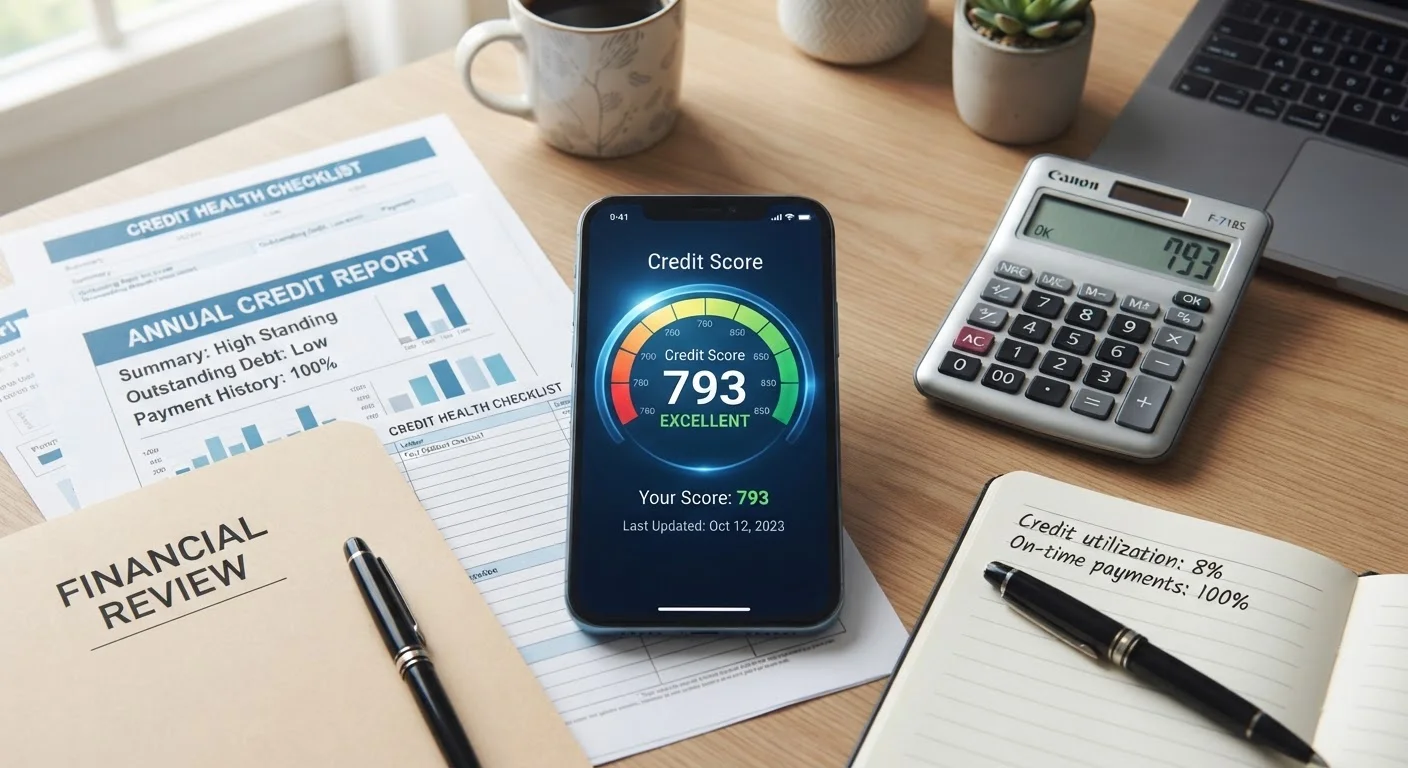
Photo: TargetReads.com | Explore Engaging Reads editorial
Key Takeaways
- Credit scores range from 300 to 850, with higher scores indicating lower lending risk.
- Payment history is the single most influential factor in most scoring models.
- Multiple scoring models exist; the score a lender sees may differ from the one you check yourself.
- Your score is calculated from your credit report — not from your income or bank balance.
- Small, consistent habits over time have a greater impact than one-time fixes.
What a Credit Score Actually Represents
A credit score isn't a measure of your worth or financial intelligence — it's a statistical prediction. Specifically, it estimates the probability that you'll fall seriously behind on a debt obligation within the next 24 months. That framing matters because it explains why lenders care so much: they're not judging you, they're managing risk at scale.
The score is generated by running the contents of your credit report through a mathematical model. The most widely known model is the FICO® Score, developed by Fair Isaac Corporation, though lenders also use VantageScore and industry-specific variants. Each model weighs credit report data differently, which is one reason your score can vary depending on who's looking at it.
Importantly, your credit score is not drawn from a single source. The three major credit bureaus — Equifax, Experian, and TransUnion — each hold their own version of your credit file, and a score generated from one bureau's data may differ from another's. Our section-by-section guide to reading a credit report can help you understand what feeds into that file.
How the Score Is Built: The Five Core Factors
Every major credit scoring model weighs several categories of credit behavior. Under the widely referenced FICO® framework, those categories and their approximate weights are:
- Payment history (~35%): Whether you've paid past accounts on time. A single missed payment can cause a meaningful drop.
- Amounts owed / credit utilization (~30%): How much of your available revolving credit you're currently using. Lower utilization generally signals lower risk.
- Length of credit history (~15%): How long your accounts have been open, including your oldest account and the average age of all accounts.
- Credit mix (~10%): The variety of account types — credit cards, installment loans, mortgages — in your file.
- New credit (~10%): Recent applications for credit, reflected as hard inquiries.
These weightings are approximations; the exact formula is proprietary and adapts to the profile being scored. For a deeper look at each factor, see our breakdown of the five factors behind every credit score.
~35%
Weight of payment history in FICO® Score
According to Fair Isaac Corporation's published scoring factor breakdown, payment history is the single largest component of a FICO® Score.
300–850
Standard FICO® Score range
The standard FICO® Score scale runs from 300 at the low end to 850 at the high end, with most scoring models from FICO® and VantageScore using the same range.
7 years
How long most negative items stay on record
Under the Fair Credit Reporting Act (FCRA), most derogatory marks such as late payments and collections may remain on a credit report for up to seven years.
Why Lenders Use Credit Scores — and What They Do With Them
When you apply for a mortgage, auto loan, or credit card, the lender needs to make a quick, consistent decision across thousands of applicants. A credit score standardizes that process. Rather than reading every page of your credit report, an underwriter can use your score as an initial filter to determine whether your application advances, what interest rate to offer, and what credit limit to extend.
This is why a higher score often translates directly into lower borrowing costs. A borrower with an exceptional score may qualify for a significantly lower interest rate than a borrower with a fair score on the same loan amount — and over the life of a mortgage or car loan, that difference compounds into thousands of dollars. Our article on how APR reflects the true cost of borrowing illustrates exactly how that math works.
“Credit scores are one of the most powerful numbers in a consumer's financial life — yet most people have only a vague understanding of how they're calculated or what they actually measure.”
— Consumer Financial Protection Bureau, U.S. Federal Agency for Consumer Financial Protection
This article is for general informational and educational purposes only. It does not constitute personalized financial or legal advice. Consult a licensed financial professional for guidance specific to your situation.
Common Misconceptions That Can Hold Your Score Back
Several widely held beliefs about credit scores turn out to be inaccurate — and acting on them can slow your progress. Among the most prevalent:
- Carrying a balance helps your score: It doesn't. You do not need to carry a revolving balance month to month to build credit history. Paying your statement balance in full avoids interest and typically keeps utilization low.
- Closing old accounts is harmless: Closing a long-standing account can shorten your average credit age and reduce your available credit limit, both of which may lower your score.
- A debit card builds credit: Debit card use does not appear on your credit report and has no effect on your credit score.
For a fuller treatment of these and other misconceptions, our piece on credit score myths that harm American consumers addresses them directly.
Free Annual Credit Reports Are Your Starting Point
Frequently Asked Questions
The content on this site is for informational purposes only and is not a substitute for professional advice. Always consult a qualified professional for guidance specific to your situation.