
Annual Percentage Rate Explained: The Number Buried in Every Loan Offer

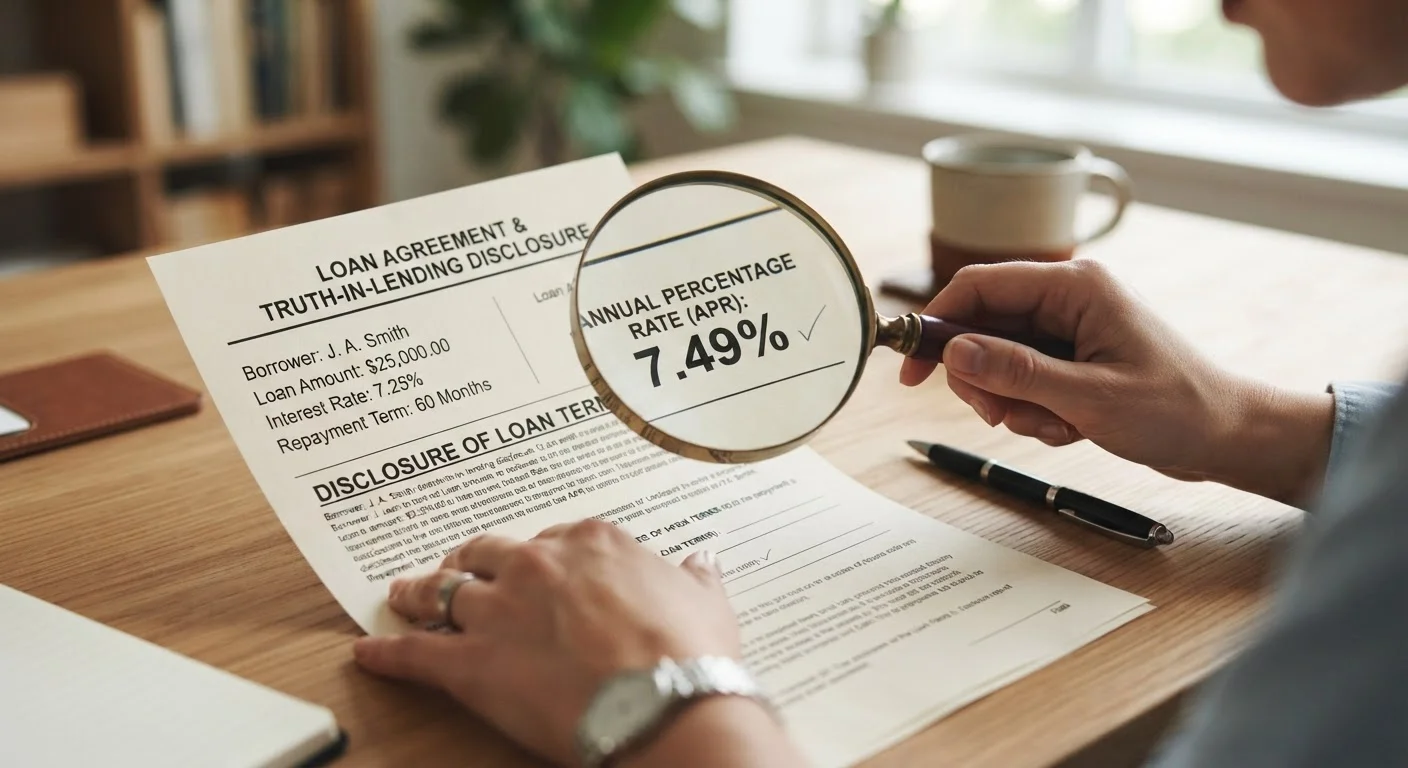
Photo: TargetReads.com | Explore Engaging Reads editorial
Key Takeaways
- APR reflects the true annual cost of a loan, including fees — not just the interest rate.
- Federal law requires lenders to disclose APR, making it easier to compare offers side by side.
- A loan with a lower interest rate can have a higher APR if it carries heavy fees.
- Credit cards express APR differently — it directly mirrors the daily and monthly interest applied to balances.
- Understanding APR helps borrowers avoid underestimating the actual cost of debt.
Why APR Exists — and Why It Matters
When a lender quotes you an interest rate, that number alone doesn't capture everything you're paying to borrow. Fees can substantially increase the real cost of a loan, yet they're easy to overlook in the fine print. Congress addressed this through the Truth in Lending Act (TILA), which requires lenders to disclose the APR prominently in any consumer loan offer.
APR rolls the interest rate and most mandatory fees into a single annualized figure. Because every lender must calculate and disclose it the same way, it becomes a standardized benchmark for comparison — a common measuring stick across wildly different loan products. Without it, comparing a mortgage from one bank to another would require calculating effective costs from scratch.
This matters in everyday terms: two mortgage offers might advertise the same 6.5% interest rate, but if one carries a 1% origination fee and the other carries none, their APRs will differ — and the difference translates directly into dollars paid over the loan's life.
~7.7%
Average APR on a 24-month personal loan
According to Federal Reserve consumer credit data, average personal loan APRs have varied considerably based on credit profile and lender type.
20%+
Typical credit card purchase APR
Federal Reserve data has consistently shown average credit card interest rates exceeding 20% in recent periods, underscoring the cost of carrying balances.
Required
APR disclosure on consumer loans under TILA
The Truth in Lending Act mandates that lenders disclose APR prominently in all consumer credit agreements, a protection in place since 1968.
What APR Includes (and What It Doesn't)
APR is broader than a raw interest rate, but it isn't all-inclusive. Understanding the boundary helps you avoid surprise costs at closing or when a balance grows larger than expected.
Typically Included in APR
- The base interest rate charged on the borrowed principal
- Origination fees or underwriting fees charged by the lender
- Mortgage broker fees (on home loans)
- Mortgage discount points (prepaid interest)
- Private mortgage insurance premiums in some loan structures
Often Excluded from APR
- Appraisal and inspection fees
- Title insurance and title search costs
- Credit report fees
- Late payment penalties and optional add-on products
This exclusion gap is especially relevant on mortgages. The APR you see on a home loan disclosure is more comprehensive than a personal loan APR, but it still may not cover every closing cost. For a deeper look at fees that accumulate quietly across financial products, see our guide to bank fees most people overlook.
APR on Credit Cards: A Different Animal
Credit card APR works differently from installment loan APR — and the mechanics have real implications for anyone carrying a balance. There is no fixed loan amount or scheduled payoff date, so APR operates as the ongoing rate applied to whatever balance remains at the end of each billing cycle.
Most issuers calculate interest using a daily periodic rate — your APR divided by 365. That rate is multiplied by your daily balance and compounded. The result: interest charges can accelerate quickly if you're only making minimum payments.
Credit cards also commonly carry multiple APRs — one for purchases, a separate (often higher) rate for cash advances, and a penalty APR triggered by late payments. Reading the Schumer Box in the card's terms and conditions reveals all of them.
If you pay your statement balance in full each month during the grace period, the purchase APR is irrelevant — you'll pay no interest. It only becomes a factor when a balance rolls over. For a detailed look at how compound interest accumulates on revolving balances, see the real cost of carrying a credit card balance.
Pay in Full to Make APR Irrelevant
Using APR to Make Smarter Borrowing Decisions
APR's value is in comparison. When you receive multiple loan offers, lining up the APRs quickly reveals which is truly less expensive — assuming you're comparing loans of the same type, amount, and term. Mixing a 3-year personal loan APR with a 7-year one won't yield a useful comparison, because total interest paid is also a function of time.
A few practical ways to put APR to work:
- Request the Loan Estimate or TILA disclosure early. Lenders must provide this before you commit. It lists the APR, total interest paid, and total cost of the loan — giving you a full picture, not just a headline rate.
- Factor in your repayment timeline. A loan with a higher APR but shorter term may cost less in absolute dollars than a lower-APR loan stretched over many years.
- Watch for variable APR clauses. If a rate is adjustable, understand how it's benchmarked and how high it can go. Rising benchmark rates mean rising borrowing costs.
Your credit score plays a direct role in the APR you're offered. Lenders use it to assess risk — a stronger score typically earns a lower APR. Similarly, managing how your savings rate and debt payoff rate interact can help you optimize both numbers simultaneously.
This article is for general informational and educational purposes only and does not constitute personalized financial, legal, or investment advice. Consult a qualified financial professional for guidance specific to your situation.
Frequently Asked Questions
The content on this site is for informational purposes only and is not a substitute for professional advice. Always consult a qualified professional for guidance specific to your situation.