
Why Your Credit Score Can Vary Across the Three Bureaus

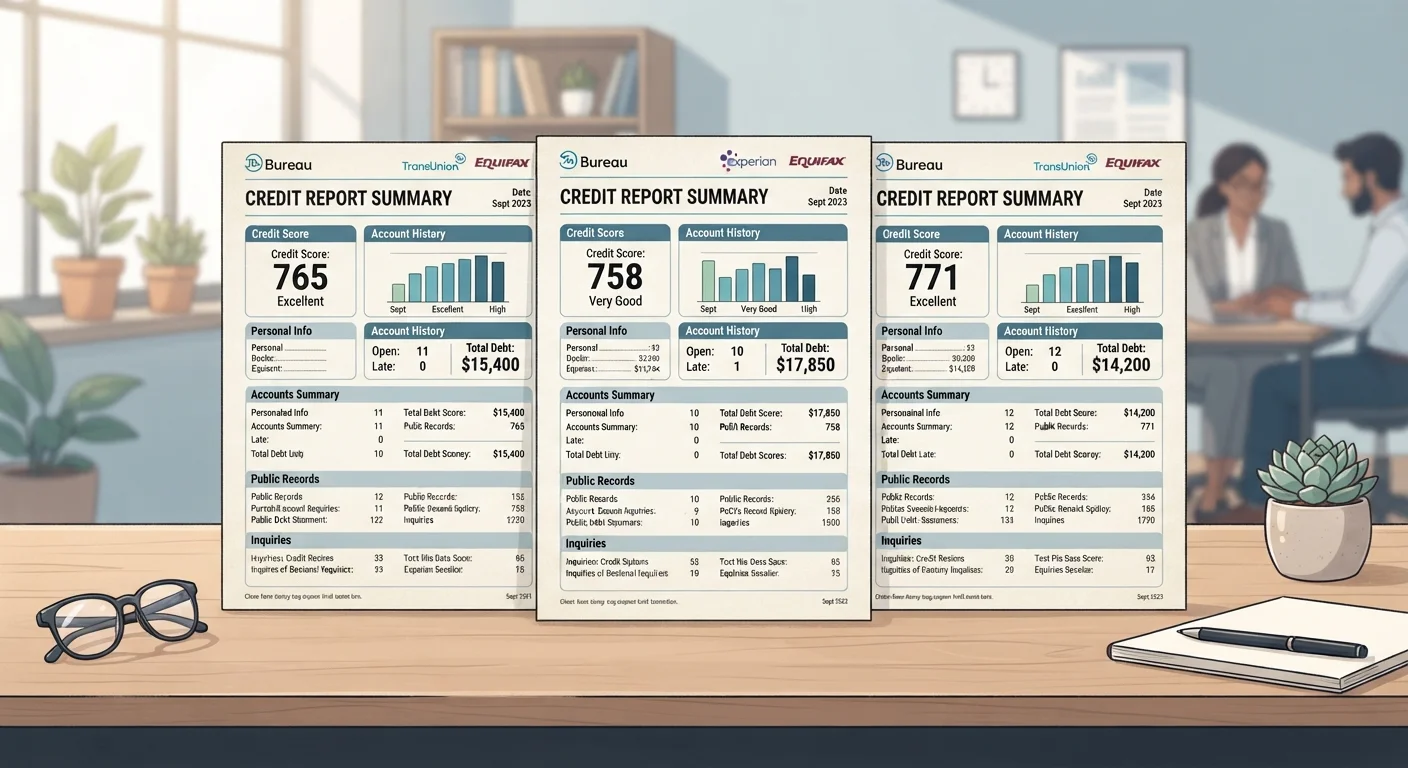
Photo: TargetReads.com | Explore Engaging Reads editorial
Key Takeaways
- The three major credit bureaus operate independently and maintain separate databases of your credit information.
- Lenders are not required to report account activity to all three bureaus, creating data gaps.
- Different scoring model versions used by each bureau can produce additional score variation.
- A difference of 20–30 points across bureaus is common and does not necessarily signal an error.
- Genuine errors on one bureau's report will not automatically be corrected at the others — you must dispute each separately.
- Reviewing all three reports regularly helps catch discrepancies that could affect lending decisions.
Three Bureaus, Three Separate Databases
Equifax, Experian, and TransUnion are independent, competing companies. They do not share a single master database. Instead, each bureau collects credit information from creditors, lenders, and public records on its own. When a bank, credit card issuer, or auto lender reports your payment activity, they choose which bureaus to send that data to — and they are under no legal obligation to report to all three.
The result is that your credit file at each bureau may contain a slightly different picture of your financial history. One bureau might show a store credit card that another has never received data on. A recently paid-off loan might appear resolved at two bureaus but still show a balance at a third. These data differences alone account for much of the score variation consumers notice.
To get a complete picture of your credit health, it helps to review your full credit report from each bureau — not just a single score summary.
How Scoring Models Add Another Layer of Variation
Even if two bureaus held identical data on you, your scores could still differ because of the scoring model each applies. The two most widely used scoring frameworks — FICO and VantageScore — have each released multiple versions over the years. A lender pulling your Equifax report might use FICO Score 8, while the same lender pulling your Experian report uses FICO Score 9. Different versions weight factors such as medical debt, paid collections, and thin credit files differently.
3
Major national credit reporting bureaus in the U.S.
Equifax, Experian, and TransUnion each independently collect and maintain consumer credit data.
~16
FICO Score versions currently in use by lenders
According to FICO, lenders use different versions of its scoring model depending on industry and their own underwriting preferences.
1 in 5
Consumers with a verifiable error on a credit report
A study by the Federal Trade Commission found that roughly one in five consumers had an error on at least one of their three credit reports.
Beyond version differences, each bureau may license the same base model with bureau-specific calibrations, meaning the underlying algorithm is tuned to that bureau's particular data patterns. This is why two people with nearly identical financial histories can see meaningfully different scores at the same bureau, depending on which model version a lender orders.
Understanding how credit inquiries affect each bureau's record is also part of understanding why scores shift independently across bureaus when you apply for credit.
When a Score Gap Is Normal vs. When to Act
A difference of 20–40 points between your highest and lowest bureau score is generally within the expected range and reflects the data and model differences described above. You do not need to take action simply because the numbers aren't identical.
Check All Three Reports Before Applying for a Loan
However, certain situations warrant a closer look. If one bureau's score is significantly lower — 50 points or more — than the others, review that bureau's full report for accounts you don't recognize, incorrect balances, late payments that were reported in error, or duplicate entries. These are the kinds of inaccuracies that have a real impact on lending decisions and are worth disputing.
Keep in mind that several common beliefs about credit scores are simply incorrect — including the idea that you have just one score. Knowing that multiple scores exist helps you interpret variation with confidence rather than alarm.
If you do find an error, file a dispute directly with the bureau reporting it. Correcting a mistake at one bureau will not automatically update the others. You must contact each separately, with supporting documentation, to ensure all three files are accurate.
This article is for general informational purposes only and does not constitute personalized financial or legal advice. Consult a qualified financial professional for guidance specific to your situation.
Frequently Asked Questions
The content on this site is for informational purposes only and is not a substitute for professional advice. Always consult a qualified professional for guidance specific to your situation.