
Building a Feeding Routine for a Multi-Pet Household

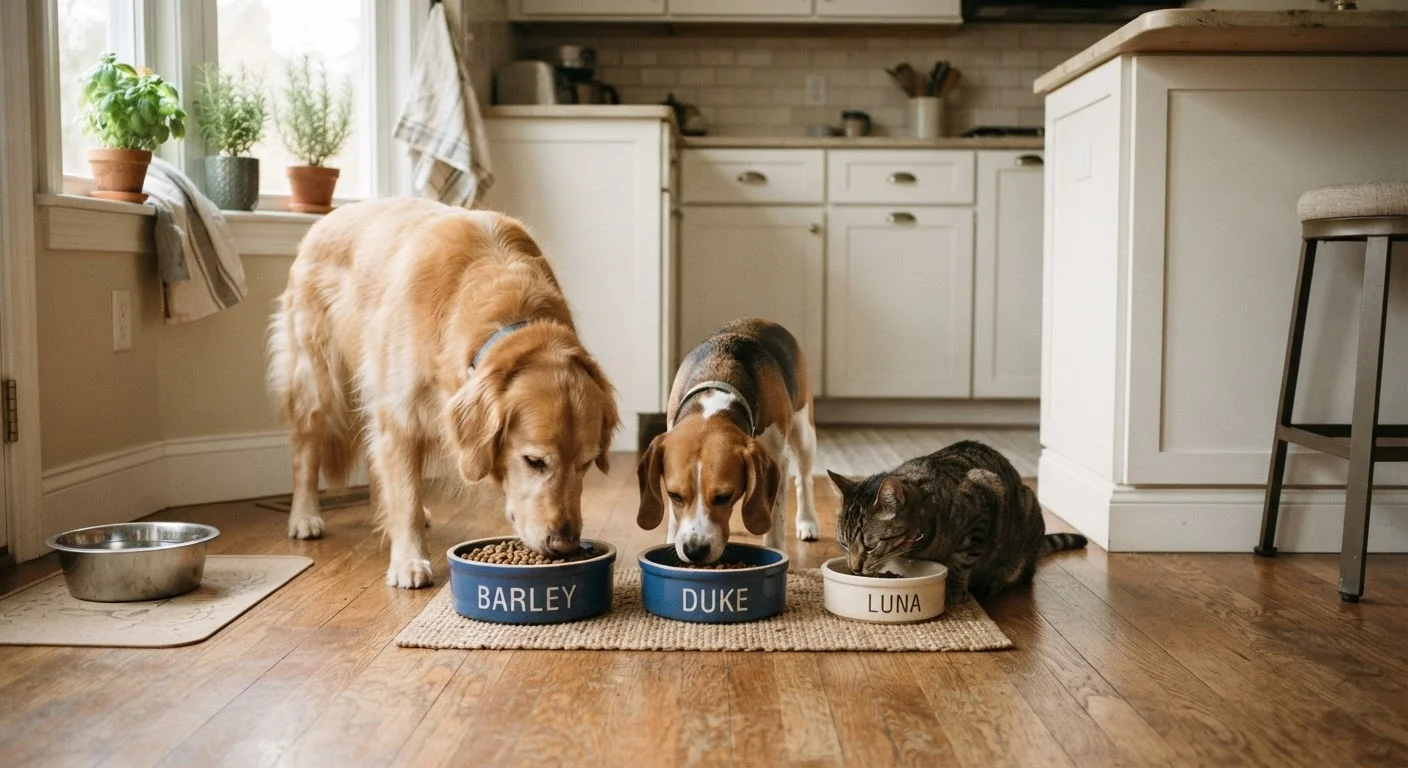
Photo: TargetReads.com | Explore Engaging Reads editorial
Key Takeaways
- Each pet in a multi-pet household should be fed separately to prevent food theft and competition.
- Portion sizes must be tailored to each animal's species, age, size, and health status.
- Consistent meal timing reduces anxiety-driven behaviors and supports digestive health.
- Supervised mealtimes allow you to monitor intake and catch health changes early.
- Consult your veterinarian before establishing a routine if any pet has a medical condition.
Why Multi-Pet Feeding Routines Break Down
Feeding multiple pets without a clear system tends to produce predictable problems: one pet overeats while another goes short, food aggression develops at the bowl, or different dietary formulas get accidentally swapped. These issues are rarely about pet personality — they're almost always a result of structure gaps that can be fixed with planning.
The foundation of any good multi-pet household feeding routine is recognizing that each animal has distinct needs. A vet-aligned approach to feeding starts with understanding what each pet actually requires nutritionally, not just what's convenient to serve. For broader guidance on keeping all your pets thriving day to day, the Pet Health & Wellness hub is a useful starting point.
Dietary Needs Vary — Vet Input Matters
What You'll Need Before You Start
Having the right setup in place makes the routine easier to stick to and reduces mealtime conflict significantly. Gather your tools and confirm each pet's requirements before implementing the steps below.
What you will need
Separate food bowls (one per pet)
Ensures each animal eats only its own portioned meal without competition.
Measuring cup or kitchen scale
Delivers accurate portion sizes per your vet's or food label's feeding guidelines.
Pet gates or baby gates
Physically separates feeding areas to prevent food theft between pets.
Elevated feeding station
Useful for cats to eat above dog level, reducing access issues in mixed-species homes.
Automatic timed feeder
Maintains consistent meal times if your schedule varies, particularly for single-pet rooms.
Step-by-Step: Building Your Feeding Routine
Follow these steps in order. If you're introducing a new animal into an established household, implement changes gradually over one to two weeks rather than all at once to give existing pets time to adjust.
Map out each pet's individual nutritional requirements
Before designing a schedule, document what each pet actually needs. Life stage matters enormously — a puppy, an adult dog, and a senior cat have very different caloric and nutrient requirements. Review the feeding guidelines on each pet's food packaging as a starting point, then confirm targets with your veterinarian. For a deeper look at how needs shift across a pet's lifetime, see how nutritional needs shift from puppy to senior.
Designate separate, fixed feeding locations
Assign each pet a specific spot — a corner of a room, a crate, or a gated area — where they eat every meal. Spatial separation is the single most effective tool for preventing food theft and reducing tension. In mixed-species homes, feeding cats on an elevated counter or shelf keeps dog noses out of their bowl without requiring a closed room.
Set consistent daily meal times
Most adult dogs and cats do well with two measured meals per day — morning and evening. Puppies and kittens typically need three or more smaller meals. Pick times you can reliably maintain seven days a week. Predictable schedules reduce anticipatory anxiety, which can manifest as pacing, whining, or inter-pet tension before meals. Structured routines also support digestive regularity.
Portion and prepare each meal before placing bowls down
Measure every portion using a kitchen scale or a standardized measuring cup — not a coffee mug or random scoop. Portion drift (gradually serving more than intended) is a leading cause of unintended weight gain in multi-pet households. If any pet's weight is creeping up despite feeding the same food, the reasons behind weight gain on the same food article covers common culprits worth reviewing.
Feed simultaneously but separately, then supervise
Place all bowls down at the same time to prevent one pet from finishing early and raiding another's bowl. Stay present for the duration of the meal — typically 10 to 20 minutes. If a pet does not finish, pick up the bowl after the mealtime window closes rather than leaving food available all day (free feeding). This maintains portion control and helps you monitor appetite changes.
Adjust the routine as pets' needs change
Feeding routines are not set-and-forget. A pet recovering from illness, a new animal joining the household, or a dog moving into senior life will require reassessment. Senior pets in particular often need adjusted portion sizes, feeding frequency, or specialized formulas — see how aging shifts your pet's care needs for practical guidance. Schedule a feeding review with your veterinarian at least annually, or whenever a significant change occurs.
Use Feeding Time as a Health Check
Preventing Food Competition and Guarding
Even pets that coexist peacefully can become tense around food. Physical separation is more reliable than training alone for preventing conflicts at mealtimes. Gates, crates, or closed rooms are practical tools — not punishments — and most pets adapt to them quickly when the routine is consistent.
Cross-Species Food Access Is a Real Risk
If you notice persistent guarding behavior, growling, or anxiety around mealtimes, consult a veterinary behaviorist or certified animal behavior consultant. These behaviors can escalate if unaddressed. For additional context on stress-related behaviors in pets, mental enrichment strategies can help reduce overall household tension between meals.
This article provides general pet care information for educational purposes only. It is not a substitute for personalized veterinary advice. Always consult a licensed veterinarian for guidance specific to your pets' health and dietary needs.
The content on this site is for informational purposes only and is not a substitute for professional advice. Always consult a qualified professional for guidance specific to your situation.