
Eye Cream vs. Face Moisturizer: Do You Actually Need Both?

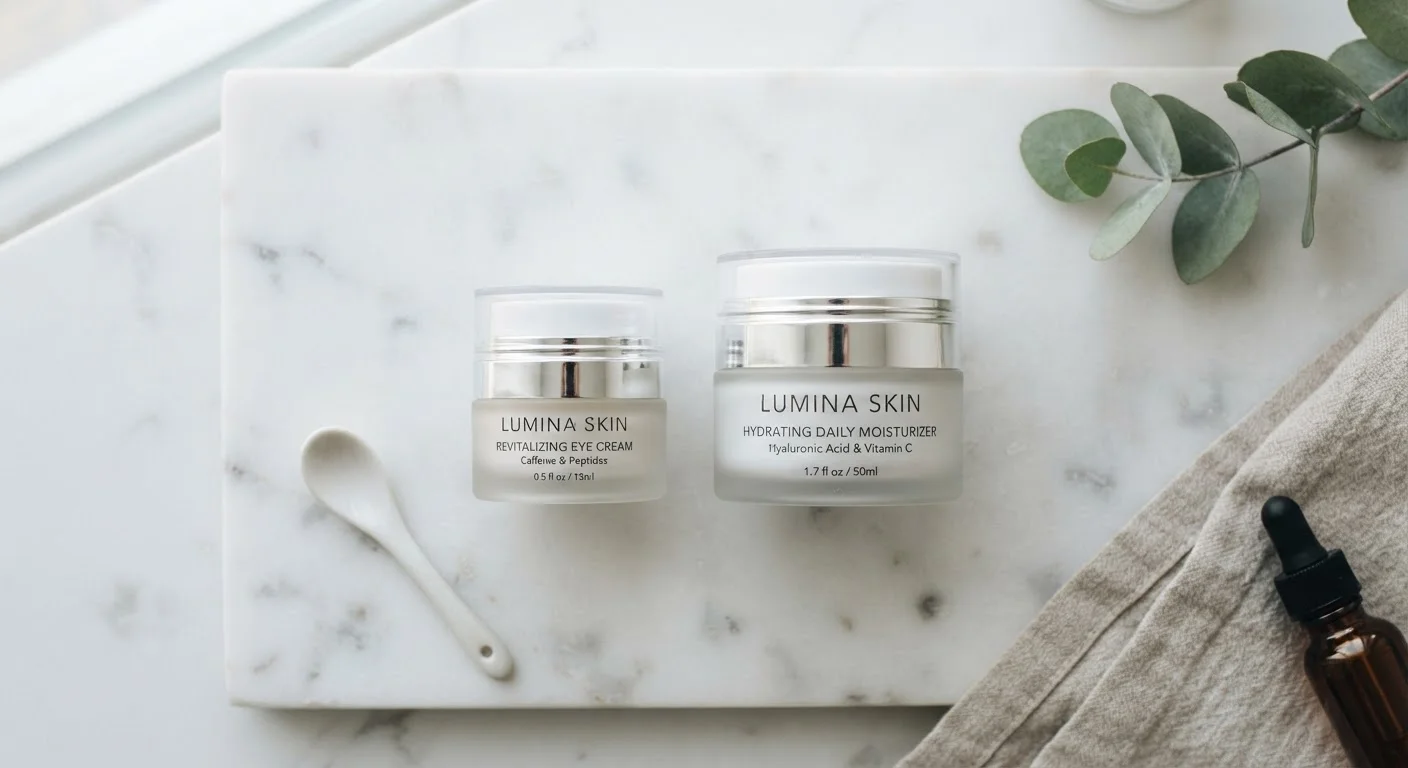
Photo: TargetReads.com | Explore Engaging Reads editorial
Key Takeaways
- The skin around your eyes is significantly thinner and more delicate than skin elsewhere on your face.
- Many eye creams share similar active ingredients with face moisturizers, but are formulated at gentler concentrations.
- For most people, a well-chosen face moisturizer applied carefully can adequately hydrate the eye area.
- Eye creams may offer targeted benefits for puffiness or dark circles that standard moisturizers don't address.
- Dermatologists generally agree that eye cream is helpful but rarely strictly necessary for everyone.
What Makes the Eye Area Different?
The skin surrounding your eyes is among the thinnest on the entire body — roughly 0.5 mm thick compared to about 2 mm elsewhere on the face. It also has fewer oil glands, meaning it dries out faster and shows signs of fatigue, dehydration, and aging earlier than other areas. That's the genuine biological reason the beauty industry created a separate product category in the first place.
Because the tissue is so delicate, it can also react more readily to fragrances, retinoids at higher concentrations, and certain preservatives that your cheeks might tolerate just fine. This sensitivity is the foundation of the eye cream argument — and it's a fair one.
How Eye Creams and Face Moisturizers Actually Differ
Flip over the packaging of a typical eye cream and a typical face moisturizer and you'll often see overlapping ingredient lists: hyaluronic acid, peptides, ceramides, niacinamide. The formulas aren't wildly different in concept. Where eye creams tend to diverge is in concentration and texture.
| Eye Cream | Face Moisturizer | |
|---|---|---|
| Formulation strength | Lower concentrations of actives | Standard or higher concentrations |
| Texture | Lighter, less likely to migrate | Varies widely — can be heavy |
| Targeted ingredients | Caffeine, vitamin K for eye concerns | Broader general hydration focus |
| Fragrance risk | Usually fragrance-free | Often contains fragrance |
| Cost | Typically higher per ounce | Generally more economical |
| Suitable for sensitive eyes | Specifically designed for it | Depends on formula |
Eye creams are generally formulated to be lighter in texture to avoid migrating into the eye itself (which can cause irritation), and active ingredients like retinol or vitamin C are often present at lower doses. Some eye creams also include ingredients specifically linked to under-eye concerns — caffeine for puffiness reduction or vitamin K for the appearance of dark circles — that aren't always present in standard moisturizers.
If you're already using a fragrance-free, non-comedogenic face moisturizer with gentle actives, applying a small amount to the orbital bone (the bony ridge around the eye socket, not directly on the lid) is a practice many dermatologists consider acceptable. That said, if your face cream contains high concentrations of acids or retinoids, applying it near the eyes is worth reconsidering. For more on how standard moisturizers can sometimes cause unintended issues, see why your moisturizer might be working against you.
The Case for Keeping Just One Product
Simplicity has real value in skincare. A shorter routine is easier to maintain, reduces the risk of layering incompatible ingredients, and is friendlier on a budget. If your skin is generally balanced, you don't notice significant puffiness or dark circles, and your face moisturizer is fragrance-free and mild, doubling it up as an eye cream is a reasonable, evidence-grounded choice.
Smart Application Technique Matters
The key is application technique: use your ring finger (it applies the least pressure) and gently tap — never rub — along the orbital bone. Avoid pulling or dragging the skin, which over time can contribute to the very concerns you're trying to prevent.
When a Dedicated Eye Cream Makes Sense
There are scenarios where investing in a separate eye product genuinely pays off. If you deal with chronic puffiness, pronounced dark circles, or visible fine lines specific to the eye area, a targeted formula can deliver actives that your all-purpose moisturizer simply doesn't carry. Mature skin in particular tends to benefit from the richer emollient profile that many eye creams offer without the heaviness of a standard cream that could cause milia (small white cysts) around the eyes.
People with contact lenses or reactive eyes may also find that eye-specific products — formulated to stay stable near mucous membranes — simply feel more comfortable. And if your face moisturizer contains strong actives that aren't eye-safe, a dedicated eye cream fills that gap safely.
This article is for general informational and educational purposes only. For personalized skincare advice, especially if you experience persistent skin irritation, consult a licensed dermatologist.
The content on this site is for informational purposes only and is not a substitute for professional advice. Always consult a qualified professional for guidance specific to your situation.