
Mental Wellness Across Your Lifespan: What Changes and What Stays the Same

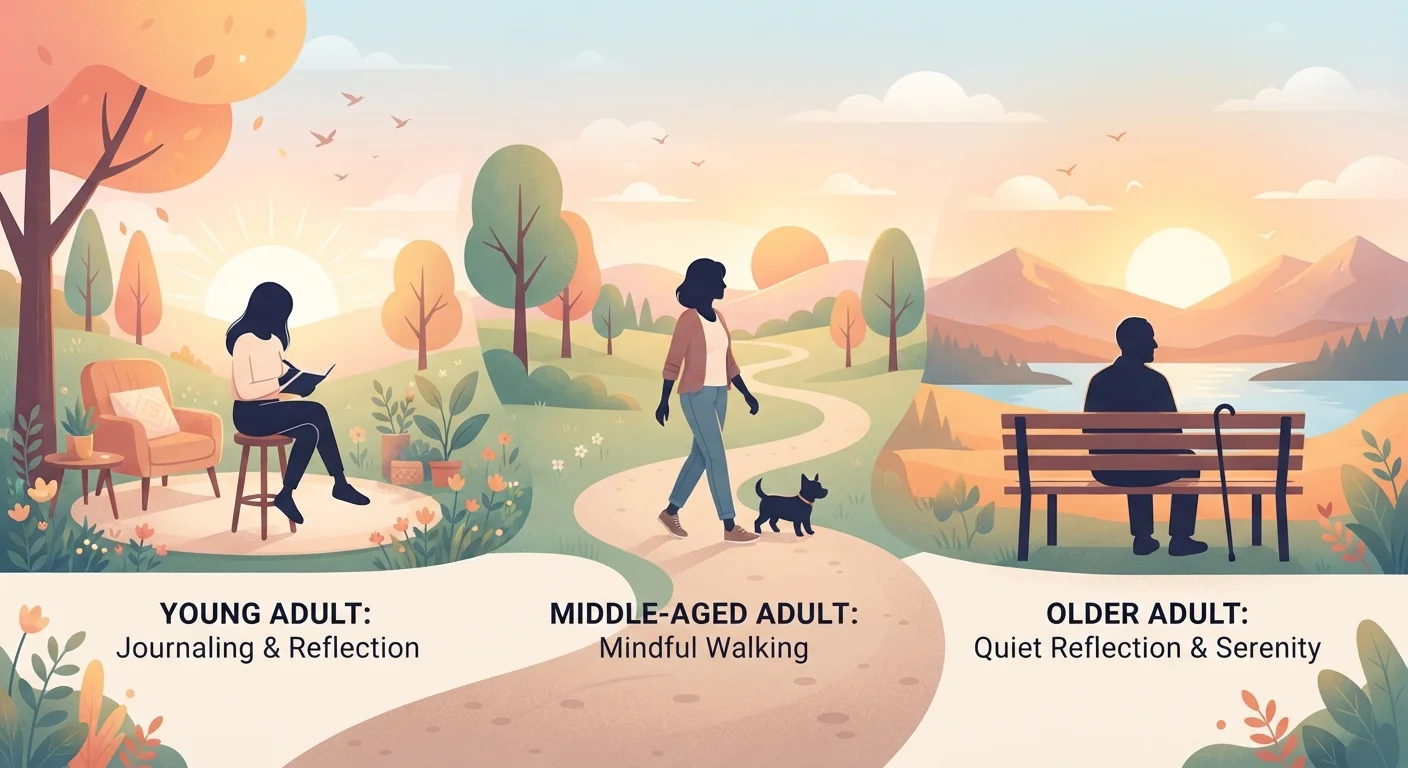
Photo: TargetReads.com | Explore Engaging Reads editorial
Key Takeaways
- Stress sources, sleep patterns, and emotional priorities shift meaningfully at each life stage.
- Young adults face peak rates of anxiety and mood disorders; early intervention matters.
- Midlife brings compounding responsibilities but also greater emotional regulation capacity.
- Older adults often report higher life satisfaction despite facing grief and physical change.
- Sleep, social connection, and purposeful activity support mental wellness at every age.
- Consulting a mental health professional is appropriate - and often beneficial - at any life stage.
Why Mental Wellness Shifts Across a Lifetime
Mental wellness is not a fixed destination. It is a dynamic state shaped by biology, relationships, culture, and the circumstances life delivers - all of which change as we age. Understanding what mental wellness actually means provides a useful starting point, but recognizing how it evolves is equally important.
The brain itself continues developing into a person's mid-twenties and undergoes structural and chemical shifts well into later life. Hormonal changes, shifting social roles, accumulated experience, and exposure to loss or adversity all interact with mental wellness over time. Research consistently shows that the type of psychological challenge tends to change across decades - even when the underlying human need for connection, meaning, and stability remains constant.
50%
Mental disorders beginning by age 14
According to the World Health Organization, half of all mental health conditions are established by age 14, with 75% in place by the mid-twenties.
20%
Older adults with a mental health condition
The CDC estimates approximately 20% of adults aged 55 and older experience some form of mental health concern, with depression and anxiety among the most common.
3x
Loneliness risk increase for depression
Research published in peer-reviewed journals consistently links chronic loneliness with a two- to threefold increased risk of depression across age groups.
Young Adulthood (Ages 18-35): Identity, Stress, and Building Foundations
Young adulthood is often framed as a time of freedom and opportunity - and it can be. But it is also the life stage with the highest prevalence of diagnosable mental health conditions. According to the National Institute of Mental Health, most mental disorders emerge before age 25, making early adulthood a critical window for recognition and support.
Common challenges at this stage include identity formation, financial pressure, relationship uncertainty, academic or career stress, and social comparison amplified by digital media. Sleep is frequently disrupted, which compounds mood instability and cognitive fatigue. The physical effects of stress are often experienced acutely at this stage, when the body's stress-response systems are running hard against high demands.
Treat your sleep schedule as a non-negotiable foundation, not a luxury. In young adulthood, erratic sleep is often the first domino to fall before mood and focus deteriorate.
In midlife, proactively name your stressors in writing rather than simply managing them reactively. Naming creates cognitive distance and reduces the physiological stress response.
Building foundational habits now - consistent sleep schedules, social routines, and regular self-reflection - can pay compounding dividends across the decades that follow.
Midlife (Ages 36-60): Transitions, Pressure, and Emotional Depth
Midlife is often characterized by what researchers call a "squeeze" effect: many adults are simultaneously managing career demands, caregiving for children and aging parents, financial responsibilities, and their own evolving health. This convergence of pressures is real, but so is a significant psychological resource that tends to grow during this period - emotional regulation.
Studies in developmental psychology indicate that adults generally become better at managing difficult emotions and tolerating ambiguity as they move through midlife. This doesn't mean midlife is stress-free; it means the tools for coping often deepen. Major transitions - divorce, job loss, relocation, the death of a parent - are common during this span and can destabilize even well-functioning adults. Sustainable daily habits become especially important when life circumstances are in flux.
Don't Dismiss Midlife Mental Health Symptoms
Midlife is also when chronic physical conditions begin to intersect more visibly with mental wellness, with pain, fatigue, and hormonal shifts influencing mood and cognition in ways that deserve attention rather than dismissal.
Older Adulthood (60+): Loss, Meaning, and Resilience
One of the more counterintuitive findings in mental wellness research is that older adults often report higher levels of emotional well-being and life satisfaction than younger cohorts - even while facing significant losses. This phenomenon, sometimes called the "positivity effect," is thought to reflect a shift in how people prioritize time and relationships as they age.
That said, older adulthood does carry specific mental wellness risks. Social isolation, bereavement, cognitive changes, retirement-related loss of identity, and the adjustment to physical limitations can all contribute to depression and anxiety. The CDC notes that depression among older adults is frequently underdiagnosed, in part because symptoms may overlap with physical illness or be mistakenly accepted as an inevitable part of aging - which they are not.
“Depression in older adults is not an inevitable part of aging. It is a medical condition that responds to treatment, and recognizing it is the first step toward recovery.”
— Centers for Disease Control and Prevention, U.S. federal public health agency
Purposeful engagement - through volunteering, creative work, mentorship, or community connection - is consistently associated with better mental wellness outcomes in this age group. Regular self-check-ins can help older adults notice mood or energy shifts before they deepen.
What Stays Constant: The Core Pillars of Mental Wellness
Across every decade of life, several foundations of mental wellness remain remarkably consistent in the evidence base:
- Sleep: Restorative sleep supports emotional regulation, memory consolidation, and stress resilience at every age, even as sleep architecture and timing naturally shift over time.
- Social connection: Loneliness is associated with poor mental and physical health outcomes regardless of age. Quality of relationships matters more than quantity.
- Physical movement: Regular movement - even moderate walking - is associated with reduced symptoms of depression and anxiety across the lifespan. See our coverage of physical health habits for more context.
- Sense of meaning or purpose: Having goals and values that feel personally significant supports psychological stability at any age.
- Self-awareness: The ability to notice and name emotional states is foundational. Tools like reflective journaling can support this skill throughout life.
Revisit Your Wellness Approach at Major Transitions
Adapting Your Approach as You Age
The specific expression of these pillars will change. A college student and a retiree may both benefit from social connection - but the form that connection takes, and the barriers to achieving it, differ substantially. Effective mental wellness support means revisiting your approach at each major life transition rather than applying a static formula.
If you are navigating a significant life change - a move, a loss, a major health diagnosis - it is worth using a structured framework like a mental wellness vocabulary to better communicate what you are experiencing to healthcare providers or trusted people in your life.
Professional support is appropriate at any age and any stage. A licensed mental health professional can help calibrate strategies to your current circumstances in ways that general guidance cannot. If you are uncertain where to start, your primary care provider is a reasonable first contact.
This article is for general informational and educational purposes only. It is not a substitute for professional mental health or medical advice, diagnosis, or treatment. Always consult a qualified healthcare professional with questions about your mental or physical health.
The content on this site is for informational purposes only and is not a substitute for professional advice. Always consult a qualified professional for guidance specific to your situation.