
All-Season vs. Winter Tires: When the Difference Actually Matters

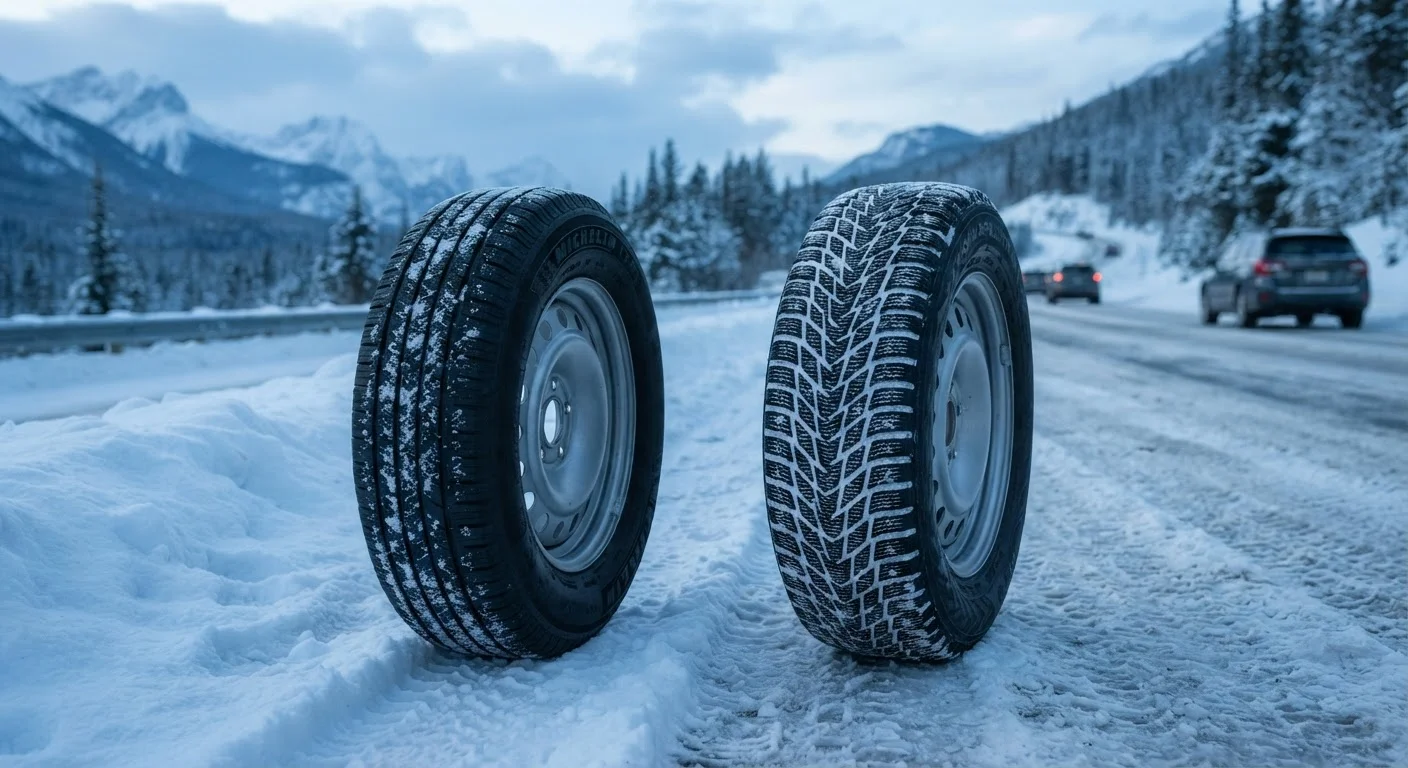
Photo: TargetReads.com | Explore Engaging Reads editorial
Key Takeaways
- All-season tires lose grip in cold temperatures because their rubber compound stiffens below roughly 45°F.
- Winter tires use a softer rubber compound and more aggressive tread to stay flexible and grip snow and ice.
- The performance gap between the two tire types is largest in true winter conditions, not just light snowfall.
- Switching to winter tires also extends the life of your all-season set by reducing wear during cold months.
- Drivers in mild climates may never need winter tires; those in northern states with harsh winters often benefit significantly.
What Actually Separates These Two Tire Types
The distinction between all-season and winter tires isn't primarily about tread pattern — it starts with the rubber compound itself. All-season tires are engineered to perform across a wide temperature range, but their compound begins to stiffen noticeably as temperatures drop below approximately 45°F. That stiffness reduces the tire's ability to conform to road surfaces, which directly reduces traction.
Winter tires (sometimes labeled "snow tires") use a softer, silica-rich rubber formulation that stays pliable in cold temperatures. This flexibility lets the tire maintain contact with icy or compacted snow surfaces rather than skimming over them. Combined with deeper tread blocks and small cuts in the tread face called sipes — tiny slits that create additional biting edges — winter tires are engineered specifically for conditions where all-seasons begin to compromise.
It's worth noting that the three-peak mountain snowflake symbol (3PMSF) on a tire sidewalk indicates it has met a minimum performance standard for snow traction. Not all all-season tires carry this rating, and those that do still don't match the cold-temperature grip of a dedicated winter tire.
| Criterion | All-Season Tires | Winter Tires |
|---|---|---|
| Rubber compound | Hardens noticeably below ~45°F | Stays flexible in cold temperatures |
| Tread design | Moderate, balanced tread pattern | Deep blocks with extensive siping |
| Snow & ice traction | Adequate in light conditions | Significantly better grip |
| Braking distance (snow) | Longer stopping distances | Measurably shorter stopping distances |
| Warm-weather performance | Well-suited for all temperatures | Wears faster in warm conditions |
| Annual cost | Single set, no seasonal swap | Higher upfront cost; may extend all-season life |
| Best climate fit | Mild to moderate winters | Cold climates with sustained snow or ice |
Where the Performance Gap Shows Up Most
The real-world difference between these tire types becomes clearest in braking distance tests conducted on snow and ice. Studies by automotive safety organizations have consistently found that vehicles equipped with winter tires stop significantly shorter on snow than the same vehicles on all-season tires — sometimes by 25 to 30 feet from 25 mph, which at low speeds is an enormous margin.
That gap matters most in three scenarios: stopping quickly to avoid a hazard, navigating intersections after a snowfall, and maintaining steering control on packed ice. On a dry summer road, a quality all-season tire performs comparably to a winter tire — so if you only ever face mild winters, the trade-off may not apply to you.
~25–30 ft
Extra stopping distance on snow for all-seasons vs. winter tires
Automotive safety testing has repeatedly shown all-season tires require significantly more distance to stop on snow from 25 mph compared to winter tires.
45°F
Temperature threshold where all-season grip begins to decline
Tire engineers and automotive experts commonly cite 45°F as the point where all-season rubber begins stiffening and reducing road contact.
~1 PSI
Pressure lost per 10°F temperature drop
Cold air contracts, causing tires to lose roughly 1 PSI for every 10-degree Fahrenheit decrease in ambient temperature, affecting handling and fuel efficiency.
Temperature alone — even without visible snow — can affect how your tires behave. A cold, dry road at 30°F presents less grip for a stiffened all-season compound than it would at 60°F. If you're in a state like Minnesota, Michigan, or upstate New York where cold temperatures persist for months, this matters throughout winter, not just during storms.
For more context on how tire maintenance connects to overall vehicle health, see our guide on long-term car maintenance habits — seasonal tire practices fit naturally into that broader approach.
Practical Considerations Before You Switch
Winter tires involve upfront cost and logistics. Ideally, you'd mount them on a second set of steel or alloy wheels, which simplifies the twice-yearly swap and avoids repeated dismounting fees. If you go this route, factor in the cost of the second wheel set when calculating the total investment.
Most tire specialists recommend switching to winter tires when daily temperatures consistently fall below 45°F — typically in October or November in northern states — and switching back in March or April. Running winter tires year-round accelerates wear significantly, since the softer compound wears faster in warm temperatures.
Also keep your tire pressure in check throughout winter. Cold air causes tire pressure to drop — roughly 1 PSI for every 10°F drop in temperature. Maintaining correct tire pressure matters for both handling and fuel economy regardless of which tire type you're running, and it's easy to overlook during cold-weather months when you're less inclined to inspect your vehicle outdoors.
If you have all-wheel drive (AWD) or four-wheel drive (4WD), it's worth understanding what those systems actually provide: they help with acceleration and forward momentum but do not improve braking or lateral grip. AWD on all-season tires does not replicate the braking or cornering performance of winter tires in cold conditions.
Making the Right Call for Your Situation
Whether winter tires make sense for you depends heavily on where you live and how you drive. Drivers in the Sun Belt or Pacific Coast regions with mild winters are unlikely to benefit meaningfully from the switch. Drivers in the upper Midwest, New England, or mountain regions with extended cold seasons have real safety reasons to consider it.
A useful rule of thumb: if you routinely see multiple inches of snowfall per season and temperatures below freezing for weeks at a time, winter tires are worth serious consideration. If your "winter" amounts to occasional cold rain and a dusting of snow once or twice a year, a quality all-season tire with an adequate tread depth will likely serve you well.
Whatever you decide, regularly checking your tread depth (the minimum safe threshold is typically 2/32 of an inch, though many mechanics recommend replacing at 4/32 for winter driving) and keeping up with routine tire maintenance will have a bigger impact on safety than tire type alone.
This article is for general informational purposes only. Always consult a qualified automotive professional for advice specific to your vehicle, driving conditions, and safety needs.
The content on this site is for informational purposes only and is not a substitute for professional advice. Always consult a qualified professional for guidance specific to your situation.