
Conventional vs. Synthetic Motor Oil: What Everyday Drivers Need to Know

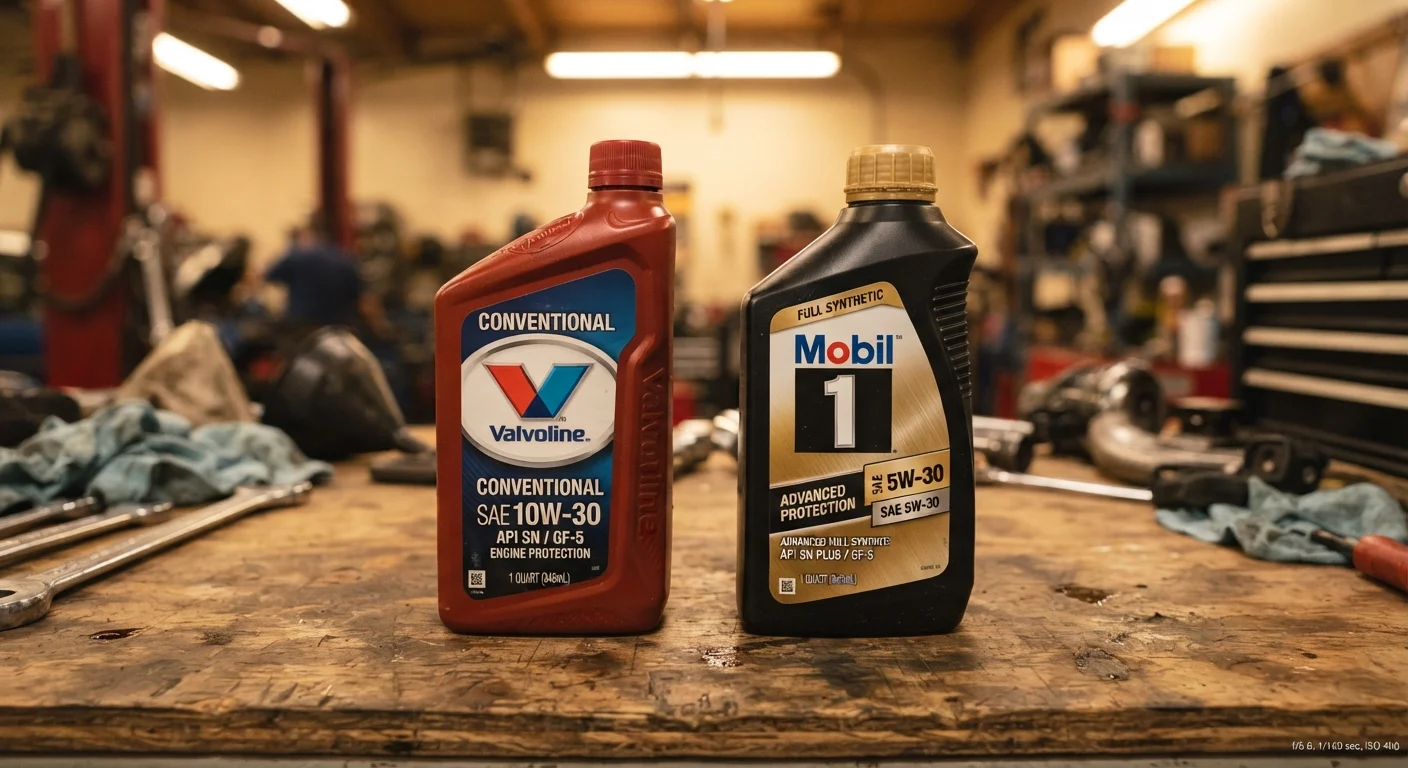
Photo: TargetReads.com | Explore Engaging Reads editorial
Key Takeaways
- Conventional oil is refined from crude oil; synthetic is chemically engineered for more uniform molecular structure.
- Most vehicles built in the last decade are factory-filled with synthetic oil and designed around it.
- Your owner's manual specifies which oil type and viscosity grade your engine requires — follow it.
- Synthetic oil typically costs more per quart but often allows longer intervals between changes.
- Switching from conventional to synthetic in a well-maintained engine is generally safe.
- Neither oil type eliminates the need for regular changes — degraded oil harms engines regardless of origin.
How Each Oil Is Made — and Why It Matters
Conventional motor oil starts as crude oil pumped from the ground. Refiners process it to remove most impurities and blend in additives — detergents, anti-wear agents, viscosity modifiers — that help it do its job. The result works well, but because crude oil is a natural product, its molecular makeup is inherently irregular. Some molecules are larger, some smaller, and they don't all behave the same way under heat and pressure.
Synthetic motor oil, by contrast, is built in a lab. Chemists start with a base stock — often derived from refined crude or natural gas — and engineer it to a precise molecular structure. The uniformity matters: molecules of consistent size and shape flow more predictably, resist breaking down under heat, and perform more reliably across a wider range of temperatures.
This is why synthetic oil is the factory fill for the vast majority of vehicles manufactured today. Tighter engine tolerances, turbochargers, and direct injection systems all generate more heat and demand more consistent lubrication than engines from 30 years ago.
| Criterion | Conventional Oil | Synthetic Oil |
|---|---|---|
| Base stock origin | Refined crude oil | Chemically engineered base stock |
| Molecular consistency | Variable, naturally occurring | Uniform, precisely structured |
| Typical change interval | 3,000–5,000 miles | 7,500–15,000 miles (varies) |
| Cost per quart | Lower | Higher (roughly 2–4×) |
| Cold-weather flow | Adequate for moderate climates | Better flow at low temperatures |
| Heat resistance | Breaks down faster under high heat | More stable under sustained high heat |
| Best engine match | Older, simpler engine designs | Modern, turbocharged, or performance engines |
Cost, Change Intervals, and the Real Math
Synthetic oil typically costs two to four times more per quart than conventional oil. For a five-quart oil change, that difference is real. But cost per change isn't the whole picture.
Conventional oil is generally rated for change intervals of roughly 3,000 to 5,000 miles under normal driving conditions. Synthetic oil — depending on the vehicle, the oil grade, and how the car is driven — can be rated for 7,500 to 10,000 miles or more per change. Some manufacturers specify intervals as long as 15,000 miles for full synthetic under ideal conditions.
~70%
New vehicles factory-filled with synthetic oil
Industry estimates suggest the majority of new passenger vehicles in the US are shipped with full synthetic or synthetic-blend oil from the manufacturer.
3,000 mi
Old conventional change guideline
The 3,000-mile rule originated with older engine technology; many modern vehicles on synthetic oil can go significantly longer between changes per manufacturer specs.
Up to 15,000 mi
Maximum synthetic interval (some vehicles)
Some manufacturers specify extended change intervals for full synthetic under normal driving conditions — always verify against your specific owner's manual.
When you account for fewer changes per year, the cost gap narrows considerably. That said, interval guidance varies by vehicle, climate, and driving pattern. Short trips, frequent stop-and-go driving, or towing shorten the effective life of any oil. See our guide to oil change intervals for a closer look at what actually drives those numbers.
The single most reliable reference is your owner's manual. It specifies both the oil type (conventional, synthetic, or synthetic blend) and the viscosity grade (such as 5W-30 or 0W-20). Those aren't suggestions — they reflect what the engine was designed around. Our guide to reading your owner's manual explains which sections to focus on and what you'll find there.
Switching Oils and Common Questions
A common concern: can you switch from conventional to synthetic in an older vehicle? In most cases, yes. The persistent myth that synthetic oil causes leaks in high-mileage engines dates to early synthetic formulations that contained esters, which could swell certain seals. Modern synthetics are largely compatible with the seals used in well-maintained engines. If an engine is already leaking, oil type isn't the underlying cause.
Blended oils — sometimes called synthetic blends or part-synthetic — occupy a middle ground. They mix conventional base stock with some synthetic base stock to offer improved performance over straight conventional at a lower price than full synthetic. Some drivers use them as a practical compromise, though your manual's specification still takes precedence.
Oil type doesn't eliminate the need for maintenance. Degraded oil — regardless of whether it started as conventional or synthetic — loses its protective additives, accumulates combustion byproducts, and thickens. An engine running on neglected oil is at risk for accelerated wear. Staying current on changes is as important as choosing the right oil. For the broader picture on keeping a vehicle running well long-term, see our overview of long-haul car maintenance.
When Your Manual Says 'Synthetic Required'
This article provides general vehicle maintenance information for educational purposes only. Always consult your vehicle's owner's manual and a qualified mechanic for guidance specific to your car and driving conditions.
The content on this site is for informational purposes only and is not a substitute for professional advice. Always consult a qualified professional for guidance specific to your situation.