
The Types of Health Insurance Plans in the U.S.: HMO, PPO, EPO, POS Explained

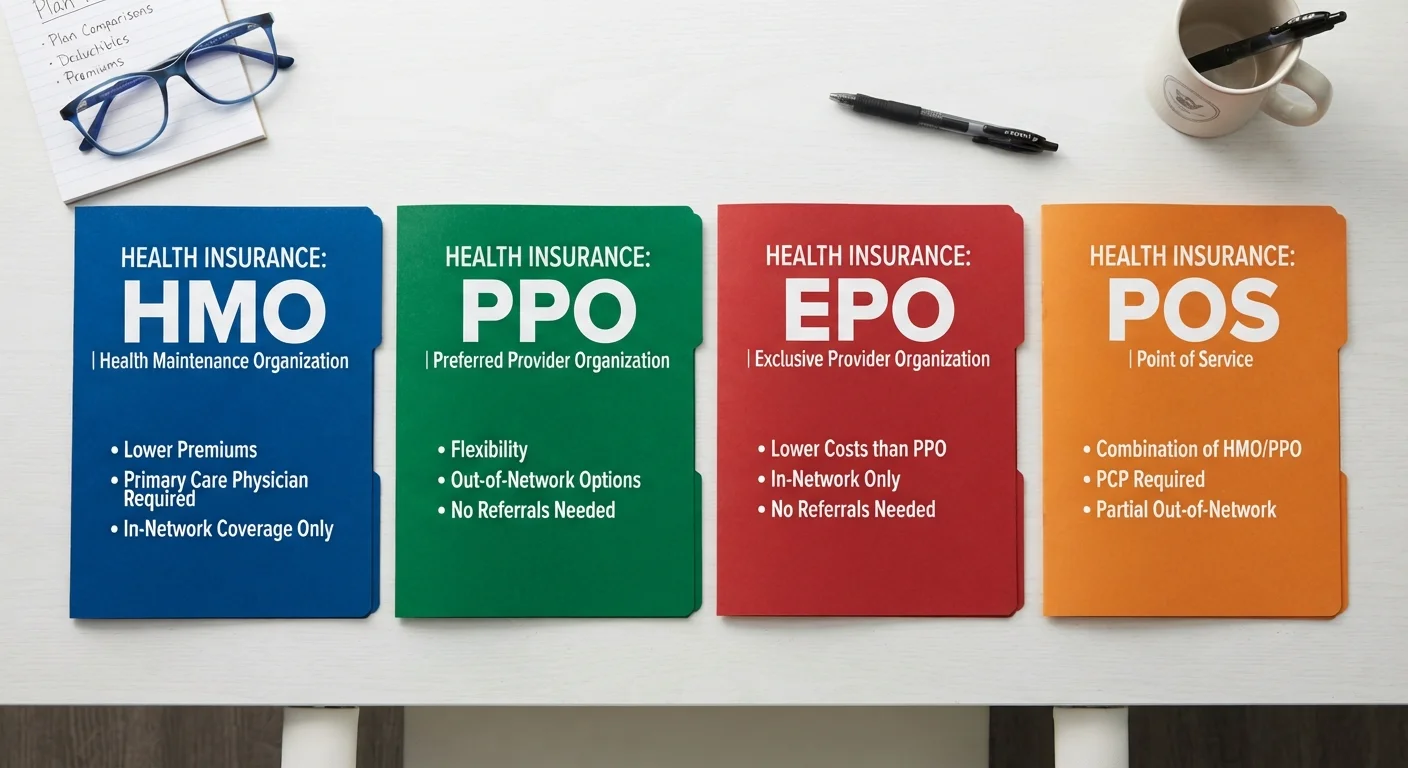
Photo: TargetReads.com | Explore Engaging Reads editorial
Key Takeaways
- HMOs require a primary care physician and referrals but typically carry the lowest premiums.
- PPOs offer the widest provider flexibility but usually come with higher monthly costs.
- EPOs combine network restrictions with no referral requirement — a middle-ground option.
- POS plans blend HMO and PPO features, requiring referrals but allowing some out-of-network care.
- No single plan type is best for everyone — the right choice depends on your health needs and budget.
Why Plan Type Matters Before You Compare Premiums
Most Americans shopping for health coverage focus first on the monthly premium — the amount you pay to keep the plan active. But the plan type shapes your experience far more deeply: it determines which doctors you can see, whether you need a referral to visit a specialist, and how much you'll owe if you go outside the plan's approved network.
The four structures you'll encounter most often are the HMO (Health Maintenance Organization), PPO (Preferred Provider Organization), EPO (Exclusive Provider Organization), and POS (Point of Service) plan. Before diving into each, it helps to know two concepts they all share: the provider network (the set of doctors and hospitals that have contracted with your insurer) and cost-sharing (your out-of-pocket share of each covered service). For plain-language definitions of those terms, see Health Insurance Terminology Every American Should Know.
This article is general educational information and is not personalized insurance or medical advice. Coverage details, costs, and network rules vary by insurer, employer, and state. Always review your actual policy documents and consult a licensed insurance professional before enrolling.
The Four Plan Types at a Glance
The comparison below captures the structural differences that matter most when choosing between plan types. Actual premiums, deductibles, and network sizes vary widely by insurer and region — use this as a framework, not a cost guarantee.
| HMO | PPO | EPO | POS | |
|---|---|---|---|---|
| Requires Primary Care Physician | Yes | No | No | Yes |
| Specialist Referral Required | Yes | No | No | Yes |
| Out-of-Network Coverage | Emergency only | Yes, at higher cost | Emergency only | Yes, at higher cost |
| Typical Premium Level | Lowest | Highest | Moderate | Moderate |
| Care Coordination | Through PCP | Self-directed | Self-directed | Through PCP |
| Best For | Cost-focused, local care | Flexibility seekers | Direct specialist access | Flexible + coordinated care |
For a deeper look at how these plan types interact with the claims payment process, see How Health Insurance Actually Works.
HMO: Coordinated Care, Lower Premiums
An HMO requires you to choose a primary care physician (PCP) — a generalist doctor who manages your overall care and issues referrals when you need to see a specialist. All care must occur within the plan's network except in documented emergencies.
Because insurers can more tightly manage utilization within this structure, HMOs tend to carry lower premiums and predictable copays. The trade-off is less flexibility: if you visit an out-of-network provider without a qualifying emergency, the plan generally pays nothing, leaving you responsible for the full bill.
Check Your Doctors Before You Enroll
HMOs work best for people who have a trusted primary care doctor, live in an area with a robust network, and prefer simplicity in billing over broad provider choice.
PPO: Maximum Flexibility, Higher Cost
A PPO lets you see any licensed provider — in-network or out-of-network — without a referral. In-network visits cost less because those providers have negotiated rates with your insurer; out-of-network visits are covered at a lower reimbursement level, and you pay the difference.
This flexibility makes PPOs popular with people who see multiple specialists, travel frequently, or live in rural areas where a large network may not exist. However, premiums are typically higher than an HMO offering comparable benefits, and the cost-sharing structure can be more complex. For a focused comparison of just these two structures, see HMO vs. PPO: Understanding the Trade-Offs.
EPO and POS: The Middle-Ground Options
An EPO restricts you to its network — like an HMO — but does not require a PCP or referrals to see specialists. You get the administrative simplicity of direct specialist access without the higher premium of a PPO, but you lose all out-of-network coverage outside emergencies.
A POS plan blends elements of both. It requires a PCP and referrals (like an HMO) but allows out-of-network care at a higher cost-sharing level (like a PPO). This makes it more flexible than an HMO but typically more affordable than a full PPO.
Both plan types are commonly offered through employer-sponsored coverage. If you're choosing between a workplace plan and an ACA Marketplace option, the structural differences go beyond plan type — see Employer-Sponsored vs. Marketplace Plans for more context.
Out-of-Network Bills Can Be Substantial
If you're enrolling for the first time and unsure which structure fits your situation, Your First Health Insurance Plan walks through the key decisions step by step.
The content on this site is for informational purposes only and is not a substitute for professional advice. Always consult a qualified professional for guidance specific to your situation.