
What 'In-Network' and 'Out-of-Network' Really Mean for Your Bills

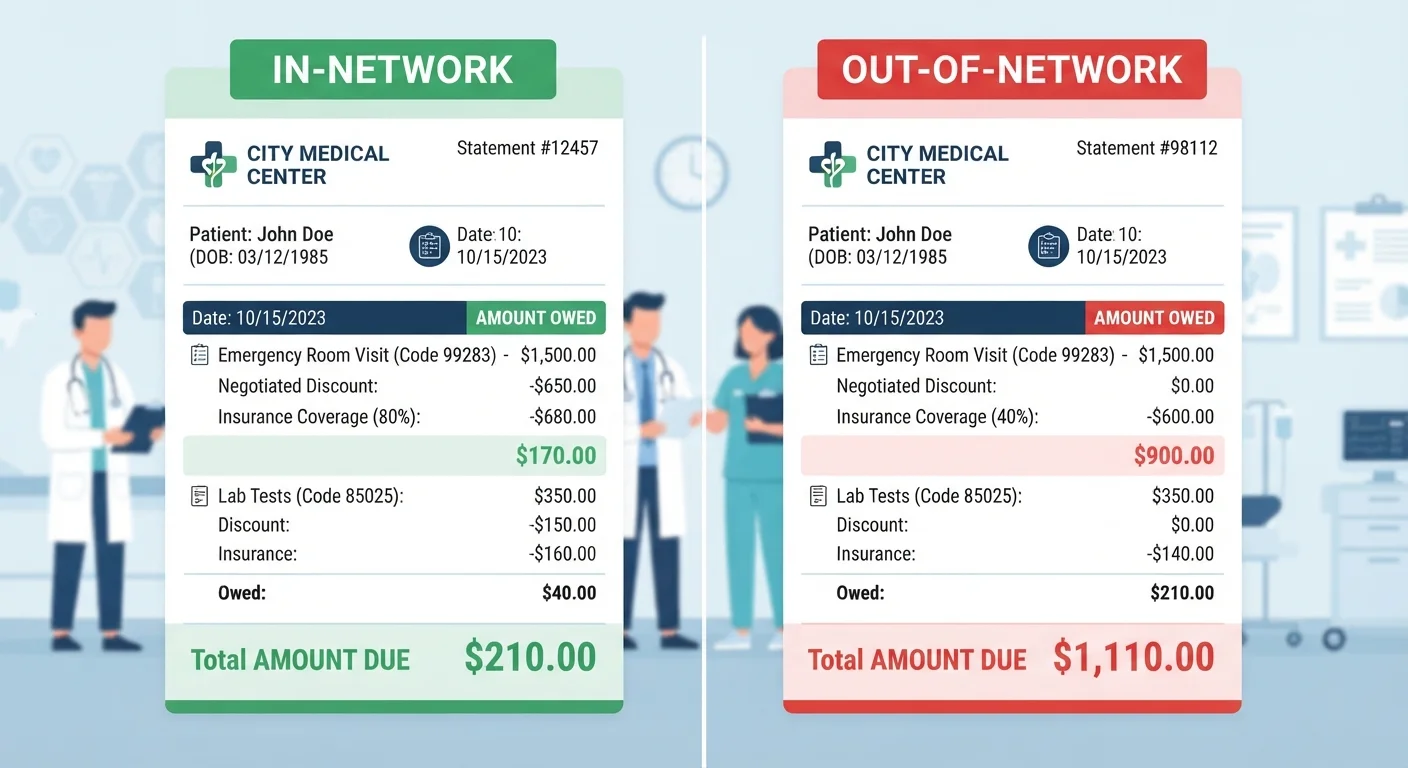
Photo: TargetReads.com | Explore Engaging Reads editorial
Key Takeaways
- In-network providers have agreed to negotiated rates with your insurer, which lowers your out-of-pocket costs.
- Out-of-network care typically triggers higher cost-sharing and may not count toward your in-network deductible.
- Some plan types, like HMOs, provide no out-of-network coverage at all except in emergencies.
- Balance billing — being charged the gap between a provider's rate and your insurer's allowed amount — can occur with out-of-network care.
- Always verify a provider's network status directly with your insurer before a scheduled appointment.
How Provider Networks Are Built
Health insurance networks are not random groupings. An insurer negotiates contracts with specific hospitals, physician groups, labs, and specialists. In exchange for being listed as a preferred provider, those healthcare providers agree to accept a set rate — called the allowed amount or negotiated rate — for covered services.
This arrangement benefits both sides. Providers get a steady stream of patients. Insurers can manage costs and predict what claims will cost. And members get access to care at pre-agreed, lower prices.
What counts as "in-network" is determined entirely by your specific plan — not your insurer as a whole. A large hospital system might be in-network for a PPO plan but out-of-network for an HMO offered by the same insurance company. This is why verifying network status at the plan level matters.
Network Status Can Change Mid-Year
What Changes When You Go Out of Network
When you see a provider who has no contract with your insurer, the cost-sharing math shifts — often dramatically. Here is what typically changes:
- Higher cost-sharing percentages: Your coinsurance rate for out-of-network care is almost always higher. A plan might cover 80% of in-network services but only 60% of out-of-network services — and that's assuming the plan covers out-of-network care at all.
- Separate deductibles: Many plans maintain distinct in-network and out-of-network deductibles. Paying down one does not accelerate the other.
- Balance billing exposure: Out-of-network providers are not obligated to accept your insurer's allowed amount. They may bill you for the remaining balance — a charge your insurer will not cover.
- Out-of-pocket maximum differences: Some plans exclude out-of-network spending from the in-network out-of-pocket maximum. You could hit your in-network cap and still owe unlimited amounts for out-of-network care. See how this limit works in our article on how the out-of-pocket maximum protects you.
1 in 5
Insured adults receiving a surprise medical bill
A Kaiser Family Foundation survey found approximately one in five insured adults reported receiving an unexpected medical bill from an out-of-network provider in the prior two years.
~40%
Higher average cost-sharing for out-of-network care
Health plan designs commonly set out-of-network coinsurance rates 20–40 percentage points higher than in-network rates, according to insurance plan structure analyses by the Kaiser Family Foundation.
How Plan Type Determines Your Network Flexibility
Not all insurance plans treat out-of-network care the same way. Your plan's structure sets the rules for what is and is not covered beyond the network.
HMO (Health Maintenance Organization): No out-of-network coverage except in life-threatening emergencies. You must use in-network providers and, in most cases, get a referral from a primary care physician before seeing a specialist.
PPO (Preferred Provider Organization): Covers both in-network and out-of-network providers, but at different rates. You pay less in-network, more out-of-network. No referrals required.
EPO (Exclusive Provider Organization): Like an HMO for network rules — no out-of-network coverage outside emergencies — but typically no referral requirement for specialists.
POS (Point of Service): A hybrid. Requires a primary care physician referral like an HMO but allows some out-of-network access like a PPO, usually at a higher cost.
Understanding your plan type is foundational. Our article on HMO vs. PPO trade-offs walks through these structures in depth.
“Patients often assume that going to an in-network hospital means all their care is in-network. That's one of the most common and costly misunderstandings in how health insurance actually works.”
— Health Policy Research Team, Health insurance consumer education researchers
Real Costs and How to Protect Yourself
Knowing how networks work lets you make smarter decisions before care happens — not after the bill arrives.
Verify Before Every Appointment
Before any scheduled appointment: Call your insurer's member services line with the provider's name, specialty, and NPI (National Provider Identifier) number. Ask explicitly whether that provider is in-network under your specific plan. Document the date, time, and representative's name.
At in-network facilities: Even within an in-network hospital, individual physicians — such as anesthesiologists, radiologists, or hospitalists — may be out-of-network. Ask the facility whether all treating providers participate in your network.
If you receive a surprise bill: Federal protections under the No Surprises Act (effective 2022) limit balance billing for emergency services and certain situations involving out-of-network providers at in-network facilities. If you believe a bill violates these protections, you have the right to dispute it. Review your Explanation of Benefits carefully for each claim.
Understanding the full picture of what you owe — including how deductibles, copays, and coinsurance interact with network status — is covered in our guide to deductible, copay, and coinsurance differences. You may also find value in reviewing billing gaps that catch people off guard to understand where coverage quietly falls short.
This article is for general informational and educational purposes only. It does not constitute personalized insurance, financial, or legal advice. Coverage terms, network rules, and regulations vary by plan and state. Always review your plan documents and consult a licensed insurance professional for guidance specific to your situation.
Frequently Asked Questions
The content on this site is for informational purposes only and is not a substitute for professional advice. Always consult a qualified professional for guidance specific to your situation.