
Envelope Budgeting in the Digital Age

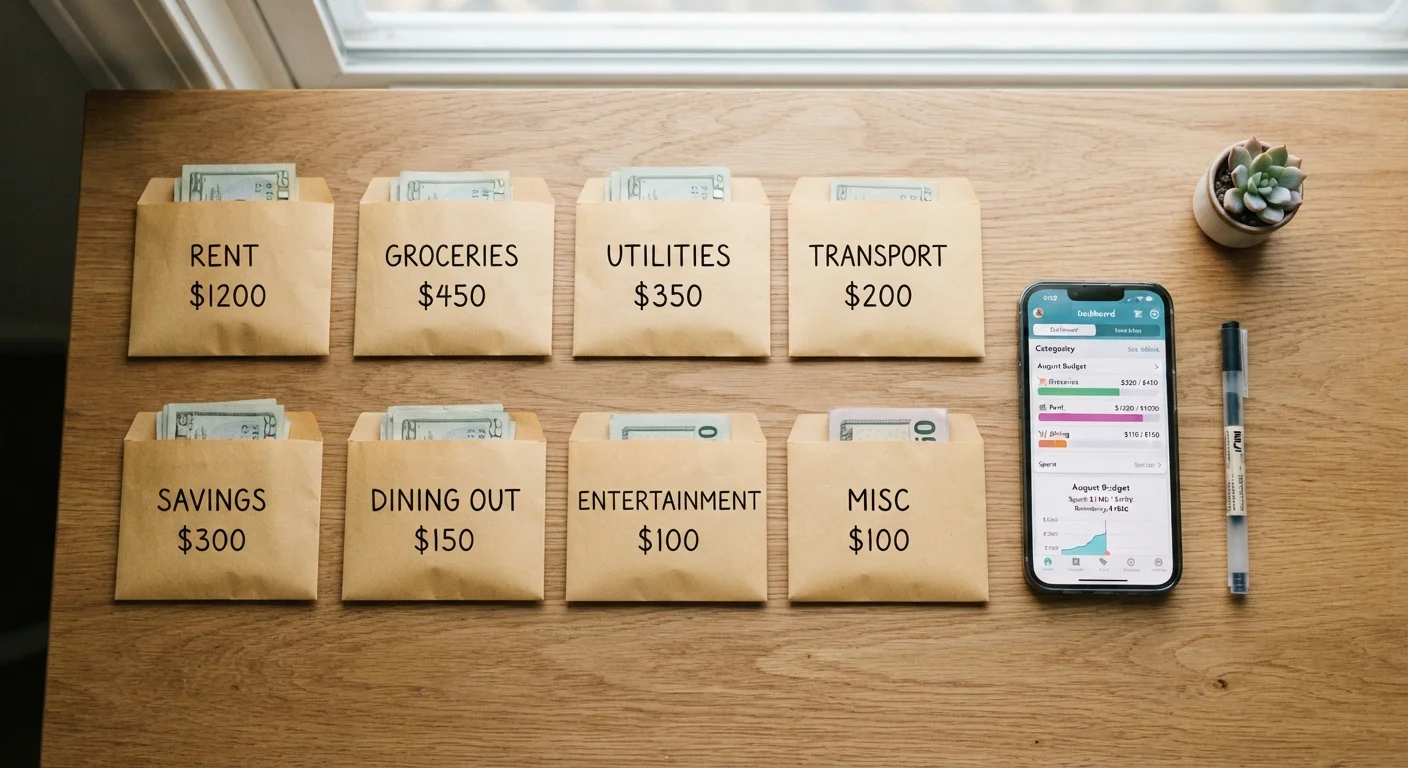
Photo: TargetReads.com | Explore Engaging Reads editorial
Key Takeaways
- Envelope budgeting forces you to allocate every dollar to a category before you spend it.
- The physical act of using cash creates a psychological spending limit that card payments often bypass.
- Digital adaptations preserve the core logic without requiring cash withdrawals.
- The method works best for variable spending categories like groceries, dining, and entertainment.
- Combining envelope principles with modern tools can make the system more practical for everyday life.
Where the Idea Comes From
Long before budgeting apps, American households managed spending by literally placing cash into labeled envelopes at the start of each month. When the grocery envelope was empty, grocery shopping paused. The system required no software, no bank integration, and no financial background — just a willingness to follow a simple physical rule.
The method gained wide recognition in personal finance communities during the late 20th century and remains a foundational approach recommended by financial educators. Its durability comes from one insight: separating money into distinct buckets before you spend it removes the ambiguity that leads most budgets to fail. If you're starting from scratch with budgeting, our step-by-step guide to building your first monthly budget covers the groundwork this system builds on.
~33%
Americans with a detailed household budget
Gallup polling has consistently found that fewer than one in three U.S. adults maintains a detailed monthly budget, suggesting most households lack a structured spending plan.
20%+
Average overspend in discretionary categories
Consumer finance studies generally find that untracked discretionary spending — dining, entertainment, shopping — tends to run significantly above what people estimate they spend.
Why the Psychology Works
Credit and debit cards obscure spending in a way cash does not. Handing over a $20 bill feels different from a tap-to-pay transaction, and research in behavioral economics consistently finds that people spend more when payment is abstract. Envelope budgeting exploits the opposite effect — the physical depletion of an envelope registers as a real limit in a way a declining bank balance often doesn't.
The method also shifts the moment of decision. Instead of asking "Can I afford this?" at the point of purchase, you ask "How much is in this category?" at the start of the month. That front-loaded decision-making reduces impulsive trade-offs and makes your priorities visible before spending begins.
“A budget is telling your money where to go instead of wondering where it went.”
— John C. Maxwell, Author and leadership educator, widely cited in personal finance contexts
Adapting the System for Digital Life
Few people carry much cash today, and that friction prompted a range of digital adaptations. The core logic transfers cleanly: instead of funding physical envelopes, you assign spending limits to virtual categories in a spreadsheet or app. Every purchase is logged against its category, and you track the remaining balance exactly as you would a dwindling envelope.
Dedicated apps exist specifically to replicate this workflow digitally, though the envelope concept also works in a simple spreadsheet without any subscription. For a balanced look at what budgeting apps offer — and where they fall short — the article on the case for and against budgeting apps lays out the trade-offs clearly.
Some people use a hybrid approach: keeping one or two high-temptation categories in actual cash envelopes (dining out or entertainment, for example) while managing fixed and recurring costs digitally. This selective use of cash preserves the psychological benefit where it matters most without requiring a full cash-only lifestyle.
Start With Just Three Envelopes
Common Pitfalls and How to Avoid Them
The most frequent mistake is creating too many categories. Tracking seventeen envelopes feels like a chore within a week, and abandoned systems produce no results. Most people find that six to ten categories cover the spending that actually varies month-to-month. Start narrow and add categories only when a genuine need appears.
A second common issue is ignoring irregular expenses — car registration, annual subscriptions, medical co-pays. These aren't monthly, so they don't fit neatly into a monthly envelope. The fix is a dedicated "irregular expenses" envelope or sinking fund that receives a small monthly contribution, so the money exists when the bill arrives.
The method also asks for consistency in logging. A purchase made on a card but not recorded against an envelope defeats the purpose entirely. Building a brief weekly review habit — a few minutes to reconcile spending against envelopes — keeps the system honest. The article on habits that separate people who stay on budget explores how that kind of routine discipline makes any budget hold over time.
For those who prefer a broader look at expense tracking options before committing to one approach, methods for tracking where your money goes covers manual, app-based, and hybrid alternatives.
This article is for general informational and educational purposes only and does not constitute personalized financial advice. Consult a qualified financial professional for guidance specific to your situation.
Frequently Asked Questions
The content on this site is for informational purposes only and is not a substitute for professional advice. Always consult a qualified professional for guidance specific to your situation.