
Tracking Where Your Money Goes: Methods That Actually Stick

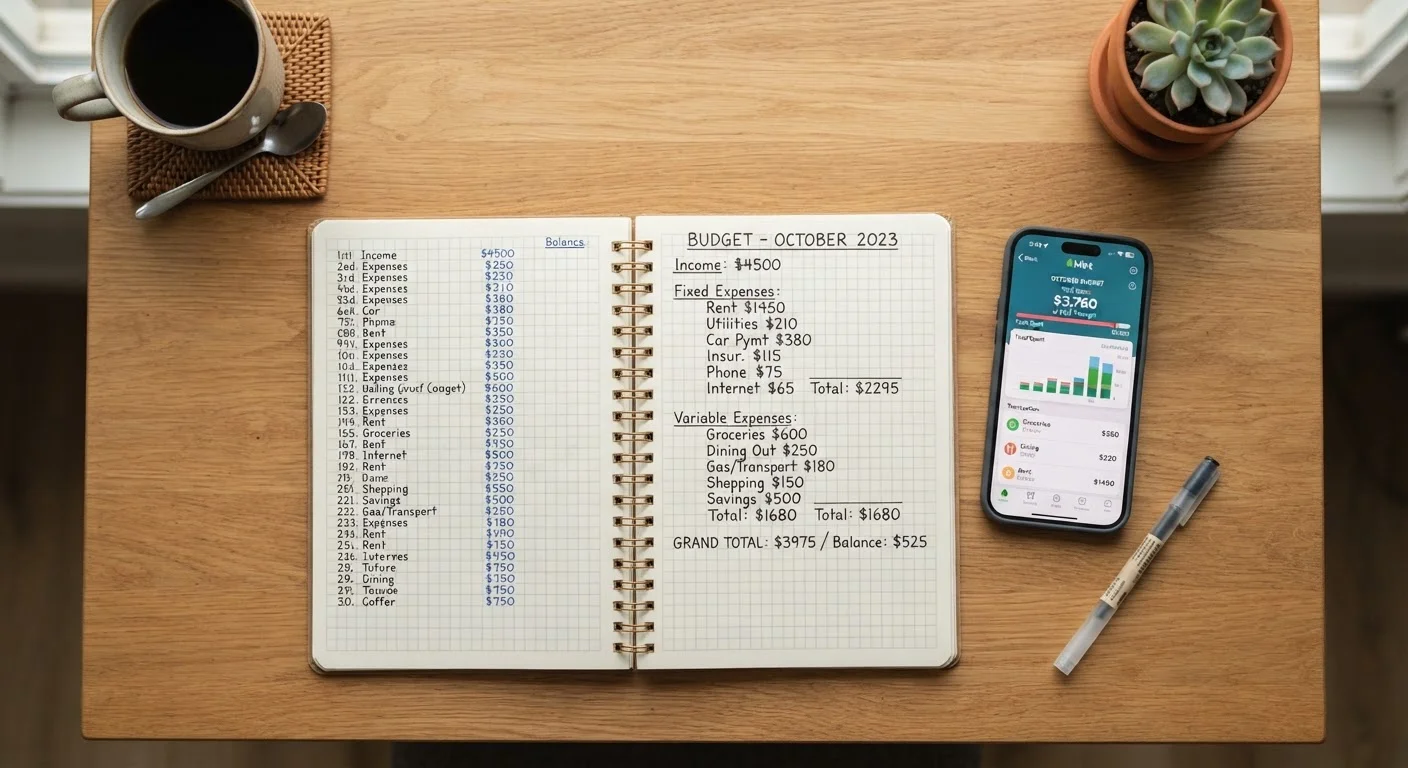
Photo: TargetReads.com | Explore Engaging Reads editorial
Key Takeaways
- No single tracking method works for everyone — the best fit depends on your habits and lifestyle.
- Manual tracking builds awareness but requires consistent time commitment.
- App-based tracking automates data entry but raises privacy and engagement trade-offs.
- Hybrid approaches combine the engagement of apps with the intentionality of manual review.
- Consistency matters more than perfection — any system beats no system.
Why Most Tracking Attempts Fail
Expense tracking has an abandonment problem. People start strong in January, log every coffee for two weeks, then quietly stop. The culprit is usually method mismatch — choosing a system that conflicts with how you actually live rather than one you'll realistically maintain.
Effective tracking isn't about willpower. It's about picking a low-friction system and building a small, repeatable routine around it. As explored in habits that keep budgets on track, successful budgeters tend to rely on reliable systems rather than motivation alone.
The three broad approaches — manual, app-based, and hybrid — each have distinct trade-offs. Understanding them helps you choose the one most likely to survive contact with your real life.
| Manual (Notebook/Spreadsheet) | App-Based | Hybrid | |
|---|---|---|---|
| Data entry effort | High — user logs every item | Low — automatic sync | Medium — review only |
| Spending awareness | Very high — deliberate logging | Moderate — passive collection | High — active review |
| Privacy risk | Minimal — no third parties | Higher — account access required | Moderate — depends on tools used |
| Setup complexity | Low to medium | Low | Low to medium |
| Customization | Fully customizable | Limited by app design | Flexible |
| Long-term stick rate | Variable — habit-dependent | Drops without review habit | Generally higher with scheduled review |
Manual Tracking: Notebooks and Spreadsheets
Manual tracking means recording expenses yourself, either in a notebook or a spreadsheet you build and maintain. The effort is real, but so are the benefits.
What works well
- Friction as a feature: Writing down a purchase forces a moment of awareness that automatic syncing skips entirely. Many people find this deliberate act changes their spending behavior over time.
- No third-party data access: Your financial details stay entirely with you.
- Full customization: You design your categories, your layout, and your review process.
Where it breaks down
- Requires consistent time — typically 5 to 15 minutes daily or after each purchase cluster.
- Easy to fall behind, especially during busy weeks.
- No automatic categorization or trend charts without building them yourself.
Spreadsheet users often find a weekly 10-minute reconciliation more sustainable than daily entry. If you're building from zero, a structured first budget walkthrough can help you set up logical spending categories before you start logging.
Start With One Week of 'Honest' Logging
App-Based Tracking: Automation and Aggregation
Budgeting and expense-tracking apps connect to your bank and card accounts to pull in transactions automatically, categorize them, and surface spending patterns with minimal daily effort.
What works well
- Near-zero data entry: Transactions appear automatically, reducing the chance of forgetting to log something.
- Trend visibility: Most apps display charts and month-over-month comparisons that are cumbersome to build manually.
- Alerts and nudges: Notifications when you approach a spending limit can interrupt habits before they become overruns.
Where it breaks down
- Requires granting read access to financial accounts, which is a meaningful privacy consideration.
- Auto-categorization errors are common — a restaurant charge may appear under travel, requiring manual correction.
- App engagement tends to drop sharply after the first month. For more on this pattern, see why apps collect dust and how to change that.
Apps are also useful for surfacing recurring charges you've forgotten about. Pairing an expense tracker with a periodic subscription audit can reveal significant monthly leakage.
For a balanced assessment of what these tools genuinely deliver, the case for and against budgeting apps covers both sides honestly.
Hybrid Tracking: Combining Intentionality with Automation
A hybrid approach uses an app or bank export to capture raw data, then pairs it with a regular manual review — weekly or monthly — where you assess the numbers and make decisions. This separates data collection (where automation excels) from reflection (where human judgment is irreplaceable).
How it typically works
- Link accounts to an app or download a monthly bank statement.
- Set a recurring 20-minute review — Sunday evening works for many people.
- Check actual spending against your intended categories and note any surprises.
- Adjust the following week's behavior based on what you find.
This model tolerates imperfection better than either pure approach. If you miss a week of manual logging, the app data still exists. If the app categorizes something wrong, your review catches it.
Tracking Isn't the Same as Budgeting
The envelope method is a related concept that many people layer on top of a hybrid system — allocating specific dollar amounts to categories before the month begins. Envelope budgeting in the digital age explains how this older framework adapts to modern money management.
Choosing the Right Method for Your Life
The method you'll actually use consistently is the correct one — even if it's imperfect by someone else's standard. Consider these factors when deciding:
- How do you prefer to interact with information? If you're already comfortable in spreadsheets, manual tracking has low start-up friction. If you avoid them, don't force it.
- How much time can you realistically commit? Manual tracking requires more active time; apps demand less daily effort but still need periodic review to be useful.
- What's your relationship with financial data? Some people find detailed numbers motivating; others find them anxiety-inducing. A system that creates stress is unlikely to survive long-term.
- Are you comfortable sharing account access? App-based systems require account linking. If that raises concern, manual or hybrid methods using bank-exported statements offer more control.
Whatever method you choose, connect it to a broader financial picture. Tracking alone doesn't build savings or eliminate debt — it creates the awareness that makes those goals achievable. Resources on saving and managing debt can help you put that awareness to work.
This article is for general informational and educational purposes only and does not constitute personalized financial advice. Consult a qualified financial professional for guidance specific to your situation.
The content on this site is for informational purposes only and is not a substitute for professional advice. Always consult a qualified professional for guidance specific to your situation.