
High-Interest Debt vs. Low-Interest Debt: Should You Treat Them the Same?

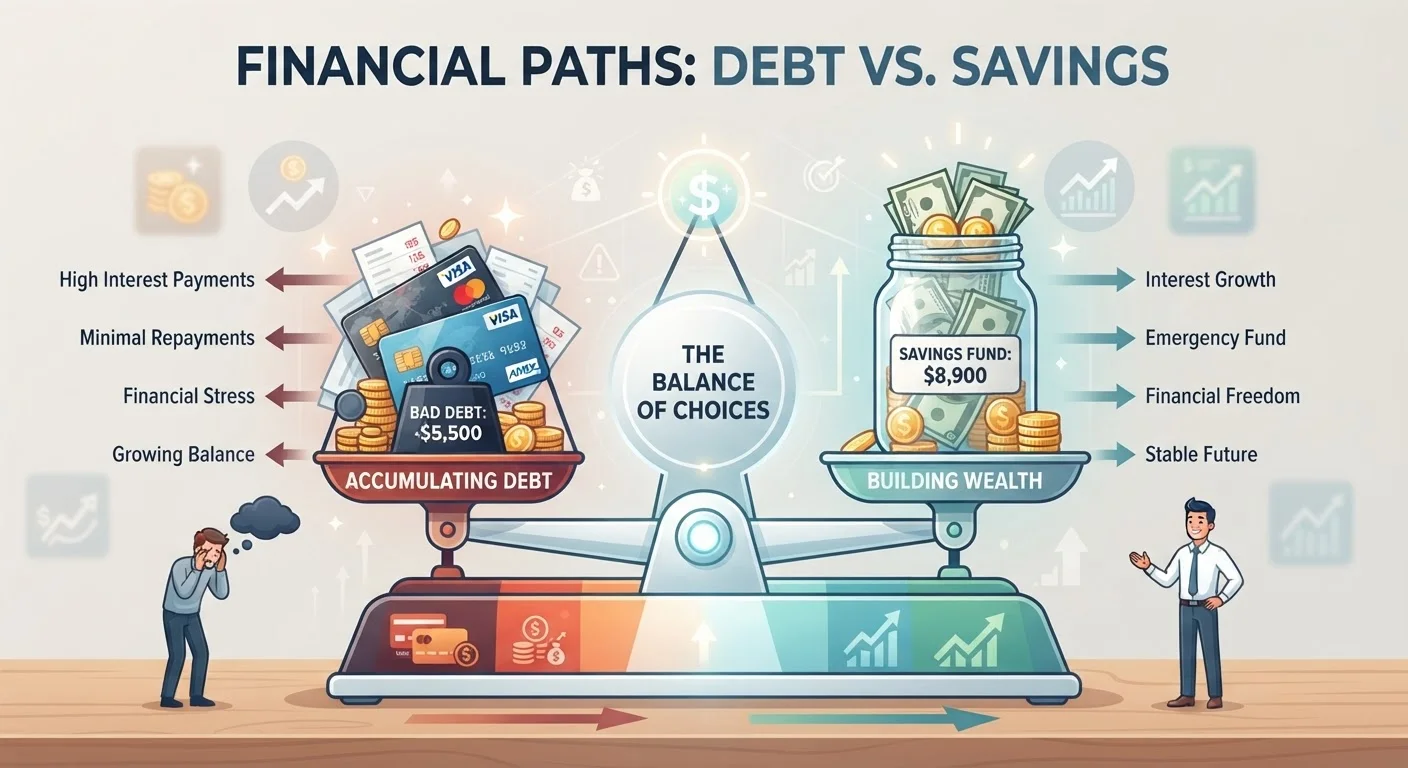
Photo: TargetReads.com | Explore Engaging Reads editorial
Key Takeaways
- High-interest debt typically costs more over time than low-interest debt and warrants faster repayment.
- Low-interest debt may not need to be aggressively paid down if you can earn more by saving or investing.
- An emergency fund remains important even while carrying low-interest debt.
- The break-even point between paying off debt and saving depends on comparing interest rates directly.
- A hybrid approach — tackling high-interest debt while maintaining modest savings — often works best for most households.
Why Interest Rate Is the Deciding Factor
Not all debt creates the same financial pressure. The single most important variable in deciding how urgently to pay off any debt is its annual percentage rate (APR) — the yearly cost of carrying that balance. A $10,000 balance at 22% APR costs dramatically more over time than the same balance at 5% APR, even though the dollar amount owed is identical.
Think of it this way: every dollar you put toward a high-interest balance earns a guaranteed, risk-free return equal to that interest rate. Paying off a credit card charging 22% is functionally equivalent to earning 22% on that money — something virtually no savings account or low-risk investment can match. By contrast, a 4% mortgage rate may be lower than what a diversified savings vehicle might reasonably return, which changes the calculus entirely.
The compounding nature of revolving credit card debt means even modest balances can grow significantly over time if only minimum payments are made. Understanding this distinction is the foundation for smarter repayment decisions.
High-Interest Debt: When Speed Pays Off
High-interest debt — commonly defined as debt carrying an APR above roughly 7–8% — includes most credit cards, many personal loans, and payday loans. The math here is unambiguous: the longer you carry these balances, the more total money leaves your household.
| High-Interest Debt | Low-Interest Debt | |
|---|---|---|
| Typical APR range | 15%–30%+ | 2%–7% |
| Common examples | Credit cards, payday loans | Mortgages, federal student loans, auto loans |
| Repayment urgency | High — costs compound quickly | Moderate — manageable over time |
| Opportunity cost of early payoff | Low — hard to beat 20%+ guaranteed return | Higher — savings/investments may outpace rate |
| Impact on cash flow | Significant drag until eliminated | Predictable, often manageable monthly payment |
| Recommended savings priority | Small emergency fund only, until cleared | Emergency fund + long-term savings simultaneously |
For this category, financial educators generally recommend prioritizing repayment above most other savings goals, with one important exception: a modest emergency fund. Without a cash cushion, an unexpected expense forces you back into the high-interest debt cycle, erasing your progress. A common starting target is $1,000 to cover minor emergencies before channeling remaining income toward debt payoff.
Several persistent debt myths — like the idea that carrying a balance helps your credit score — can lead people to delay repayment unnecessarily. In reality, paying balances in full or aggressively reducing them typically benefits both your finances and your credit profile.
Minimum Payments Alone Are Costly
Low-Interest Debt: A Different Set of Trade-Offs
Low-interest debt — mortgages, federal student loans, and some auto loans — often carries rates well below the long-run average returns of diversified savings or investment accounts. This creates a genuine trade-off: should surplus cash go toward extra principal payments, or toward savings and investments that might outpace the loan's interest cost?
There is no single correct answer. Paying down a 3.5% mortgage faster provides a guaranteed 3.5% return and reduces risk. Contributing to a tax-advantaged retirement account may produce higher returns over decades — but those returns are not guaranteed and involve market risk. Your risk tolerance, time horizon, and tax situation all factor in.
What low-interest debt generally does not require is an emergency payoff strategy. Making regular scheduled payments while simultaneously growing an emergency fund and contributing to long-term savings is a defensible approach for many households. Tracking both your savings rate and debt payoff rate simultaneously helps you see whether you're making real forward progress on both fronts.
Building a Strategy That Handles Both
Most people carry a mix of debt types at once, which means a rigid all-or-nothing approach rarely fits real life. A practical framework:
- List all debts with their APRs. Separate anything above ~7–8% from lower-rate obligations.
- Establish a minimum emergency fund. Even a small cash buffer prevents high-interest debt from rebounding.
- Direct extra dollars to high-interest balances first, while maintaining minimum payments on everything else.
- Once high-interest debt is cleared, evaluate whether extra cash is better used paying down low-interest debt faster or directing funds toward savings goals, based on your specific rates.
The math behind splitting income between debt and savings shows that a hybrid approach — rather than an all-debt or all-savings posture — often produces the most durable financial outcomes. If you're considering restructuring multiple debts, understanding what debt consolidation actually changes can help you evaluate whether combining balances makes sense for your situation.
Use the Rate Comparison Test
This article is for general informational purposes only and does not constitute personalized financial or legal advice. Consult a qualified financial professional before making decisions specific to your situation.
The content on this site is for informational purposes only and is not a substitute for professional advice. Always consult a qualified professional for guidance specific to your situation.