
Why Minimum Payments Are Designed the Way They Are

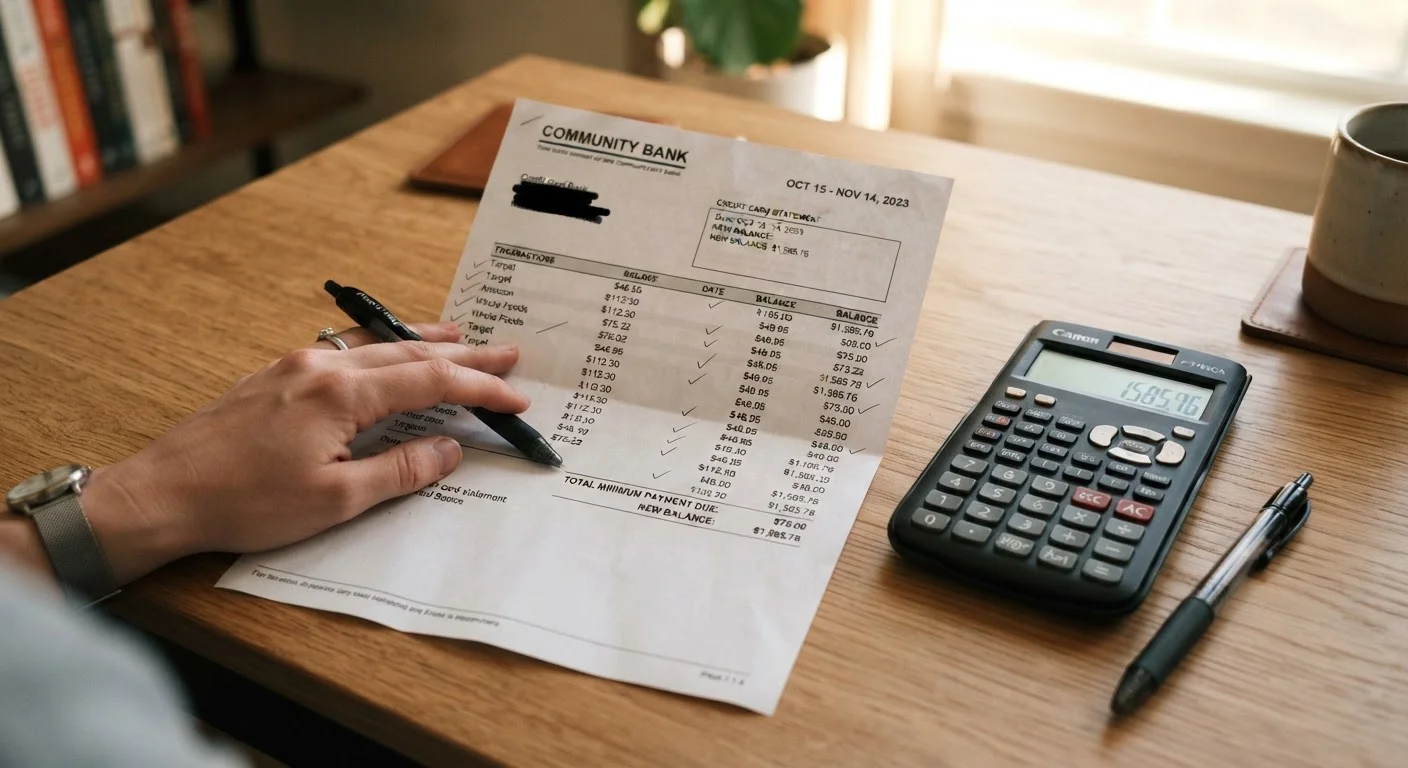
Photo: TargetReads.com | Explore Engaging Reads editorial
Key Takeaways
- Minimum payment formulas are set by issuers, not regulators, and typically equal 1–3% of the outstanding balance or a flat floor (often $25–$35).
- Paying only the minimum on a high-balance card can extend repayment by years and multiply interest costs significantly.
- As your balance falls, so does your minimum payment — slowing payoff even further unless you maintain a consistent payment amount.
- Understanding the formula helps you make deliberate choices about how much above the minimum to pay each month.
- Minimum payments protect cash flow short-term but can conflict with savings goals if treated as a permanent strategy.
The Mechanics Behind the Formula
Credit card issuers design minimum payment formulas to serve a specific business purpose: ensuring the account stays current and interest keeps accruing on the bulk of your balance. The two most common approaches are a percentage-of-balance method and a flat-dollar floor, and most card agreements use whichever result is greater.
A typical percentage-of-balance formula works like this: the issuer takes 1–3% of your current balance, then adds that cycle's interest charges and any applicable fees. On a $4,000 balance at a 22% annual percentage rate (APR), that might produce a minimum of roughly $88–$147 — of which a large share simply covers interest accrued that month, leaving very little to reduce the principal itself.
The flat-floor provision — often $25–$35 — kicks in when your balance is small enough that the percentage would otherwise produce a trivially low figure. It protects the issuer's operational costs more than it benefits you.
Check Your Statement's Minimum Payment Warning
Your exact minimum payment formula is disclosed in your cardholder agreement. Issuers are also required under federal disclosure rules to print a minimum-payment warning on each monthly statement, showing total repayment time and interest cost if you pay only the minimum. That box is worth reading.
Why Minimums Shrink as You Pay — and Why That's a Problem
One of the least-discussed features of percentage-based minimums is that they are self-reducing. As your balance falls, your minimum falls proportionally. On the surface this sounds borrower-friendly; in practice, it dramatically extends your repayment timeline.
Consider a $5,000 balance at 20% APR with a minimum set at 2% of the balance. In the first month your minimum might be $100. Six months later, after modest payments, it might be $82. A year later, $67. If you track the minimum down with your payment each month, the tail end of repayment can stretch on for a decade or more — and cost more in interest than the original purchases.
10+ years
Time to pay off $5,000 at minimums only
Consumer finance educators commonly illustrate that paying only percentage-based minimums on a mid-size balance at a typical APR can extend repayment well beyond a decade.
~$2,200+
Estimated interest on a $3,000 balance at 20% APR (minimums only)
Illustrative calculations using standard amortization modeling show interest costs can approach or exceed the original balance when only minimums are paid over the full repayment period.
Maintaining a fixed payment — equal to your first month's minimum, or higher — is one of the simplest mechanical changes available to borrowers. It keeps pressure on the principal rather than letting interest quietly consume each cycle's contribution. For structured strategies that go further, the avalanche and snowball methods offer two well-researched frameworks for accelerating payoff.
Balancing Minimum Payments With Saving Goals
The minimum payment structure creates a real tension for households trying to build an emergency fund or contribute to savings while carrying revolving debt. Paying only the minimum preserves monthly cash flow — but the interest cost that accumulates undermines the net value of money set aside elsewhere.
The general guidance from financial educators is to treat the minimum as a floor, never a target. Whenever possible, pay something above the minimum — even an extra $20–$50 per month — and direct that increment toward the highest-rate balance first. This approach is explored in depth in our article on how the math works when paying debt and saving simultaneously.
Pay a Fixed Amount, Not a Moving Target
Some people also confuse minimum payments with credit-building strategy, believing that carrying a balance signals responsible credit use. That's a persistent myth. For a full breakdown of common misconceptions, see our piece on debt myths that keep people stuck.
Understanding why minimums are structured the way they are — as a revenue mechanism for issuers, not a repayment plan for you — is the foundation for making more intentional decisions about how you manage revolving credit. For a fuller picture of what carrying a balance actually costs over time, see the real cost of carrying a credit card balance.
This article is for general informational purposes only and does not constitute personalized financial or legal advice. Consult a qualified financial professional regarding your specific circumstances.
Frequently Asked Questions
The content on this site is for informational purposes only and is not a substitute for professional advice. Always consult a qualified professional for guidance specific to your situation.