
Crate Training a Puppy Without the Tears

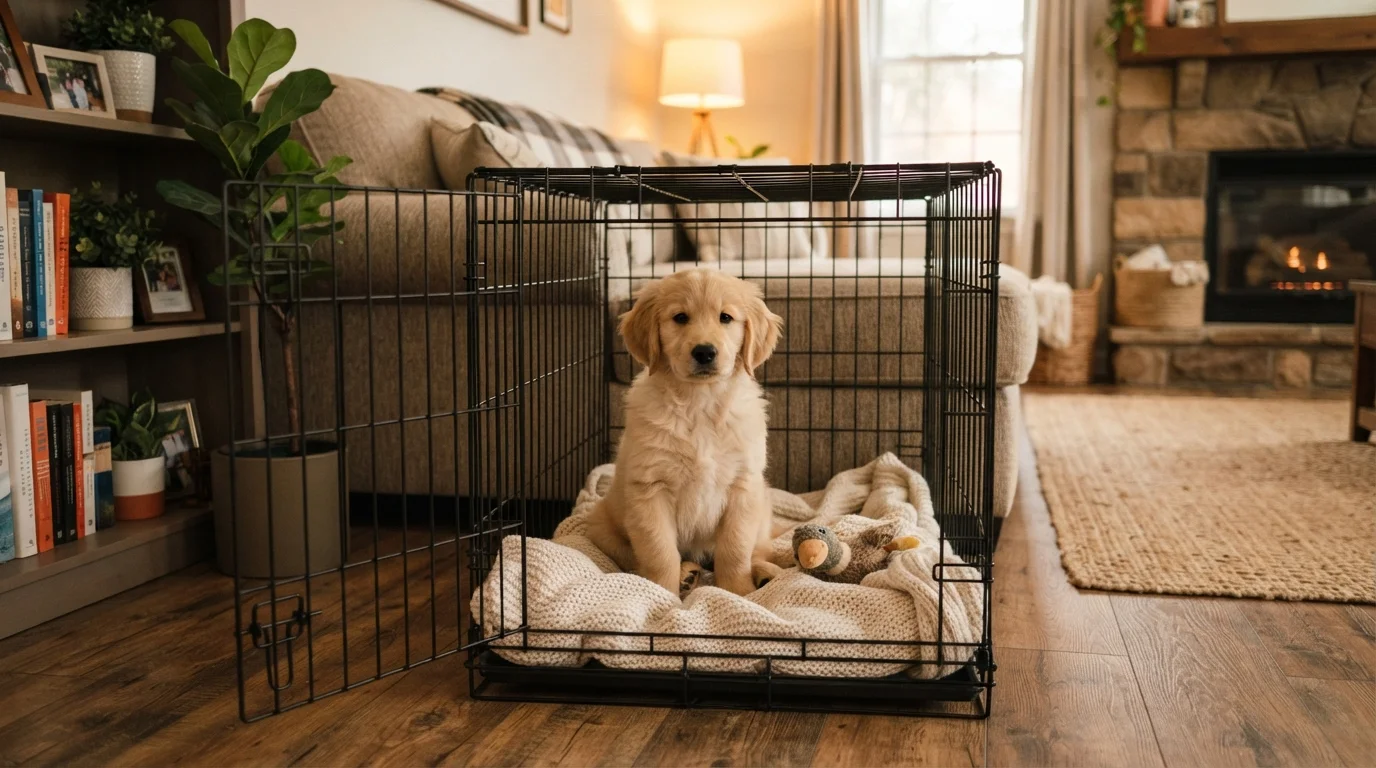
Photo: TargetReads.com | Explore Engaging Reads editorial
Key Takeaways
- Crate training should always be gradual — forcing a puppy inside creates lasting fear and resistance.
- A crate sized just large enough for the puppy to stand, turn, and lie down discourages accidents.
- Puppies under 12 weeks should not be crated for more than one to two hours at a stretch.
- Whining during crating is normal at first; responding to every cry can unintentionally reinforce the behavior.
- Positive associations — treats, meals, and favorite toys near the crate — speed up acceptance significantly.
Why Crate Training Works — and What It's Actually For
A crate, used correctly, mimics the den instinct that dogs carry from their wild ancestry. It gives a puppy a defined, secure space that belongs entirely to them — a retreat when the household feels overwhelming, and a structure that supports house training by leveraging a dog's natural reluctance to soil their sleeping area.
Crate training is not about confinement for its owner's convenience. It's a tool for building confidence and preventing the unsupervised behaviors — chewing, accidents, and anxiety-driven destruction — that derail many puppies' early months. Understanding why it works makes it easier to implement it patiently. If you'd like to understand the learning mechanics underneath positive training methods, see our guide to how dogs actually learn.
Crate training also fits naturally into broader new-puppy routines. Our new dog setup checklist covers the full first two weeks, including where crating fits alongside feeding schedules and early boundary-setting.
What you will need
What You'll Need Before You Start
Having the right setup from the beginning prevents common early mistakes that can set crate training back by days or even weeks. Review the tools below before beginning the step-by-step process.
Wire or plastic dog crate
Provides a safe, den-like enclosure that becomes your puppy's personal resting space.
High-value training treats
Used to create positive associations with entering and staying in the crate.
Crate mat or soft blanket
Makes the crate interior comfortable and encourages the puppy to settle.
Chew toy or food-stuffed toy
Keeps the puppy mentally occupied during initial closed-door sessions.
Divider panel (for wire crates)
Allows you to reduce the usable crate space as your puppy grows, preventing accidents.
Step-by-Step: Introducing the Crate
Work through these steps at your puppy's pace. Some puppies settle into a crate within three or four days; others need two to three weeks of gradual exposure. Neither timeline is wrong — what matters is that each step is comfortable before moving to the next.
Choose and position the crate correctly
Select a crate that gives your puppy just enough room to stand up, turn around, and lie down comfortably. Too much space allows a puppy to use one corner as a bathroom, which works against house training. Place the crate in a busy household area — a living room or kitchen — so your puppy doesn't feel isolated from family activity.
Introduce the crate with treats and encouragement
Toss small, high-value treats just inside the crate entrance and let your puppy retrieve them at their own pace. Do not push or lure the puppy all the way in during this phase — the goal is simply to make approaching the crate feel rewarding. Repeat this several times across the first day.
Encourage voluntary entry with meals
Begin feeding your puppy's regular meals just inside the crate door, then move the bowl progressively further back over several sessions. Once your puppy walks in confidently to eat, you can gently close the door while they finish the meal, then open it immediately when done. Gradually extend the time the door stays closed after eating.
Build crating duration in small increments
Once your puppy enters willingly and tolerates a closed door for a few minutes, begin practicing short crating sessions while you remain in the room. Start at five minutes, then ten, gradually working toward thirty minutes over several days. Only begin leaving the room — and eventually the house — after your puppy is reliably calm at these shorter durations.
Establish a nighttime crating routine
Place the crate in or near your bedroom initially so your puppy can sense your presence. Most puppies under 12 weeks need a nighttime bathroom break every three to four hours. Set an alarm rather than waiting for your puppy to cry, which helps prevent whining from becoming the signal for release. Over weeks, gradually move the crate to its permanent nighttime location.
Respond to protest calmly and consistently
If your puppy whines in the crate and you are confident they don't need a bathroom break, wait for a brief pause in the noise before opening the door. Releasing a puppy while they are actively crying teaches them that crying opens the crate. If the protest is extreme or sustained, assess whether you've advanced the duration too quickly and scale back.
Feed Meals Inside the Crate
Never Use the Crate as Punishment
When Your Puppy Protests — and When to Seek Help
Some degree of whining and fussing is a normal part of the process — your puppy is learning that crating is temporary and that calm behavior leads to release. Mild protest that settles within a few minutes is expected and not a sign that something is wrong.
Sustained, escalating distress — especially if it appears even when you are present — may be a signal of something beyond typical adjustment. Separation anxiety is a distinct condition that doesn't resolve with standard crate training and requires its own approach. Our article on separation anxiety in dogs can help you distinguish normal protest from a deeper behavioral pattern.
Watch for Signs of Genuine Distress
Crate training also pairs well with early socialization work. The same weeks you spend building crate comfort are part of a broader developmental window. Our piece on puppy socialization explains what that period means in practice and how to make the most of it.
This article is for general informational and educational purposes only and is not a substitute for guidance from a qualified veterinarian or certified professional dog trainer. If your puppy shows signs of significant distress or health concerns, consult a professional.
The content on this site is for informational purposes only and is not a substitute for professional advice. Always consult a qualified professional for guidance specific to your situation.