
The Capsule Wardrobe Explained: What It Is and Whether It Works

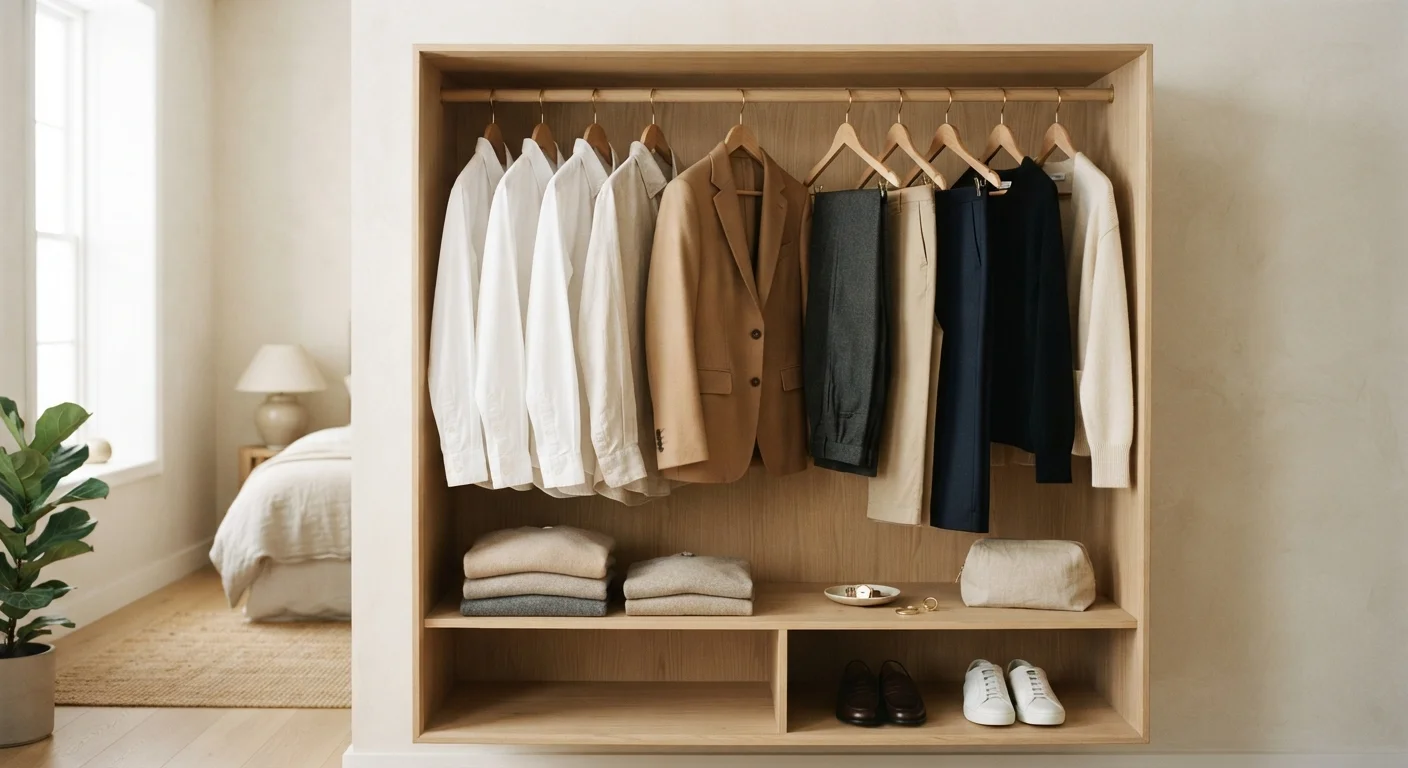
Photo: TargetReads.com | Explore Engaging Reads editorial
Key Takeaways
- A capsule wardrobe is a small, intentional clothing collection where every piece works with the others.
- The concept originated in the 1970s and is about function and versatility, not minimalism for its own sake.
- There is no universal piece count — the right number depends on your lifestyle and needs.
- A capsule wardrobe can reduce decision fatigue and make getting dressed faster and less stressful.
- It requires honest self-assessment; what works for one person's life may not suit another's.
Where the Idea Came From
The capsule wardrobe concept has a surprisingly clear origin. London boutique owner Susie Faux introduced the term in the 1970s, describing a collection of essential, high-quality pieces that would never go out of style. The idea was practical: instead of chasing trends, invest in a reliable wardrobe foundation that serves you across seasons and occasions.
The concept reached American audiences in the mid-1980s when designer Donna Karan released her influential 'Seven Easy Pieces' — a tightly edited collection of interchangeable basics designed for working women. The idea resonated because it solved a real problem: too many clothes, not enough outfits.
Decades later, the capsule wardrobe has been reinterpreted countless times — sometimes as a minimalism statement, sometimes as a sustainability strategy, sometimes as pure practicality. At its core, though, it has always been about the same thing: owning what you actually use.
“A capsule wardrobe gives you freedom — not restriction. When your clothes work together, you stop thinking about getting dressed and start thinking about everything else.”
— Susie Faux, London boutique owner and originator of the capsule wardrobe concept
What a Capsule Wardrobe Actually Involves
A capsule wardrobe is built around three principles: versatility, cohesion, and intention. Every item should mix and match with at least two or three others in the collection. The pieces should feel cohesive together — not necessarily matching, but visually compatible. And each item should be chosen deliberately, not grabbed on sale because it seemed like a good idea at the time.
Most approaches suggest starting with foundational items — well-fitting trousers, a few quality tops, a layering piece or two, and footwear that crosses contexts. From there, you add pieces that reflect your actual life: what you do, where you go, and what makes you feel comfortable and confident.
Start With What You Already Own
Importantly, a capsule wardrobe is not about deprivation. It's not a competition to own the fewest items possible. If you genuinely need 45 pieces to cover your lifestyle without stress, that is your capsule. If 28 does it, great. The number follows the life — not the other way around.
For those who find getting dressed stressful or time-consuming, see how a morning routine built around your closet can make the whole process feel easier.
Does It Actually Work?
For many people, yes — with realistic expectations. The most commonly reported benefit is reduced decision fatigue. When your wardrobe is smaller and every piece works together, choosing an outfit becomes genuinely easier. Research on decision fatigue consistently shows that reducing low-stakes daily choices can free up mental energy for higher-priority tasks.
~20%
Clothes worn regularly from the average wardrobe
Industry estimates and consumer behavior studies consistently suggest most people wear only a small fraction of what they own on a regular basis.
35,000+
Daily decisions the average adult makes
Psychological research on decision fatigue suggests that reducing low-stakes choices — like what to wear — can conserve mental energy for more meaningful decisions.
The approach also tends to reduce the "I have nothing to wear" feeling — which is almost always a symptom of too many wrong items, not too few clothes. When your closet contains only pieces you actually like and wear, the frustration decreases. Check out the common wardrobe habits that leave people feeling underdressed to see if any familiar patterns show up.
That said, a capsule wardrobe isn't effortless to maintain. It requires periodic editing — especially as your life or body changes — and thoughtful shopping habits going forward. Buying fewer clothes and wearing more of them is a mindset shift that takes practice. Season-to-season transitions also need some attention; rotating your wardrobe between seasons without chaos is a skill worth developing alongside the capsule concept.
The honest answer is that a capsule wardrobe works best when it's built around your real life — not an idealized version of it. It's a framework, not a formula.
A Capsule Wardrobe Is Personal, Not Prescriptive
Frequently Asked Questions
The content on this site is for informational purposes only and is not a substitute for professional advice. Always consult a qualified professional for guidance specific to your situation.