
Wired vs. Wireless Earbuds: Sound, Convenience, and the Trade-Offs Most People Don't Consider

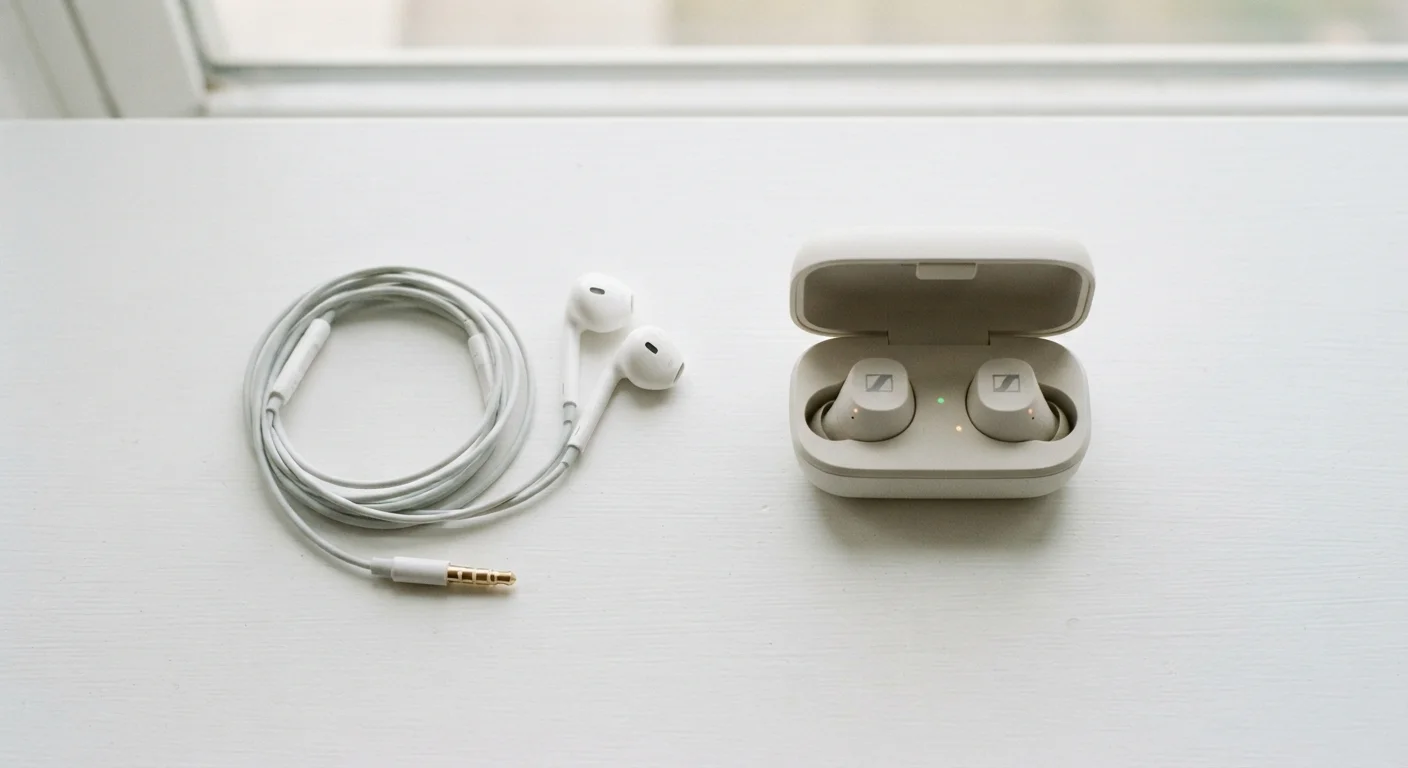
Photo: TargetReads.com | Explore Engaging Reads editorial
Key Takeaways
- Wired earbuds deliver audio with no latency and no battery dependence, benefiting musicians and video editors.
- Wireless earbuds use Bluetooth, which introduces a small but measurable audio delay relevant for certain tasks.
- Audio quality differences between wired and wireless have narrowed significantly with modern codec technology.
- Wireless earbuds require regular charging and can lose battery capacity over time like any rechargeable device.
- Your use case — commuting, gaming, studio work, or workouts — should drive the choice more than marketing.
The Core Difference: How Each Type Delivers Sound
Wired earbuds transmit audio as an analog or digital electrical signal directly from your device through a cable — typically via a 3.5mm headphone jack or USB-C port. That direct connection means the signal travels with no added processing delay and no compression artifacts introduced by wireless encoding.
Wireless earbuds rely on Bluetooth — a short-range radio protocol — to receive audio from your phone, tablet, or laptop. The audio is compressed using a codec (such as SBC, AAC, or aptX) before transmission, then decoded by a chip inside the earbud. Each step adds a small amount of processing. To understand how Bluetooth fits into the broader wireless landscape, see our guide to wireless protocols.
The practical upshot: for casual listening — podcasts, playlists, video calls — most people won't notice a difference. The gap becomes more meaningful in specific scenarios like synchronized video playback, live instrument monitoring, or competitive gaming.
| Criterion | Wired Earbuds | Wireless Earbuds |
|---|---|---|
| Audio Latency | Near-zero (direct signal) | Low to moderate (codec-dependent) |
| Audio Compression | None | Codec-based (varies by standard) |
| Battery Required | No | Yes (built-in, rechargeable) |
| Cable Management | Required | Not required |
| Device Compatibility | Depends on port availability | Broad (Bluetooth universal) |
| Noise Cancellation | Rare | Common in many models |
| Physical Activity Use | Cable can snag or restrict | Designed for movement |
| Setup Time | Plug-and-play, instant | Initial pairing required |
Latency, Audio Fidelity, and the Battery Factor
Latency refers to the delay between when audio is sent and when you hear it. Wired connections produce near-zero latency. Bluetooth latency has improved considerably — newer codecs like aptX Low Latency and LC3 (used in Bluetooth LE Audio) can push delays below 40 milliseconds, which is imperceptible during most media consumption. However, even small delays can be disorienting when watching someone speak on screen or playing a rhythm-based game.
40ms
Typical Bluetooth latency threshold for perceptibility
Audio engineers generally consider delays under 40 milliseconds imperceptible during casual listening; competitive gaming and live monitoring require lower thresholds.
300–500
Estimated charge cycles before significant battery degradation
Lithium-ion batteries used in wireless earbuds typically retain around 80% capacity after 300–500 full charge cycles, though this varies by product and usage patterns.
Audio fidelity is a more nuanced story. Early wireless earbuds compressed audio noticeably, but high-quality codecs combined with improved driver hardware have significantly closed the gap with wired listening. That said, a wired earbud with a good driver will still have an edge in accurate reproduction because no codec compression occurs.
Battery life is wireless earbuds' most concrete trade-off. Most offer between five and ten hours of playback per charge, with charging cases extending that further. But lithium-ion batteries degrade over time, meaning capacity diminishes with each charge cycle — something worth factoring into a longer-term ownership calculation, similar to how battery dependence affects phone hotspot use.
Practical Considerations Most Buyers Overlook
The disappearance of the 3.5mm headphone jack from many modern smartphones has made wired listening more complicated for some users. Adapters exist but add friction — an extra dongle to carry, charge ports occupied, and potential compatibility issues. For users of devices that still include a headphone jack, this is a non-issue.
On Headphone Jack Adapters
Wireless earbuds offer genuine advantages for physical activity: no cable snag, freedom of movement, and often sweat resistance. Many also include active noise cancellation (ANC), which uses microphones to counteract ambient sound. ANC is rarely found in wired earbuds at comparable price points.
Durability patterns also differ. Wired earbuds most commonly fail at cable stress points near the jack or the earbud housing. Wireless earbuds are more likely to encounter issues with charging contacts, firmware, or degraded battery capacity. Neither type is inherently more durable — failure modes just differ.
One underappreciated advantage of wired earbuds: they work without pairing. Plug in, and audio plays — no Bluetooth handshaking, no case required. For users who share earbuds between multiple people or devices, or who simply want a no-fuss experience, that immediacy has real value.
The content on this site is for informational purposes only and is not a substitute for professional advice. Always consult a qualified professional for guidance specific to your situation.