
Bluetooth vs. Wi-Fi vs. Zigbee: How Smart Home Devices Actually Talk to Each Other

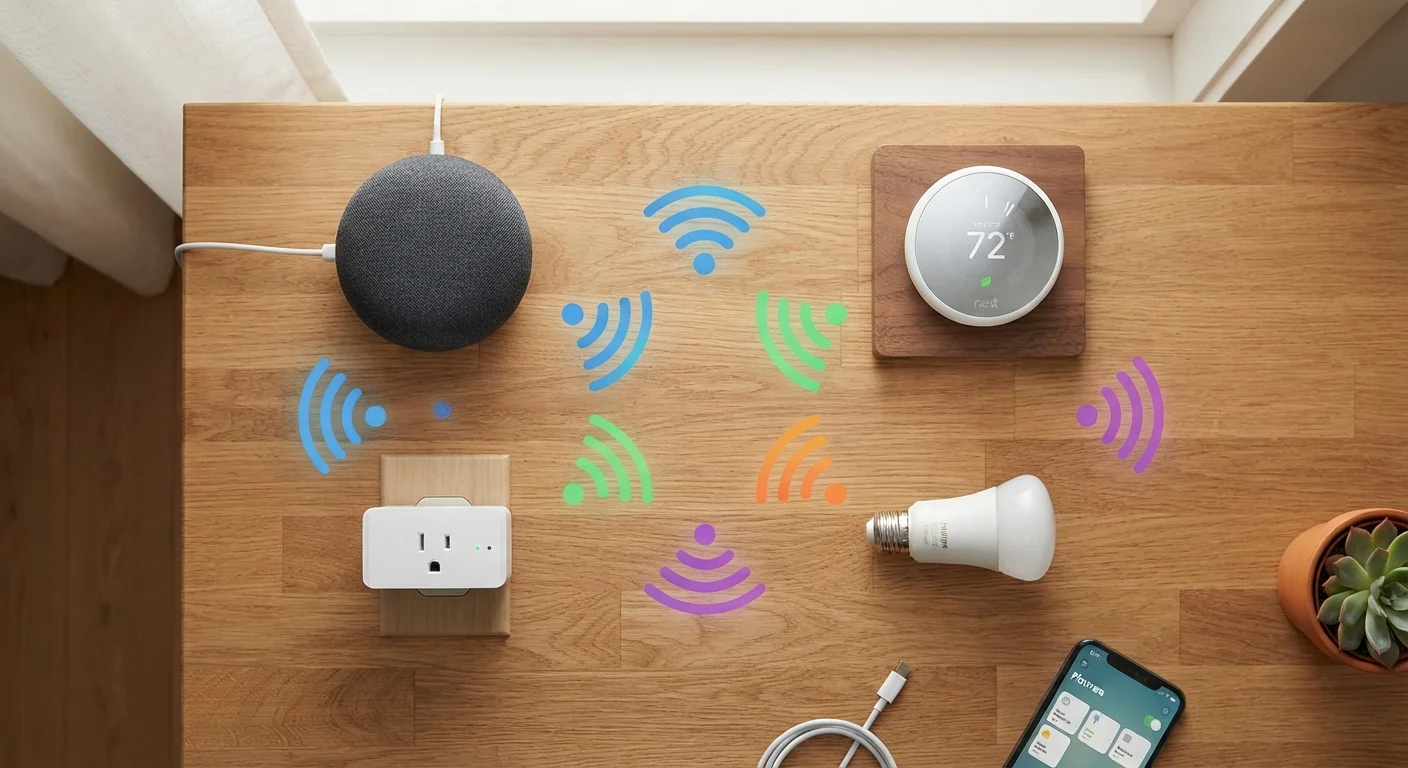
Photo: TargetReads.com | Explore Engaging Reads editorial
Key Takeaways
- Bluetooth works well for short-range, low-power devices but struggles beyond 30 feet.
- Wi-Fi offers the longest range and fastest speeds but draws more power and can crowd your router.
- Zigbee creates a self-extending mesh network ideal for large numbers of low-power sensors.
- No single protocol is universally best — your home size, device count, and router capacity all matter.
- The Matter standard is emerging as a way for devices across all three protocols to interoperate.
Why the Protocol Behind a Device Matters
When you buy a smart plug, thermostat, or light bulb, the box usually highlights what it can do — not how it does it. But the wireless protocol a device uses is one of the most consequential specs you'll rarely see advertised prominently. It shapes how far the device can be from your router or hub, how much battery it drains, whether it slows down your network, and whether it will work alongside other brands you add later.
Understanding what makes a device truly 'smart' starts with understanding how it communicates. The three most common wireless standards in consumer smart home products are Bluetooth, Wi-Fi, and Zigbee — and each was built around very different priorities.
Bluetooth: Simple, Nearby, and Low-Power
Bluetooth is the most familiar of the three. It's in your headphones, your keyboard, and increasingly in smart locks, bulbs, and sensors. Classic Bluetooth and the newer Bluetooth Low Energy (BLE) variant are both short-range technologies, typically reaching 30 to 100 feet under ideal conditions — and considerably less through walls.
The major advantage of Bluetooth is its low power draw. BLE devices can run for months or years on small batteries, which makes it a strong fit for door sensors, motion detectors, and wearables. The trade-off is range and reliability. Bluetooth devices often need a phone or dedicated hub nearby to relay commands, and interference from other devices can disrupt the connection.
Bluetooth Mesh — a newer variation — allows devices to relay signals between each other to extend coverage. It's promising but not yet as mature or widely deployed as Zigbee's mesh implementation.
Check Your Hub Before You Buy
Wi-Fi: Familiar but Resource-Hungry
Wi-Fi smart devices connect directly to your home router, which means no additional hub is required. That simplicity is appealing, and setup is usually straightforward. Wi-Fi also offers the fastest data throughput of the three protocols, making it a natural fit for smart cameras, video doorbells, and displays that stream content.
The downsides are real, though. Wi-Fi devices consume significantly more power than Bluetooth or Zigbee alternatives, so battery-powered Wi-Fi sensors drain quickly. More importantly, every Wi-Fi smart device is another client on your router. Homes with dozens of smart gadgets can run into congestion or stability issues, especially on older routers.
Dead zones in your home can also cut off Wi-Fi smart devices entirely, since they can't relay signals through each other the way Zigbee devices can. If you're adding many smart home devices, it's worth reviewing your router's capacity — see how mesh Wi-Fi compares to a standard router for coverage-heavy setups.
| Bluetooth | Wi-Fi | Zigbee | |
|---|---|---|---|
| Typical range | 30–100 ft | Up to 150+ ft indoors | Up to 300 ft (mesh-extended) |
| Power consumption | Very low (BLE) | High | Very low |
| Hub required | Often (or phone) | No | Yes |
| Network scalability | Limited | Router-dependent | Scales well via mesh |
| Best use case | Locks, sensors, audio | Cameras, displays, speakers | Large sensor networks, lighting |
| Setup complexity | Simple | Simple | Moderate (hub needed) |
Zigbee: Mesh Networking for Larger Setups
Zigbee is less of a household name but is widely embedded in smart home ecosystems — including products from several major platform manufacturers. It operates on the 2.4 GHz frequency band and uses a mesh network topology, meaning each mains-powered Zigbee device can act as a relay node, passing signals along to devices that are out of direct hub range.
This mesh architecture makes Zigbee well-suited to homes with many devices spread across multiple rooms or floors. Adding more Zigbee devices generally strengthens the network rather than straining it, which is the opposite of what happens with Wi-Fi. Zigbee devices also consume very little power, making battery-based sensors practical for long-term use.
The main friction point is setup: Zigbee requires a compatible hub or coordinator (a dedicated device that manages the network). If your hub loses power or goes offline, Zigbee devices lose their connection. And while Zigbee is a standard, different manufacturers have historically implemented it in ways that don't always play nicely together — though the emerging Matter standard is working to bridge those gaps.
300 ft+
Potential Zigbee mesh range
Zigbee's mesh topology allows signals to hop between devices, extending coverage well beyond a single hub's direct reach.
10–15x
More power used by Wi-Fi vs. BLE
Wi-Fi radio modules can draw significantly more current than Bluetooth Low Energy counterparts, reducing battery life in portable devices.
Choosing the Right Protocol for Your Home
There's rarely a single right answer. Most smart homes end up using a mix of protocols depending on which devices make sense for which jobs. A few practical considerations can help guide the decision:
- Device count: A handful of devices works fine on Wi-Fi. A large deployment — 20 or more sensors, bulbs, and switches — typically benefits from a Zigbee mesh.
- Power source: For battery-operated devices, Bluetooth or Zigbee will outlast Wi-Fi alternatives significantly.
- Streaming and data: For cameras, speakers, or displays, Wi-Fi's bandwidth advantage is hard to replace.
- Cross-brand compatibility: If you want devices from different manufacturers to work together, look for Matter certification, which is designed to work across Bluetooth, Wi-Fi, and Thread (a protocol related to Zigbee).
Understanding how Wi-Fi bands and channels affect your network is also useful context when deciding how many Wi-Fi smart devices your setup can comfortably support.
The content on this site is for informational purposes only and is not a substitute for professional advice. Always consult a qualified professional for guidance specific to your situation.