
Credit Cards vs. Debit Cards: Understanding the Financial and Legal Differences

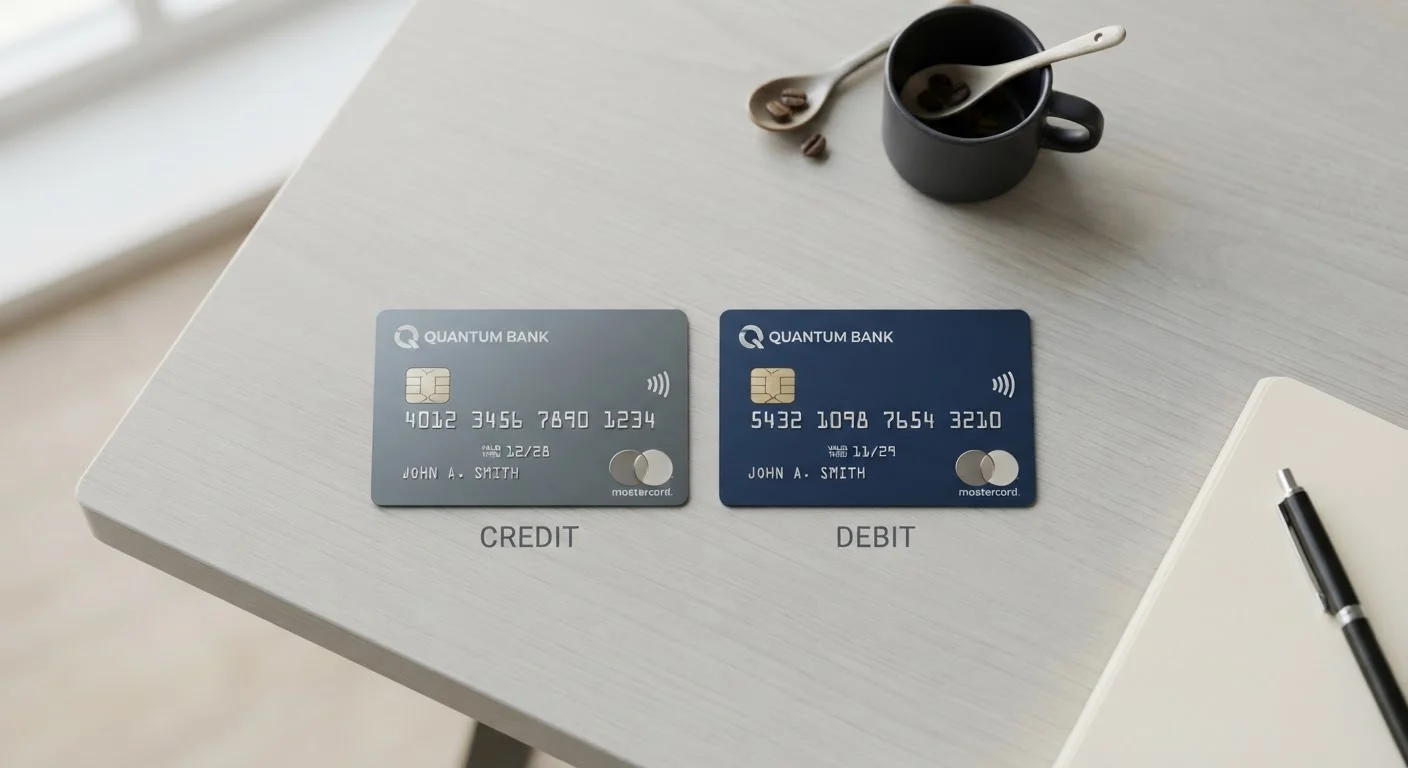
Photo: TargetReads.com | Explore Engaging Reads editorial
Key Takeaways
- Credit cards let you borrow money from a lender; debit cards draw directly from your bank balance.
- Federal law gives credit card users stronger fraud protections than debit card holders.
- Credit card use — when managed well — can help build your credit score; debit cards have no effect on credit.
- Debit cards carry overdraft risk; credit cards carry the risk of high-interest debt if balances aren't paid in full.
- Both card types can be used widely, but their legal and financial implications differ significantly.
How Each Card Actually Works
Despite sharing the same rectangular shape and network logos, credit and debit cards operate through fundamentally different mechanisms. A debit card is a direct line to your checking account. When you swipe or tap, the funds are pulled from your existing balance, often within seconds. There's no borrowing involved — you're spending money you already have.
A credit card, by contrast, draws on a revolving line of credit extended by the card issuer. You're not spending your own money at the point of sale; you're borrowing the issuer's money with a promise to repay it. If you pay the full balance by the due date each month, you typically owe no interest. If you carry a balance, interest charges — often at significant annual percentage rates (APRs) — accumulate on the unpaid amount.
Understanding this distinction is foundational to everything else: protections, costs, credit impact, and risk all flow from whether you're accessing your own funds or a lender's. For a broader look at where your money lives before you spend it, see how checking and savings accounts differ.
| Criterion | Credit Card | Debit Card |
|---|---|---|
| Funding source | Borrowed from card issuer | Your existing bank balance |
| Fraud liability (federal law) | Max $50 (FCBA); often $0 | Up to $500+ depending on timing (EFTA) |
| Impact on credit score | Yes — payment history reported | No credit bureau reporting |
| Risk of debt | Yes — if balance not paid in full | No debt; overdraft fees possible |
| Interest charges | Yes — on unpaid balances | None (unless overdraft line used) |
| Spending limit | Credit limit set by issuer | Your current account balance |
| Dispute process | Funds not lost during dispute | Funds already withdrawn; recovery takes time |
Legal Protections: Where the Differences Really Matter
This is arguably the most consequential difference between the two card types. Federal law treats credit and debit card fraud quite differently, and the gap can mean thousands of dollars in a worst-case scenario.
Credit cards are governed primarily by the Fair Credit Billing Act (FCBA). Under this law, your maximum liability for unauthorized charges is $50 — and in practice, most major issuers have voluntary zero-liability policies that waive even that amount. Critically, because credit transactions don't touch your bank account, disputed funds are not actually missing from your balance while the investigation is underway.
Debit cards fall under the Electronic Fund Transfer Act (EFTA), which provides protections that vary based on reporting speed. Report the loss or theft before any unauthorized transactions occur, and your liability is $0. Report within two business days, and liability is capped at $50. Wait between two and 60 days, and that cap rises to $500. Beyond 60 days, you could be responsible for the full amount of unauthorized withdrawals. Crucially, those funds are already gone from your account during an investigation — meaning rent, bills, and other payments could bounce in the interim.
$50
Maximum federal credit card fraud liability
Under the Fair Credit Billing Act, consumers are liable for no more than $50 in unauthorized credit card charges — and most issuers voluntarily waive even this amount.
$500+
Potential debit card fraud liability after 60 days
The Electronic Fund Transfer Act allows liability to exceed $500 — and potentially cover the full loss — if unauthorized debit card use goes unreported beyond 60 days.
35%
Payment history weight in FICO score
According to FICO, payment history is the single largest factor in your credit score, making on-time credit card payments a powerful credit-building tool.
The legal asymmetry makes credit cards notably more consumer-protective in fraud scenarios, though it requires disciplined repayment to avoid interest costs.
Credit Score Impact and Long-Term Financial Health
One card type shapes your financial future; the other simply reflects your present spending. Credit card activity — on-time payments, credit utilization ratios, account age — is reported to the three major credit bureaus (Equifax, Experian, and TransUnion) and factors directly into your credit score. Responsible use over time can meaningfully strengthen your credit profile, which affects your ability to qualify for loans, mortgages, and even some rental applications.
Debit card use has zero impact on your credit score. Purchases, payments, and even overdrafts (unless tied to a line of credit) are not reported to credit bureaus. For someone new to credit or recovering from past financial difficulties, this means a debit card alone will not help build the credit history needed for future borrowing.
However, credit card misuse carries its own long-term cost. Carrying high balances month over month generates compounding interest charges that can become a significant financial burden. For guidance on managing that risk, see how high-interest debt differs from low-interest debt — and why the distinction matters for repayment strategy.
If you use either card through a mobile payment app, the underlying protections generally follow the card type — not the app. Learn more in our overview of how digital wallet apps handle your money.
What About Prepaid Debit Cards?
Risk Profiles: Overspending vs. Overdraft
Both card types carry financial risks — they just manifest differently. With a credit card, the primary danger is spending beyond your ability to repay. Interest-bearing balances can grow quickly, and minimum payments often do little to reduce the principal. Consumers who routinely carry balances may find themselves paying far more than the original purchase price over time.
Debit cards eliminate that debt risk but introduce another: overdrafts. If your account balance falls below zero — due to a pending transaction, a timing gap, or simply miscalculating your balance — most banks will either decline the transaction or process it and charge an overdraft fee. Some consumers opt into overdraft protection programs, which may link a checking account to a savings account or line of credit, though these come with their own terms and potential costs.
Neither risk profile is inherently worse; the right card for you depends on your spending habits, financial discipline, and specific goals. Consulting a licensed financial adviser can help you determine which approach fits your personal circumstances. This article provides general financial education and is not a substitute for personalized financial advice.
This article is for informational purposes only and does not constitute personalized financial, legal, or investment advice. Consult a qualified financial professional for guidance specific to your situation.
The content on this site is for informational purposes only and is not a substitute for professional advice. Always consult a qualified professional for guidance specific to your situation.