
The Landscape of Digital Wallets: How Mobile Payment Apps Handle Your Money

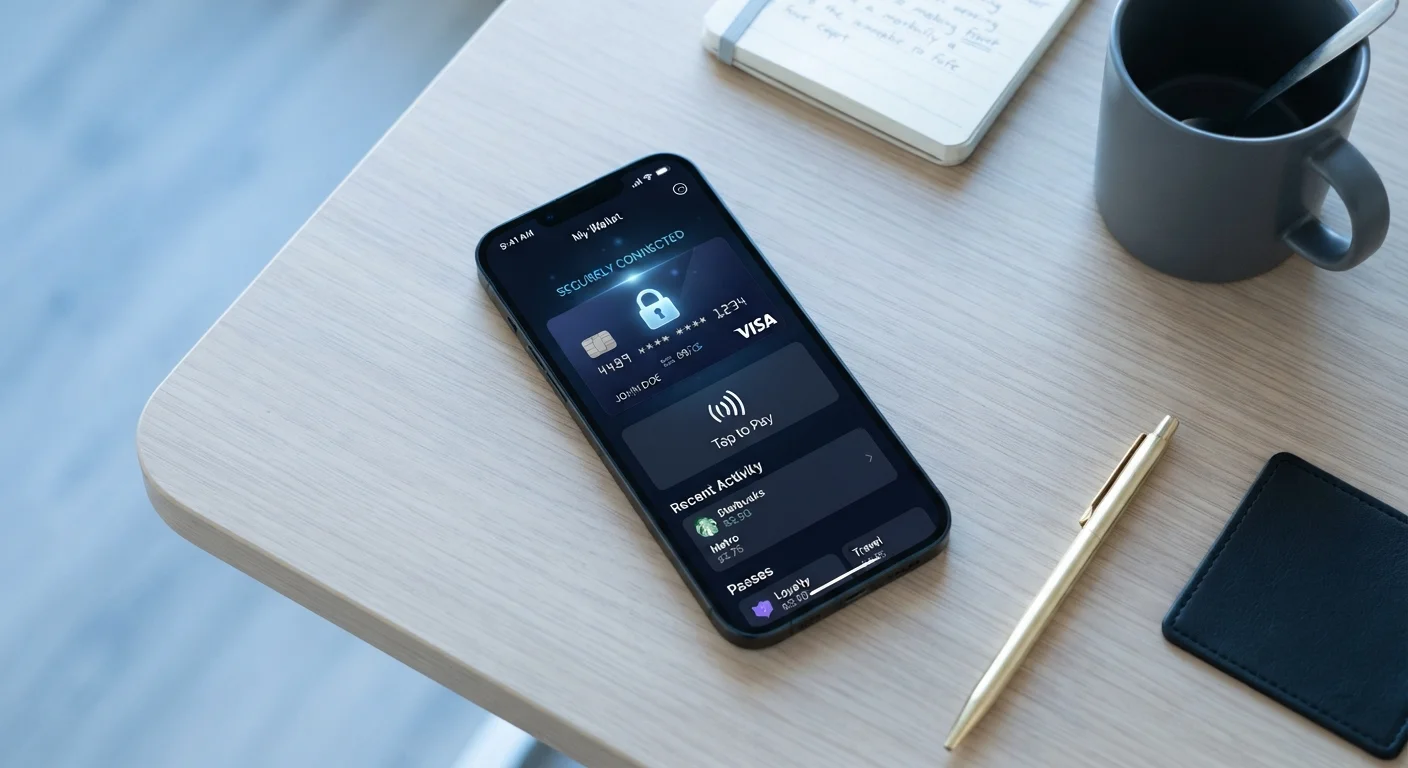
Photo: TargetReads.com | Explore Engaging Reads editorial
Key Takeaways
- Digital wallets store payment credentials, not your actual money — most link to an underlying bank account or card.
- NFC technology enables tap-to-pay by transmitting a one-time token, not your real card number.
- Consumer protections vary widely depending on whether a wallet holds a stored balance or simply passes through card payments.
- Apps that store a cash balance may not carry the same FDIC insurance as a traditional bank account.
- The permissions a wallet app requests reveal a lot about how it collects and uses your data.
What a Digital Wallet Actually Is
A digital wallet is a software application that stores payment credentials — such as debit card numbers, credit card details, or bank account links — so you can make purchases without physically presenting a card. The term covers a wide spectrum: from the tap-to-pay feature built into your phone's operating system to peer-to-peer (P2P) payment apps that let you split a dinner bill with friends.
It helps to think in two broad categories. Pass-through wallets tokenize an existing card or bank account and transmit payment on its behalf. Stored-value wallets actually hold a balance inside the app itself, functioning more like a prepaid account. Many popular apps blend both models — you can pay a friend from a stored in-app balance, then cash out to your bank.
Understanding which type you're using matters, because the rules governing each are meaningfully different. For a broader look at how everyday banking tools work, see the Credit & Banking hub.
How the Money Moves: The Technical Layer
When you tap your phone at a store terminal, the technology doing the work is called NFC — a short-range wireless standard that transmits data only within a few centimeters. Crucially, what gets transmitted is not your actual card number. Instead, the wallet generates a unique, single-use token called a payment token or device account number. The merchant's terminal receives this token; your real card number never leaves your device.
Behind the scenes, the token is validated by a payment network (such as Visa or Mastercard) which maps it back to your actual account to authorize the charge. This architecture means that even if a merchant's system is compromised, attackers obtain an expired, useless token — not a reusable card number.
1–2 cm
Maximum NFC tap-to-pay transmission range
NFC operates at close range by design, limiting the window for wireless interception during a transaction.
One-time use
Payment tokens generated per transaction
Each tap-to-pay transaction generates a unique token, so intercepted data cannot be replayed for fraudulent charges.
Varies by platform
FDIC coverage status for stored balances
The CFPB has noted that many nonbank payment platforms do not automatically provide FDIC deposit insurance on held balances.
For in-app and online purchases, wallets use a similar tokenization process, often combined with biometric authentication (fingerprint or face recognition) on your device to confirm the transaction is intentional.
Where Your Money Actually Lives
This is one of the most misunderstood aspects of digital wallets. When you use a pass-through wallet, your money never leaves your bank or card account — the wallet is a conduit, not a container. Your funds remain subject to whatever protections apply to that underlying account.
Stored-value wallets are different. If an app holds a balance on your behalf, that balance typically sits in accounts the company maintains, not in your name at an FDIC-insured bank. The FDIC insures deposits held at member banks, and whether a wallet balance qualifies depends on how the company structures those accounts — a detail buried in the terms of service.
Stored Balances Are Not Automatically FDIC-Insured
Some companies do pass balances through to FDIC-insured custodial accounts, and disclose this in their terms. Others do not. Reading the fine print before keeping a significant balance in a payment app is genuinely worthwhile. For context on how traditional bank accounts and credit products compare, our article on credit cards vs. debit cards explains the underlying financial and legal differences.
Consumer Protections: What Applies and What Doesn't
Federal consumer protection law treats digital wallet transactions differently depending on how the payment is structured.
- Credit card transactions processed through a wallet generally carry the same chargeback and dispute rights as a physical card swipe, governed by the Truth in Lending Act.
- Debit card transactions processed through a wallet are typically covered by the Electronic Fund Transfer Act (EFTA), which limits your liability for unauthorized charges — provided you report problems promptly.
- Stored-balance transfers between users on a P2P platform occupy grayer territory. Many such transfers are currently treated more like cash — once sent, they may be difficult or impossible to reverse.
Before sending money through a P2P payment app, treat it like handing over cash — confirm the recipient's details carefully, because many platforms do not guarantee reversal of completed transfers.
If you use a payment app's stored balance feature, search the platform's help center for the phrase 'FDIC' to find their specific disclosure about how balances are held.
The Consumer Financial Protection Bureau (CFPB) has highlighted that large nonbank payment platforms are not always subject to the same supervisory framework as banks, which can affect dispute resolution. Checking a platform's published dispute policy before you need it is a practical step most users skip.
Privacy, Data, and App Permissions
Payment apps collect data beyond the transaction itself. Purchase history, location at time of payment, linked contacts, and device identifiers are all potentially available to the app depending on permissions granted. This data can inform advertising, credit-risk modeling, or product development — uses that vary by platform and are disclosed (to differing degrees of clarity) in privacy policies.
Our guide to app permissions breaks down what each permission type actually enables on Android and iOS. For a payment app specifically, location access during a transaction may be used for fraud detection — a legitimate use — but the same permission can enable ongoing location tracking if left enabled between transactions.
Audit Payment App Permissions Periodically
Regularly reviewing which apps have access to sensitive data is also connected to broader account security hygiene. For a related perspective on credential security, see our article on password managers.
Making Sense of the Landscape
Digital wallets have made paying genuinely more convenient, and their tokenization architecture is a meaningful security improvement over handing a card to a stranger. But convenience can obscure complexity. The same app can function as a pass-through card wallet, a stored-balance account, a P2P payment tool, and a financial data aggregator — sometimes simultaneously.
A few practical principles help regardless of which app you use:
- Understand whether you're paying from a stored balance or a linked account — the consumer protections differ.
- Avoid keeping large balances inside payment apps unless you've confirmed FDIC pass-through coverage applies.
- Review app permissions periodically, particularly location and contacts access.
- Familiarize yourself with the platform's dispute process before you need it.
If you're thinking about how digital payment habits connect to your broader financial picture, our articles on tracking where your money goes and budgeting apps offer useful context. Digital wallets make money easy to spend — the methods that help you track it are worth understanding too.
This article is for general informational purposes only and does not constitute financial, legal, or banking advice. Consumer protections and platform policies vary and may change; consult the relevant platform's current terms and a qualified financial professional for guidance specific to your situation.
The content on this site is for informational purposes only and is not a substitute for professional advice. Always consult a qualified professional for guidance specific to your situation.