
Dry Kibble vs. Wet Food: Weighing the Real Differences for Your Pet

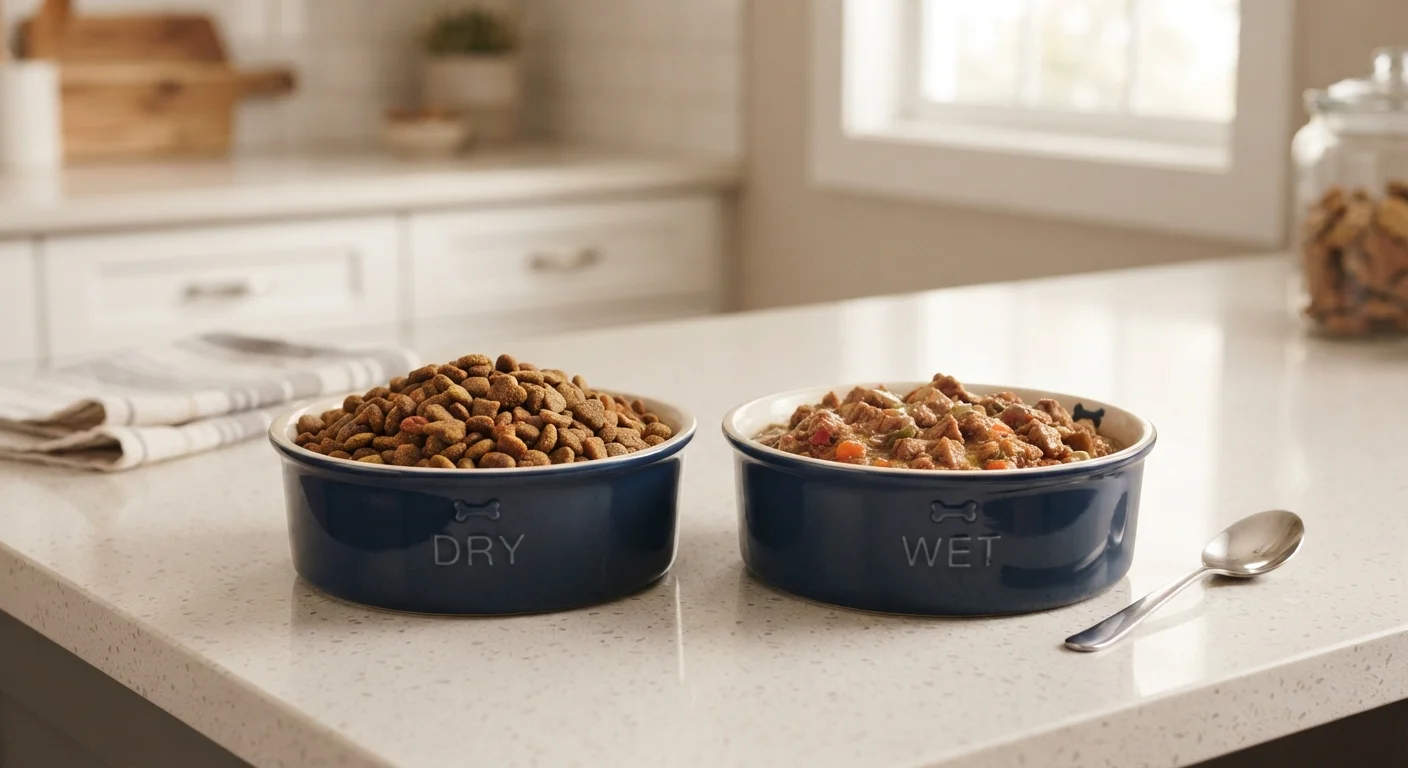
Photo: TargetReads.com | Explore Engaging Reads editorial
Key Takeaways
- Dry kibble is calorie-dense, shelf-stable, and supports dental hygiene through its crunchy texture.
- Wet food provides significantly more moisture, which can benefit urinary and kidney health.
- Neither format is universally superior — the right choice depends on your pet's life stage, health, and preferences.
- Many veterinarians support mixed feeding approaches when both foods are nutritionally complete.
- Always check that any pet food carries an AAFCO nutritional adequacy statement before purchasing.
How Dry and Wet Foods Are Made — and Why It Matters
Dry kibble is produced through a process called extrusion: ingredients are mixed, cooked under high heat and pressure, and forced through a die to create the familiar bite-sized pieces. The result is a low-moisture product (typically around 10% water) with a long shelf life. Wet food, by contrast, is cooked in a sealed can or pouch with enough liquid to preserve a soft, moist texture — usually 70–80% water by weight.
That difference in moisture content is the single biggest driver of the nutritional and practical trade-offs between the two formats. Because wet food is so water-heavy, it delivers fewer calories per gram than kibble. You'll generally feed a larger volume of wet food to meet a pet's energy needs, which affects both cost and how you measure portions.
For a broader grounding in how to evaluate any pet food — regardless of format — see our plain-language introduction to pet nutrition for first-time owners.
| Criterion | Dry Kibble | Wet Food |
|---|---|---|
| Moisture content | ~10% | 70–80% |
| Calories per gram | Higher | Lower |
| Shelf life (unopened) | Months | Months |
| Shelf life (opened) | Weeks (airtight container) | 24–48 hours (refrigerated) |
| Dental health benefit | Modest (mechanical abrasion) | Minimal |
| Hydration support | Low | High |
| Palatability for picky eaters | Moderate | Generally higher |
| Cost per calorie | Lower | Higher |
| Free-choice feeding suitability | Yes | No |
Nutritional Strengths and Limitations of Each Format
Both dry and wet foods can be nutritionally complete when properly formulated. The key indicator to look for is an AAFCO nutritional adequacy statement on the label — this confirms the food meets established minimum standards for a specific life stage. Neither format automatically wins on nutrition; formulation quality matters far more than the physical form.
Dry kibble strengths: Calorie density makes it easier to provide a full day's energy in one measured meal. The crunchy texture creates mild mechanical abrasion against tooth surfaces, which veterinary dental researchers have found can modestly reduce tartar accumulation — though this is not a substitute for brushing or professional cleanings. Kibble's low moisture content also makes it easy to store, leave out for free-choice feeding, and portion consistently.
Wet food strengths: The high water content supports overall hydration, which is particularly relevant for cats. Cats evolved as desert animals with a low thirst drive, meaning they naturally drink less water than dogs relative to their needs. Wet food can meaningfully increase a cat's daily fluid intake, supporting kidney and urinary tract function. Wet food is also generally more aromatic and palatable, which can benefit picky eaters or pets with reduced appetite due to illness or age.
70–80%
Water content in typical wet pet food
Compared to roughly 10% in dry kibble, this difference makes wet food a meaningful contributor to a pet's daily fluid intake.
~3x
Approximate cost difference per calorie
Wet food typically costs several times more per calorie delivered than dry kibble, according to general veterinary nutrition guidance.
AAFCO
Standard to look for on all pet food labels
The Association of American Feed Control Officials sets nutritional adequacy standards that indicate a food is complete and balanced for a stated life stage.
To understand how ingredients translate to these nutritional outcomes, our guide on reading pet food ingredient labels walks through what label terms actually mean.
Practical Considerations: Cost, Convenience, and Feeding Patterns
Beyond nutrition, the everyday logistics of feeding your pet matter. Dry kibble holds a clear advantage in shelf life and cost-per-calorie. A bag of kibble can remain fresh for weeks to months when stored in an airtight container. Wet food, once opened, must be refrigerated and used within 24–48 hours, and it costs considerably more to deliver equivalent calories.
Free-choice feeding — leaving food out throughout the day — is practical only with dry kibble. Wet food left at room temperature for more than a couple of hours can spoil and become a bacterial risk. If your schedule demands flexibility, this alone is a meaningful practical consideration.
Many veterinarians and animal nutritionists support a mixed feeding approach: a measured kibble base that covers the majority of caloric needs, with wet food offered as a topper or supplement. This can provide hydration benefits and palatability while keeping costs manageable. If you go this route, ensure each food is individually complete and adjust total portions so your pet doesn't exceed their daily caloric target.
Feeding protocols should also align with your pet's species. Dogs and cats have genuinely different nutritional requirements — a point explored in detail in our piece on feeding dogs vs. cats.
What AAFCO Complete and Balanced Actually Means
Making the Call: What Your Vet Can Help You Decide
No single food format is right for every pet. Age, health status, activity level, and individual preference all play a role. A young, active dog with no health concerns may thrive on a complete dry kibble. An older cat with early kidney disease may benefit substantially from the extra moisture in wet food. A pet recovering from dental surgery may temporarily need soft food regardless of what they usually eat.
Your veterinarian is the most reliable resource for format-specific guidance tailored to your individual animal. Annual wellness visits are a good time to reassess your pet's diet — particularly as they move through life stages where nutritional needs shift. For a deeper look at veterinary-aligned feeding principles, see Feeding Your Pet Well: Principles Vets Actually Recommend.
If you're also curious how raw diets compare to both of these processed formats, our evidence-based overview of raw food diets for pets is a useful companion read.
This article is for general informational purposes only and does not constitute veterinary or medical advice. Always consult a licensed veterinarian before making significant changes to your pet's diet, especially if your animal has an existing health condition.
The content on this site is for informational purposes only and is not a substitute for professional advice. Always consult a qualified professional for guidance specific to your situation.