
Feeding a Dog vs. Feeding a Cat: Why One Diet Cannot Serve Both

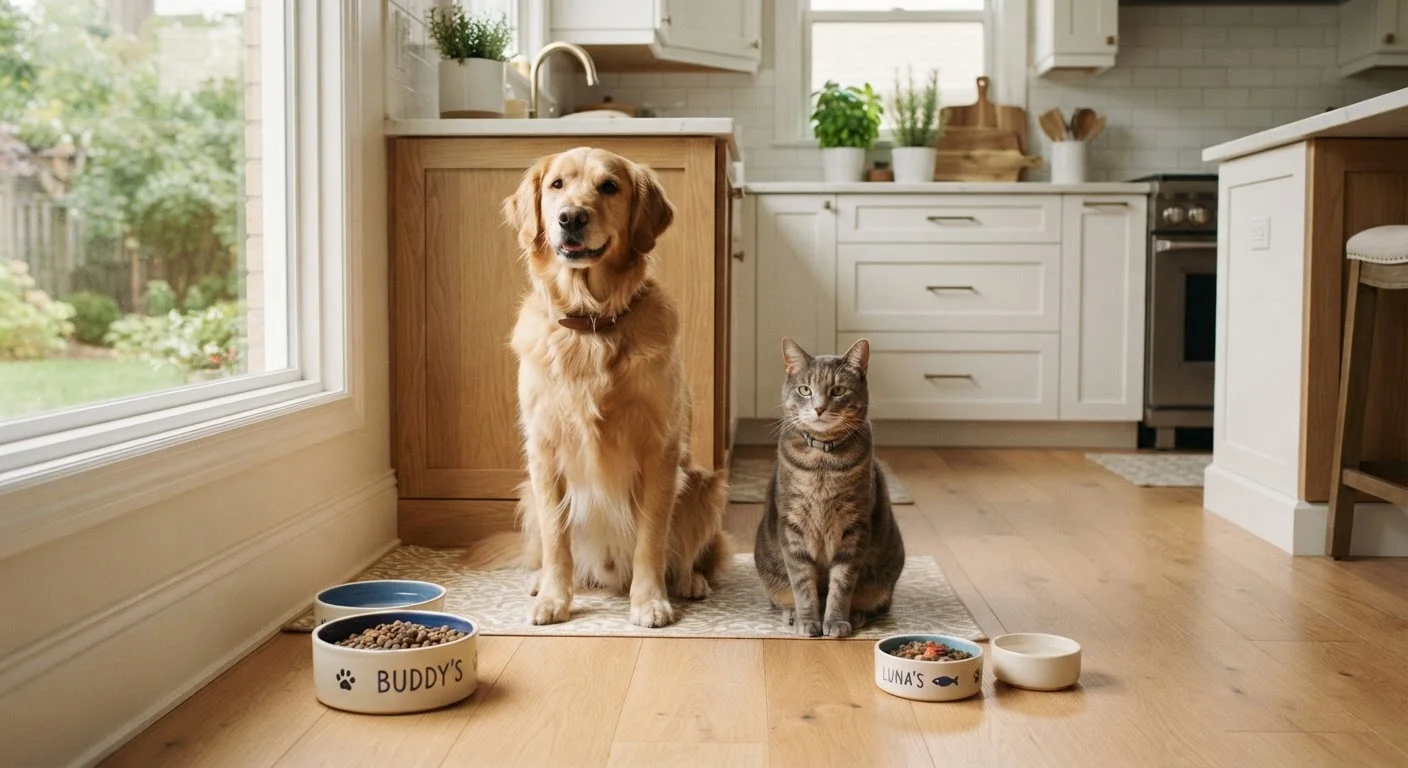
Photo: TargetReads.com | Explore Engaging Reads editorial
Key Takeaways
- Cats are obligate carnivores; dogs are omnivores — their digestive systems are fundamentally different.
- Taurine, arachidonic acid, and preformed vitamin A are nutrients cats must obtain from food but dogs can synthesize.
- Feeding cat food to dogs long-term can cause obesity and pancreatitis due to excess fat and protein.
- Feeding dog food to cats long-term can cause serious deficiencies, including heart disease and vision loss.
- Multi-pet households need separate feeding stations and species-appropriate foods for each animal.
- Always consult a veterinarian before making significant changes to your pet's diet.
Why Species Biology Determines Everything About Diet
The difference between feeding a dog and feeding a cat isn't a matter of preference or portion size — it's rooted in millions of years of evolutionary biology. Dogs evolved alongside humans as generalist feeders, capable of digesting a wide range of foods including grains, vegetables, and meat. Cats, by contrast, are obligate carnivores: animals whose bodies are biologically wired to survive exclusively on animal tissue.
This distinction has real metabolic consequences. A dog's digestive system can synthesize certain nutrients from plant precursors; a cat's cannot. Understanding this gap is the foundation for any responsible multi-pet feeding strategy. For a broader introduction to balanced pet diets, see our plain-language nutrition guide for new owners.
| Criterion | Dog Nutrition | Cat Nutrition |
|---|---|---|
| Dietary classification | Omnivore | Obligate carnivore |
| Protein requirement | Moderate; plant sources acceptable | High; must come from animal sources |
| Taurine synthesis | Can synthesize from diet | Must obtain directly from food |
| Vitamin A source | Converts beta-carotene from plants | Requires preformed retinol (animal tissue) |
| Arachidonic acid | Synthesizes from linoleic acid | Must consume from animal fat |
| Carbohydrate tolerance | Can digest and use carbohydrates | Limited carbohydrate metabolism |
| Risk of eating the other's food | Pancreatitis, obesity risk from cat food | Taurine deficiency, heart/vision damage from dog food |
Nutrients Cats Need That Dog Food Cannot Reliably Provide
Three nutrients illustrate the danger of feeding cats a dog-formulated diet over time:
- Taurine: An amino acid essential for heart function and vision in cats. Dogs synthesize taurine from other amino acids; cats lack the enzymatic capacity to do this efficiently and must consume it directly. Taurine deficiency in cats is linked to dilated cardiomyopathy (a serious heart condition) and retinal degeneration.
- Arachidonic acid: A fatty acid dogs produce from linoleic acid. Cats cannot perform this conversion and must obtain arachidonic acid from animal fat sources — something plant-heavy or dog-formulated foods may not adequately supply.
- Preformed vitamin A: Dogs convert beta-carotene from plants into vitamin A. Cats cannot make this conversion and require retinol, which comes from animal liver and tissue. A cat sustained on dog food may develop a vitamin A deficiency even if the food contains plant-sourced beta-carotene.
These are not minor technicalities — they represent life-stage and organ-level risks. Common myths about pet nutrition often underestimate how species-specific these requirements truly are.
~2×
Higher protein requirement in cats vs. dogs
According to the National Research Council, adult cats require roughly twice the dietary protein per kilogram of body weight compared to adult dogs.
0%
Taurine synthesized by cats from plant sources
Cats lack sufficient activity of the enzymes needed to produce taurine from cysteine and methionine, making dietary taurine from animal tissue non-negotiable.
What Happens When Dogs Eat Cat Food Regularly
Cat food is formulated to be calorie-dense and very high in protein and fat — appropriate for a small, carnivorous animal with a fast metabolism. For dogs, those same qualities can create problems when consumed routinely:
- Excess fat intake increases the risk of pancreatitis (inflammation of the pancreas), a painful and potentially serious condition in dogs.
- Higher caloric density contributes to weight gain and obesity, particularly in less active or middle-aged dogs.
- Digestive upset — including loose stools, vomiting, or gas — is common when dogs eat food formulated for a different digestive profile.
A dog stealing a few bites of cat food now and then is unlikely to suffer lasting harm, but if this becomes a daily habit, the cumulative effects can be significant. Preventing food theft starts with structured mealtimes and separate feeding zones — topics covered in depth in our guide to building a feeding routine for a multi-pet household.
Practical Feeding in a Multi-Pet Household
Households with both dogs and cats face a real logistical challenge: keeping each animal's food accessible to them but not to the other. Several approaches work well in practice:
- Elevated feeding stations: Place cat food on a counter, shelf, or cat tree that dogs cannot reach. This takes advantage of cats' natural preference for elevated surfaces.
- Microchip-activated feeders: These open only for the pet whose microchip is registered, preventing cross-species food access entirely.
- Scheduled, supervised meals: Feed pets at set times and remove bowls when the meal is complete. Free-feeding (leaving food out all day) makes monitoring and separation much harder.
- Baby gates with cat doors: A gate with a small opening lets cats pass freely into a separate feeding room while blocking dogs.
Whatever method you choose, consistency is what makes it work. Our vet-recommended feeding principles can help you evaluate whether your current routine is meeting each pet's needs. For food format questions — whether dry or wet food is more appropriate — see our comparison of dry kibble vs. wet food.
When to Speak With Your Veterinarian
This article is for general informational purposes only and does not constitute veterinary or medical advice. Consult a licensed veterinarian before making significant changes to your pet's diet or if you have concerns about their nutritional health.
The content on this site is for informational purposes only and is not a substitute for professional advice. Always consult a qualified professional for guidance specific to your situation.