
Clicker Training vs. Verbal Markers: Which Works Better for Your Pet

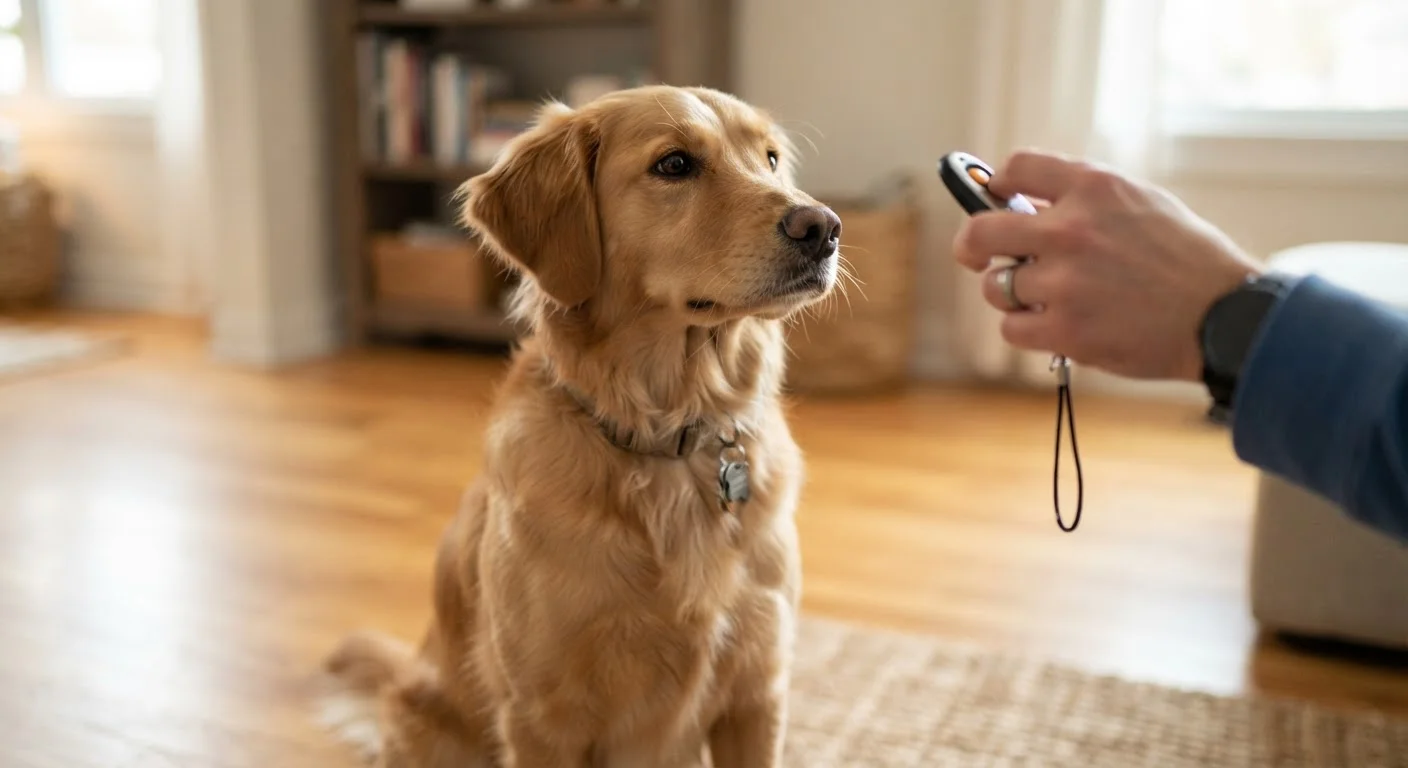
Photo: TargetReads.com | Explore Engaging Reads editorial
Key Takeaways
- Both clickers and verbal markers work by bridging the gap between a desired behavior and the reward that follows.
- Clickers offer a highly consistent, non-emotional sound that animals can distinguish easily from ambient noise.
- Verbal markers are always available but can vary in tone, volume, and emotion across different household members.
- The best marker is the one you will use consistently — neither is universally superior.
- Most animals can be conditioned to either marker through repeated pairing with rewards.
- Consistency across all trainers in the household matters more than the specific marker chosen.
How Marker Training Actually Works
Whether you use a clicker or a spoken word, both are conditioned reinforcers — neutral signals that an animal learns to associate with an incoming reward. The marker's job is simple but critical: it tells the animal exactly which behavior just earned them something good, bridging the inevitable delay between the behavior and the treat landing in their mouth.
This concept, rooted in operant conditioning research, means neither tool has an inherent advantage in the learning process itself. What matters is how reliably and precisely the signal is delivered. A poorly timed verbal cue is no better than a poorly timed click — and a well-timed word is just as effective as a well-timed clicker.
To learn how subtle errors in delivery can quietly undermine your sessions, see what commonly goes wrong in training.
| Criterion | Clicker Training | Verbal Markers |
|---|---|---|
| Consistency of signal | Identical every time | Varies with speaker's tone |
| Portability | Requires carrying a device | Always available |
| Hands-free use | Requires one hand | Completely hands-free |
| Timing precision | High — fast, neutral click | Good — depends on practice |
| Multi-trainer household | Needs a clicker per trainer | One shared word works |
| Noise-sensitive pets | May startle some animals | Adjustable volume and tone |
| Learning curve | Mechanical feel takes practice | Intuitive for most people |
The Case for the Clicker
The clicker's biggest advantage is acoustic consistency. Every click sounds identical — it carries no emotional content, no fatigue, and no variation from frustration or excitement. This makes it easier for animals to identify, particularly in noisy environments or during complex, fast-moving behaviors where split-second timing defines success.
Clickers are especially valued in precision sports like canine agility, obedience competition, or trick training, where a behavior must be marked at a very specific moment — mid-jump, at the peak of a spin, or the instant four paws land correctly. Many professional trainers and applied animal behaviorists favor the clicker in early shaping work for exactly this reason.
The trade-off is practical: you need a free hand, and you need to actually have the clicker. Some owners also find the mechanical feel of the tool creates a more deliberate, focused training mindset — a useful side effect.
~0.2s
Window for effective behavior marking
Animal learning research suggests the marker must occur within roughly 0.2 seconds of the behavior to clearly communicate which action earned the reward.
5–10 reps
Pairings needed to condition a new marker
Most animals require only a handful of reward-paired repetitions before a new marker signal — click or word — begins to function as a conditioned reinforcer.
The Case for Verbal Markers
A short, sharp word — commonly "yes," "good," or "nice" — is your most portable training tool. It requires no equipment and is never left behind. For owners managing a leash, treats, and a distractible dog simultaneously, eliminating one object from the equation can meaningfully improve sessions.
Verbal markers become particularly practical in multi-person households. A shared marker word is easier to distribute consistently than multiple clickers, though it does require some household coordination. Keeping everyone aligned on the same cue is worth the effort — inconsistent markers slow down any animal's learning.
The primary challenge is emotional neutrality. Human voices naturally shift in pitch, volume, and urgency based on mood. An excited or frustrated tone attached to a marker word introduces variability the animal must filter through. Practicing calm, consistent delivery — especially in high-distraction settings — helps close the gap between verbal and clicker precision.
Choosing and Switching: What the Evidence Suggests
Research in animal learning confirms that most dogs, cats, and other trainable animals can be conditioned to respond to either marker type with roughly equivalent outcomes, provided training is otherwise well-structured. The best marker, in practice, is the one the trainer uses most reliably.
Some owners use both: a clicker in structured sit-down sessions for new behaviors, and a verbal marker for reinforcing known behaviors throughout the day. This isn't contradictory — animals can learn multiple conditioned reinforcers, as long as each is consistently paired with rewards.
If you're weighing other dimensions of your training approach — not just the tool but the method — a comparison of positive reinforcement and correction-based methods offers useful grounding in what the evidence actually says. And if you're deciding between training formats altogether, group classes versus private sessions is worth reading before you commit.
Can You Switch Markers Mid-Training?
The content on this site is for informational purposes only and is not a substitute for professional advice. Always consult a qualified professional for guidance specific to your situation.