
Keeping Training Consistent When the Whole Household Is Involved

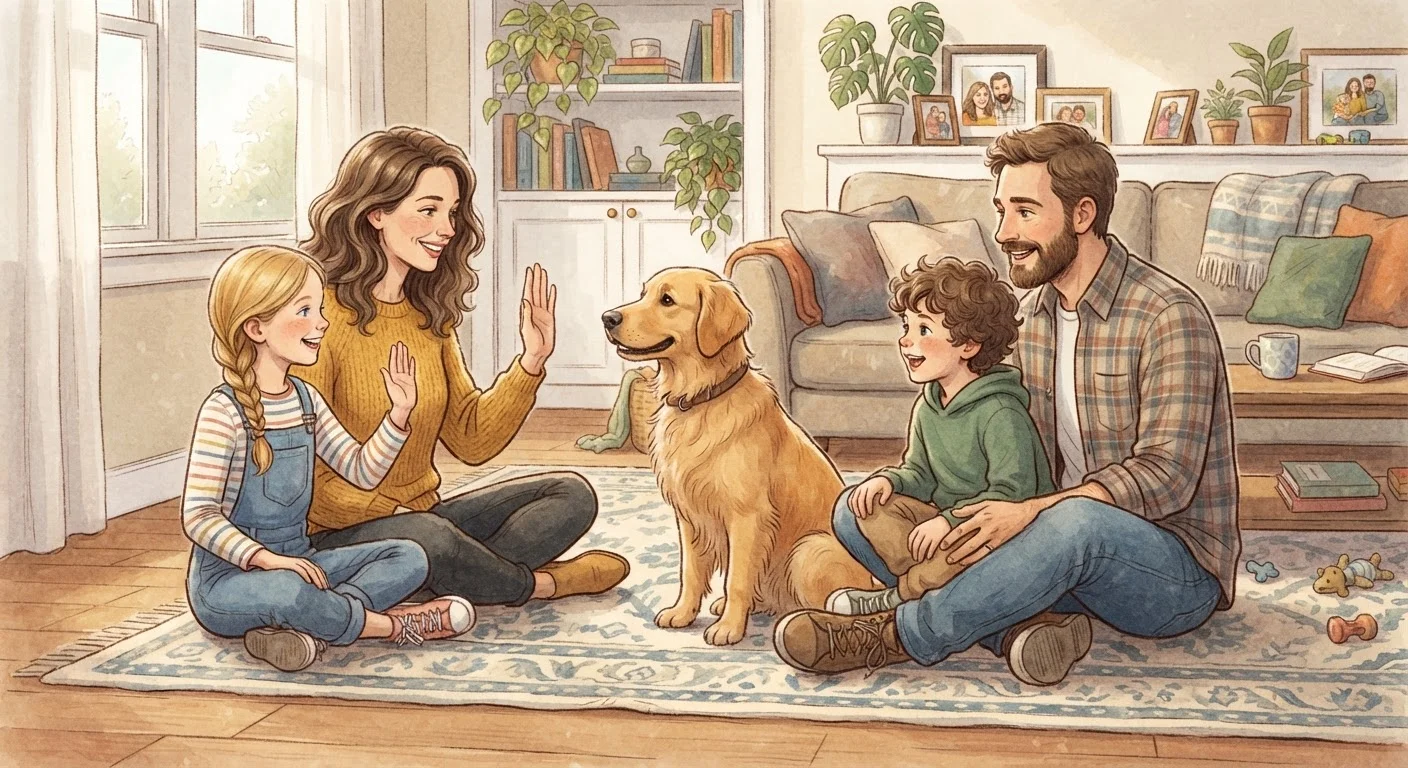
Photo: TargetReads.com | Explore Engaging Reads editorial
Key Takeaways
- Mixed cues from different family members are one of the most common reasons training stalls or regresses.
- A shared household training guide — even a simple one — dramatically reduces confusion for your dog.
- Children and guests should be included in expectations, not treated as exceptions to the rules.
- Regular check-ins among household members help catch drift before it becomes a problem.
- Dogs learn from patterns; the more consistent the pattern, the faster and more reliably they learn.
Why Mixed Signals Undermine Your Dog
Dogs are pattern-recognition learners. When one person says "off" and another says "down" to stop jumping, and a third simply ignores the behavior, the dog receives three conflicting data points and learns nothing reliable. This isn't stubbornness — it's the predictable result of an inconsistent environment.
Veterinary behaviorists and certified professional trainers widely agree that inconsistency across handlers is one of the leading reasons dogs fail to generalize trained behaviors at home. Your dog may perform perfectly during a solo training session and completely fall apart when the whole family is in the room — because the rules suddenly feel different.
If your household is just getting started, Setting Up a New Dog for Success in Your Home covers the foundational routines that make household alignment much easier from day one.
“Consistency is the foundation of all learning. Dogs don't generalize the way humans do — they learn specific responses to specific cues in specific contexts. Change the context or the cue, and you've changed the lesson.”
— Dr. Ian Dunbar, Veterinarian, animal behaviorist, and founder of the Association of Professional Dog Trainers
Best Practices for Whole-Household Training Consistency
The following practices are grounded in established positive-reinforcement training principles and are designed to work in real households — including those with children, older adults, or members who are skeptical about "dog training."
Create a one-page household training reference and post it somewhere visible
Hold a brief household training meeting before introducing any new rule or command
Standardize rewards — not just cues — across all handlers
Assign a lead trainer who serves as the consistency anchor during the learning phase
Schedule weekly two-minute check-ins to catch consistency drift early
Quick Actions You Can Take Today
You don't need a professional overhaul to start improving consistency. Small structural changes made today can shift the household dynamic quickly.
For a deeper look at how subtle errors — including inconsistent commands — quietly erode progress, see When Good Training Sessions Go Wrong.
Including Everyone — Even the Reluctant Ones
Not every household member will be equally enthusiastic about structured training. A teenager who thinks the rules are unnecessary or a grandparent who believes dogs should be allowed to do as they please can inadvertently undo weeks of work.
Frame It Around the Dog, Not the Rules
The key is framing: instead of asking resistant household members to "follow training rules," explain what the dog experiences when rules shift. Most people — once they understand their dog isn't being defiant but genuinely confused — become more willing to stay consistent.
Frequent visitors, including regular babysitters or family members who stop by often, should also receive a brief orientation. A dog that holds a solid "sit" greeting with the family but jumps on guests will continue to practice jumping — and the behavior will persist.
72%
Of dog owners report inconsistency as a top training obstacle
According to the American Pet Products Association's pet owner survey data, household coordination is among the most commonly cited challenges in home training.
4–8x
More repetitions needed when cues vary across handlers
Research in applied animal behavior indicates dogs may require significantly more trials to acquire a behavior when multiple handlers use inconsistent cues during the learning phase.
For households choosing between training formats, Group Classes vs. Private Dog Training Sessions can help you decide which approach fits your household's schedule and needs. And if you're working on specific commands, Clicker Training vs. Verbal Markers explains how to choose and standardize your marker across all handlers.
This article is for general informational and educational purposes only. For concerns about your pet's specific behavior or health, consult a qualified veterinarian or certified professional dog trainer.
The content on this site is for informational purposes only and is not a substitute for professional advice. Always consult a qualified professional for guidance specific to your situation.