
Group Classes vs. Private Dog Training Sessions

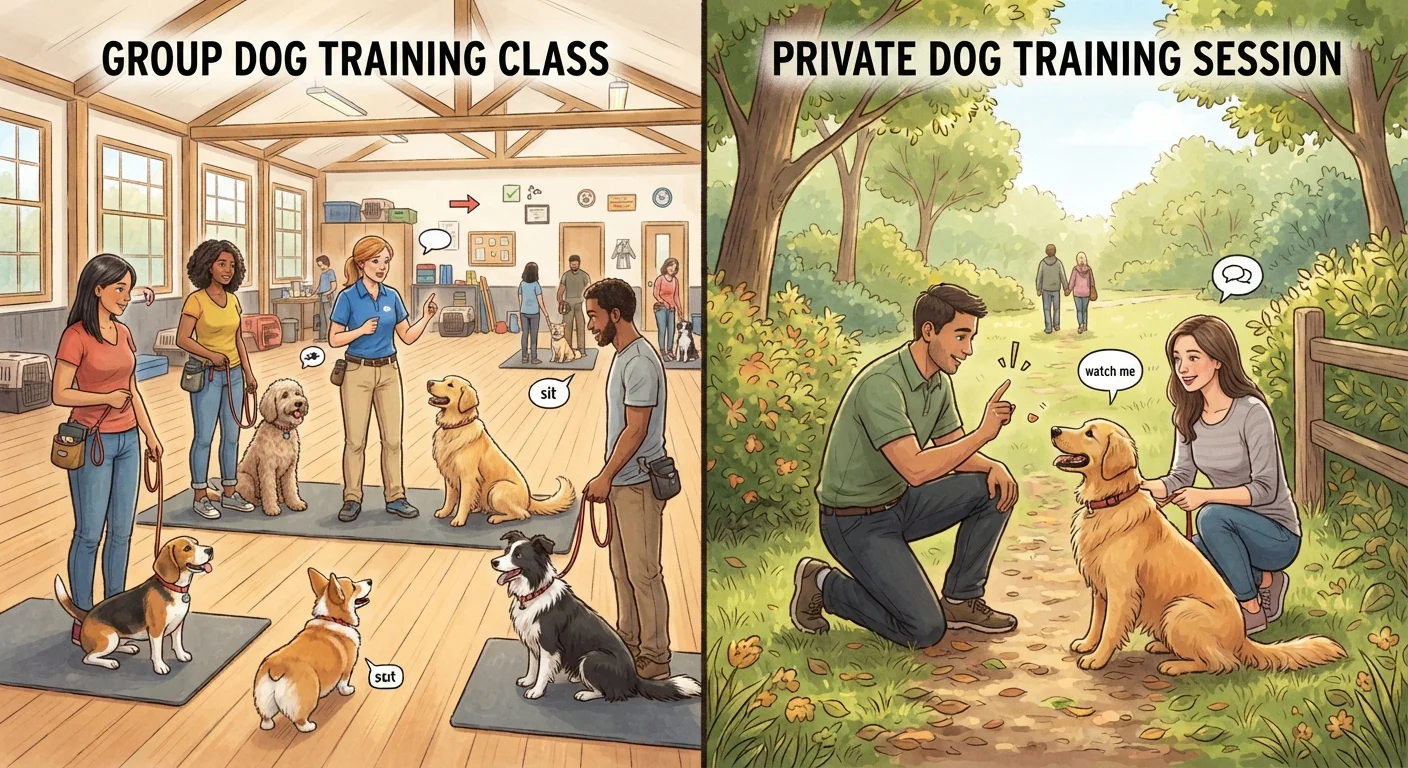
Photo: TargetReads.com | Explore Engaging Reads editorial
Key Takeaways
- Group classes excel at socialization and real-world distraction training for dogs without significant behavioral issues.
- Private sessions allow trainers to address specific behavioral problems with a fully customized plan.
- Cost, your dog's temperament, and your schedule are the three biggest factors when choosing a format.
- Many owners benefit most from combining both formats at different stages of their dog's development.
- Neither format replaces daily practice at home — consistency between sessions determines long-term results.
What Each Format Actually Involves
Group dog training classes typically bring together four to ten dogs and their owners in a shared space — often a pet store, training facility, or community center. A single instructor guides the group through structured exercises, covering foundational cues like sit, stay, come, and leash manners. Sessions usually run four to eight weeks and are conducted at a fixed time each week.
Private sessions, by contrast, are one-on-one appointments between a trainer, you, and your dog. They can take place in your home, a neutral location, or the trainer's facility. Because the trainer's full attention is on your dog, the plan can be built entirely around your dog's history, temperament, and your specific goals. Understanding why dogs respond differently in these two contexts is rooted in learning theory — see how dogs actually learn for a deeper look at the cognitive mechanics involved.
Where Group Classes Shine
The most significant advantage of a group class isn't the cue work itself — it's the environment. Dogs that learn to respond to cues despite nearby dogs, unfamiliar people, and ambient noise are developing a skill called generalization: the ability to perform a behavior across varied contexts, not just at home.
Group settings are particularly well suited for:
- Puppies in their socialization window (roughly 3–14 weeks), building positive associations with other dogs and people
- Dogs that are social and relatively calm around other animals
- Owners who want structured accountability and peer support
- Those pursuing foundational obedience without complex behavioral concerns
Group classes also tend to normalize training as a practice, which can help owners stay motivated. Instructors often cover common handler mistakes in real time — a benefit that's harder to replicate from a book or video alone.
Audit Your Dog's Readiness Before Enrolling
Where Private Sessions Have the Edge
Private training is not simply a premium version of the group experience — it's a structurally different approach suited to different problems. When a dog has leash reactivity, resource guarding, separation anxiety, or a fear response to specific triggers, a group environment can actually set training back. Exposing a reactive dog to multiple off-leash dogs before foundational work is in place can entrench the unwanted behavior rather than resolve it.
Private sessions allow a trainer to:
- Conduct a full behavioral assessment before any training begins
- Work in the environment where problem behaviors actually occur (often the home)
- Adjust criteria and pacing in real time without the pressure of a class schedule
- Coach the owner directly on subtle handling errors that group classes may not address
If your household has multiple people involved in training your dog, a private trainer can also address the consistency challenges that arise — a topic covered in depth in our guide on keeping training consistent when the whole household is involved.
Avoid Group Classes for Aggressive Dogs
Key Differences at a Glance
The table below summarizes how both formats compare across the factors most owners consider when making a decision.
| Group Classes | Private Sessions | |
|---|---|---|
| Typical cost | Lower; paid per multi-week course | Higher; charged per individual session |
| Socialization benefit | High; structured exposure to other dogs and people | Low to none; one-on-one environment |
| Customization | Limited; curriculum applies to all dogs | Full; plan built around your dog's needs |
| Best for reactive dogs | Not recommended until reactivity is managed | Well suited; controlled, low-stimulation setting |
| Schedule flexibility | Fixed weekly class times | Appointments scheduled as needed |
| Trainer attention | Shared across all dogs in class | Fully focused on your dog and handling skills |
| In-home training option | Rarely available | Commonly available |
| Peer community | Built-in group of fellow owners | None; solo experience |
Keep in mind that cost and availability vary significantly by region and individual trainer. These comparisons reflect general patterns rather than guaranteed figures.
Making the Right Call for Your Dog
The format that fits your dog today may not be the right fit in three months. Many trainers recommend starting with private sessions to address any immediate behavioral concerns, then transitioning to group classes once the dog can handle the environment safely. Others start in group classes and add private sessions when specific challenges emerge.
Questions worth asking before enrolling in either format:
- Does my dog have any fear, reactivity, or aggression that would make a group setting unsafe or counterproductive?
- Am I looking for foundational manners or targeted behavioral change?
- What is my schedule flexibility, and can I commit to a weekly group class?
- How much handler coaching do I personally need?
Also consider whether subtle session-management errors could be undermining your progress — when good training sessions go wrong walks through the most common pitfalls. And if you're weighing training tools alongside format, clicker training vs. verbal markers is a useful companion read.
This article is for general informational purposes only. For dogs with serious behavioral issues — particularly aggression — consult a certified veterinary behaviorist or credentialed applied animal behaviorist for a professional assessment.
The content on this site is for informational purposes only and is not a substitute for professional advice. Always consult a qualified professional for guidance specific to your situation.