
Teaching a Reliable Recall: The One Command Worth Getting Right

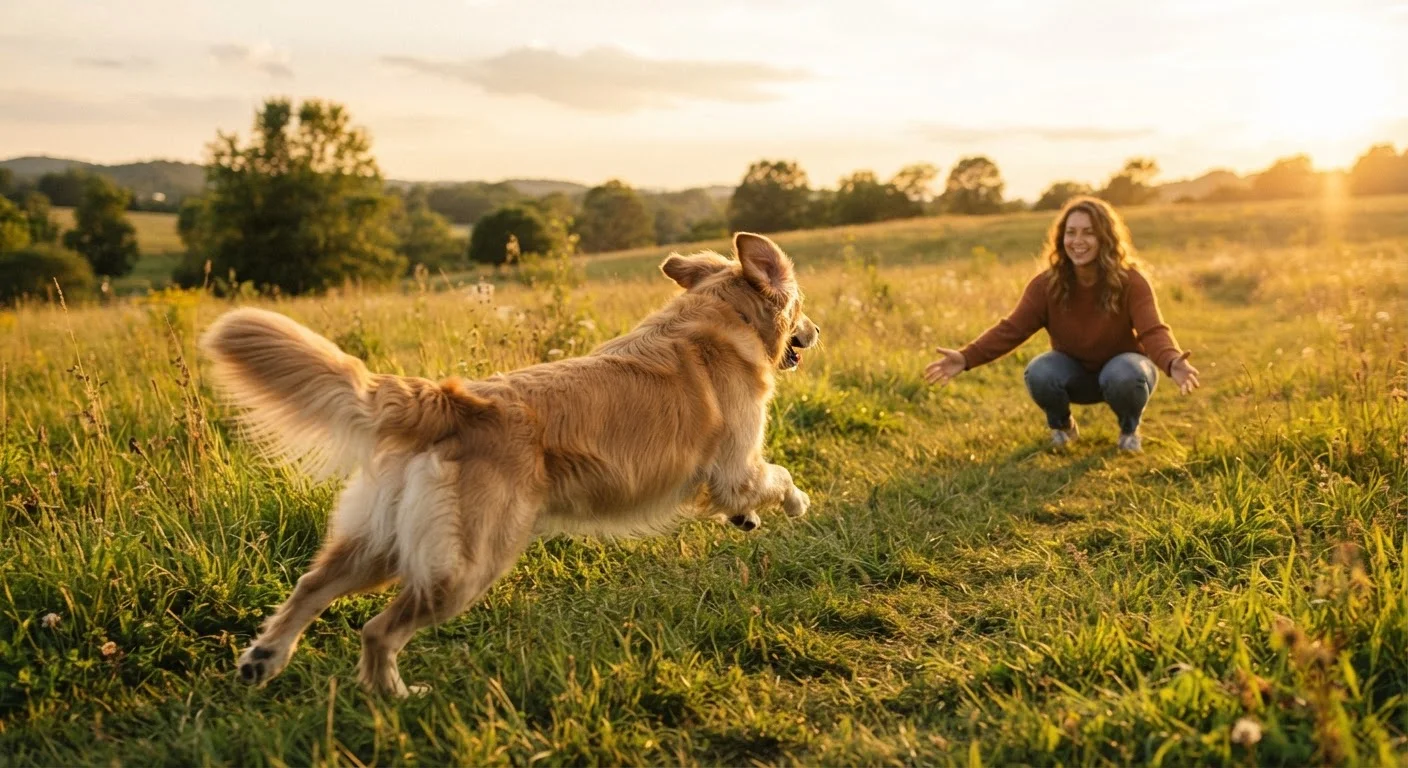
Photo: TargetReads.com | Explore Engaging Reads editorial
Key Takeaways
- Recall training works best when it's built on positive associations — your dog should always want to come to you.
- Start in a low-distraction environment and gradually increase difficulty over weeks, not days.
- Never punish your dog after they come to you, even if they took a long time.
- Proofing recall across different environments and distractions is what makes it reliable in real situations.
- Consistency across all household members is essential to avoid mixed signals.
Why Recall Outranks Every Other Command
Sit is impressive. Stay has its uses. But recall — the reliable "come" — is the one command that can save your dog's life. It's the behavioral backstop for every off-leash moment, every opened gate, every dropped leash. Yet it's also the command most commonly trained inconsistently, then wondered why it fails exactly when it matters most.
The good news: recall is not complicated to teach. It is, however, easy to accidentally undermine. The training steps below are grounded in positive reinforcement principles, which veterinary and behavioral consensus consistently supports as the most effective and welfare-conscious foundation for teaching dogs new skills.
What you will need
What You'll Need Before You Start
Recall training requires minimal equipment, but the quality of what you use matters. High-value rewards are non-negotiable — your dog needs to feel that reaching you is worth abandoning whatever they were doing. If your dog won't work for kibble at home, they won't work for kibble near a dog park.
High-Value Treats
Reward your dog immediately upon returning to you — the payoff must be worth competing with every distraction in the environment.
Long Line (20–30 ft)
Allows safe outdoor recall practice while keeping your dog under control before the behavior is fully proofed.
Clicker or Verbal Marker
Marks the exact moment your dog turns toward you, increasing the precision of reinforcement.
Treat Pouch
Keeps rewards accessible so you can deliver them within one to two seconds of the behavior.
If you're deciding between a clicker and a verbal marker to precisely time your rewards, our guide on clicker training vs. verbal markers covers the tradeoffs in detail.
Step-by-Step: Building a Reliable Recall
Follow these steps in order. Resist the urge to skip ahead — the early indoor stages are where the association is being built. Rushing to outdoor environments before the behavior is solid is the single most common training mistake.
Choose and protect your recall word
Pick a single, clear cue — most trainers recommend "come" or "here" — and commit to using it exclusively for the recall behavior. Never use your recall word in frustration, to end something fun, or when you cannot follow through. If the word has already been diluted by repeated use without response, choose a fresh cue and start clean.
Build the association indoors
Begin in a quiet room with minimal distractions. Say your recall cue once in a cheerful tone, then immediately back up a few steps to encourage your dog to follow. The moment they reach you, reward generously — multiple treats in a row, enthusiastic praise, or a brief play burst. Keep sessions to 3–5 minutes.
Practice the 'check in' game
Throughout the day, whenever your dog naturally wanders over to you, say your recall word, reward them, and let them go again. This teaches your dog that coming to you is never a trap — they are free to return to whatever they were doing. This step alone builds enormous goodwill around the cue.
Add distance in a controlled space
Once your dog responds consistently at close range, increase distance gradually. Use a hallway, then a living room, then a fenced yard. Call once, reward extravagantly when they arrive, and never repeat the cue multiple times — each repetition teaches your dog the word is optional.
Introduce mild distractions
Practice with low-level distractions present: another person in the room, a toy on the floor, mild outdoor smells. If your dog fails to respond, resist repeating the cue. Instead, make yourself more exciting — clap, crouch, make silly sounds — then reward the moment they reach you. A failed recall is feedback that you advanced too quickly, not that the dog is being defiant.
Proof on a long line outdoors
Attach a 20–30 ft long line before moving to open outdoor spaces. This allows natural exploration while giving you a safety net. Practice recalls with the line dragging loosely — only use it as a physical backup if needed, not as a correction. Gradually expose your dog to higher-distraction environments: parks, trails, areas with other dogs or wildlife at a distance.
Maintain the behavior over time
A recall is not a skill you train once and store. Periodically reward unexpected recalls with a jackpot — a handful of treats or a special game. Vary the reward type so your dog never knows what's coming, which research on variable reinforcement schedules suggests maintains behavior more durably than predictable rewards.
Make Coming to You the Best Thing Ever
Common Pitfalls That Quietly Undo Your Progress
Recall training often erodes gradually rather than failing all at once. The most frequent culprits:
- Repeating the cue: Saying "come, come, come" teaches your dog to wait for the third repetition. Say it once, make yourself irresistible, and reward.
- Using recall to end all fun: If "come" consistently means the park trip is over, your dog learns to avoid it. Practice recalls mid-play, reward, then release back to the activity.
- Inconsistent household use: If one family member uses the cue casually without follow-through, it loses meaning for everyone. See our article on keeping training consistent across your household for practical strategies.
- Sessions that run too long: Fatigue and frustration degrade performance. When training sessions go wrong, session length and handler frustration are often the first things to examine.
Punishment After a Recall Destroys Trust
Off-Leash Safety Is Never Guaranteed
Proofing Over Time: How Recall Becomes Truly Reliable
A recall is considered proofed when it holds across different environments, distractions, distances, and handlers — not just in your living room. This takes weeks to months of consistent practice, not a single training phase. New environments effectively reset your dog's distraction threshold, so always expect to reward more generously in unfamiliar places.
If you have a new dog still settling in, pairing recall work with a broader routine foundation makes a significant difference. Our guide on setting up a new dog for success covers how to structure those critical early weeks so training has the best possible foundation to build on.
This article is for general informational purposes only and does not constitute professional veterinary or animal behavior advice. For dogs with significant behavioral challenges, consult a certified professional dog trainer or veterinary behaviorist.
The content on this site is for informational purposes only and is not a substitute for professional advice. Always consult a qualified professional for guidance specific to your situation.