
Neutrals vs. Statement Pieces: Finding the Right Balance in Your Outfits

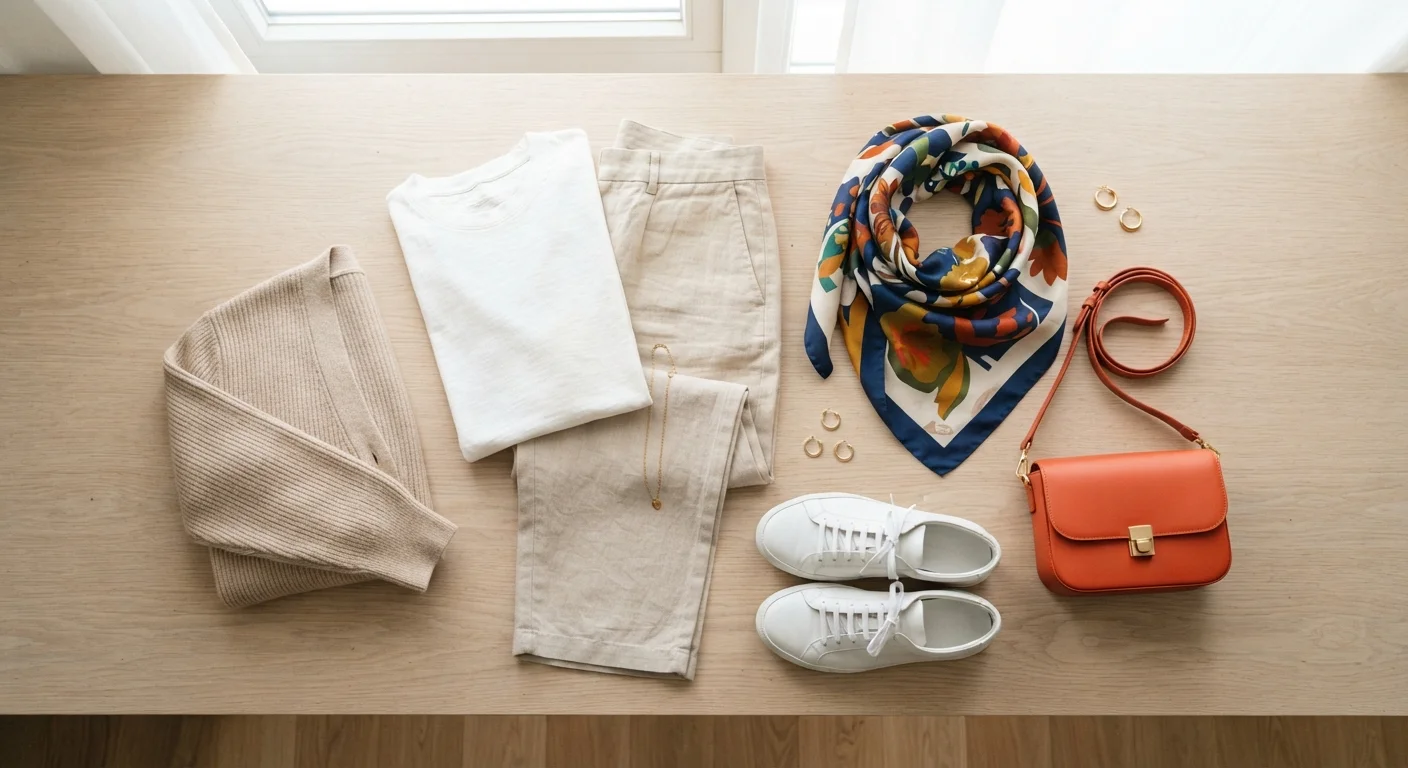
Photo: TargetReads.com | Explore Engaging Reads editorial
Key Takeaways
- Neutrals provide outfit flexibility; statement pieces inject personality and visual interest.
- A practical ratio of roughly two neutrals to one statement item works well for most everyday looks.
- Statement pieces don't have to be bold colors — interesting textures, cuts, or prints count too.
- Fit matters more than the color or pattern of any single item in your outfit.
- A well-chosen statement piece can refresh multiple neutral outfits across your wardrobe.
What Actually Makes Something a 'Neutral' or a 'Statement'?
Before diving into balance, it helps to be clear on definitions — because these terms get used loosely. Neutrals in fashion typically refer to colors that sit quietly in an outfit: white, black, grey, navy, beige, camel, and ivory. They don't compete for attention, which is exactly why they pair so easily. Some style thinkers extend the category to include muted, desaturated tones like dusty rose or sage — colors that read as soft rather than bold.
Statement pieces, by contrast, are items that do the visual talking. This could be a vivid color, a striking print, an unusual texture, or an unexpected silhouette. A mustard-yellow trench coat, a leopard-print midi skirt, an oversized plaid blazer — these are designed to be noticed. But statement doesn't always mean loud; a well-cut structural jacket in a neutral color can be a statement through its form alone.
One thing worth noting: whether something reads as a statement depends on context. A bright red cardigan might feel bold at the office and understated at a street fair. That context-dependence is part of what makes styling so personal — and why rigid rules often fall flat, as we explore in our piece on common style myths worth questioning.
How Neutrals and Statement Pieces Work Together
Think of neutrals as the supporting cast and statement pieces as the lead. When the supporting cast is strong and cohesive, the lead shines. When the supporting cast is chaotic, everything fights for attention and nothing wins.
A practical starting point many stylists suggest is the two-to-one principle: for every statement item in an outfit, aim for at least two neutral anchors. Pair a floral printed skirt (statement) with a plain white tee and simple tan sandals (two neutrals), and the skirt gets to do its job without visual interference. Swap the white tee for a striped top and suddenly the outfit has two competing focal points — which can work, but requires more intentionality.
| Criterion | Neutrals | Statement Pieces |
|---|---|---|
| Outfit versatility | Pairs with almost everything | Pairs with select items only |
| Visual impact | Subtle, recedes in outfit | High — draws the eye immediately |
| Styling effort | Low — minimal coordination needed | Higher — requires thoughtful pairing |
| Cost per wear | Typically high — used often | Variable — depends on wearability |
| Expressive range | Subtle personality signal | Strong individual expression |
| Risk of outfit clashing | Very low | Moderate without careful editing |
The same logic applies to accessories. A maximalist necklace lands beautifully against a solid-color dress. Pile on bold earrings, a printed bag, and a patterned belt at the same time, and the effect often reads as cluttered rather than expressive. Editing down is a skill, not a limitation.
For more reliable outfit-building frameworks, our guide to outfit formulas that work for almost any occasion offers practical combinations that make the process feel intuitive rather than exhausting.
Building Your Wardrobe Around This Balance
The most functional wardrobes aren't neutral-only or statement-heavy — they're proportional. A useful mental model: treat neutrals as your wardrobe's infrastructure and statement pieces as its personality. You need both, but in different quantities.
Start by identifying the neutrals you already reach for instinctively. Most people have a natural comfort zone — some gravitate toward black and white, others toward warm earthy tones. Leaning into that instinct makes getting dressed easier rather than a daily negotiation with your closet.
Texture Counts as a Statement Too
From there, choose statement pieces that genuinely excite you rather than items you bought because they were on trend or looked great on a model. A statement piece only works if you actually want to wear it. If it intimidates you every morning, it's not serving your wardrobe — it's just taking up space.
It's also worth remembering that fit transforms everything. A well-fitted neutral trouser can feel more polished and intentional than a statement piece that doesn't quite work on your frame. Our article on why fit matters more than price or labels explains why proportion and tailoring consistently outperform novelty. And when seasons shift, revisiting this balance is a natural opportunity — see our practical guidance on seasonal wardrobe transitions for help rotating pieces without the overwhelm.
If you're building from scratch or refreshing on a budget, color coordination basics can help you identify which statement tones will naturally play well with the neutrals you already own.
The content on this site is for informational purposes only and is not a substitute for professional advice. Always consult a qualified professional for guidance specific to your situation.