
The Case For and Against Trimming Your Hair Every Six Weeks

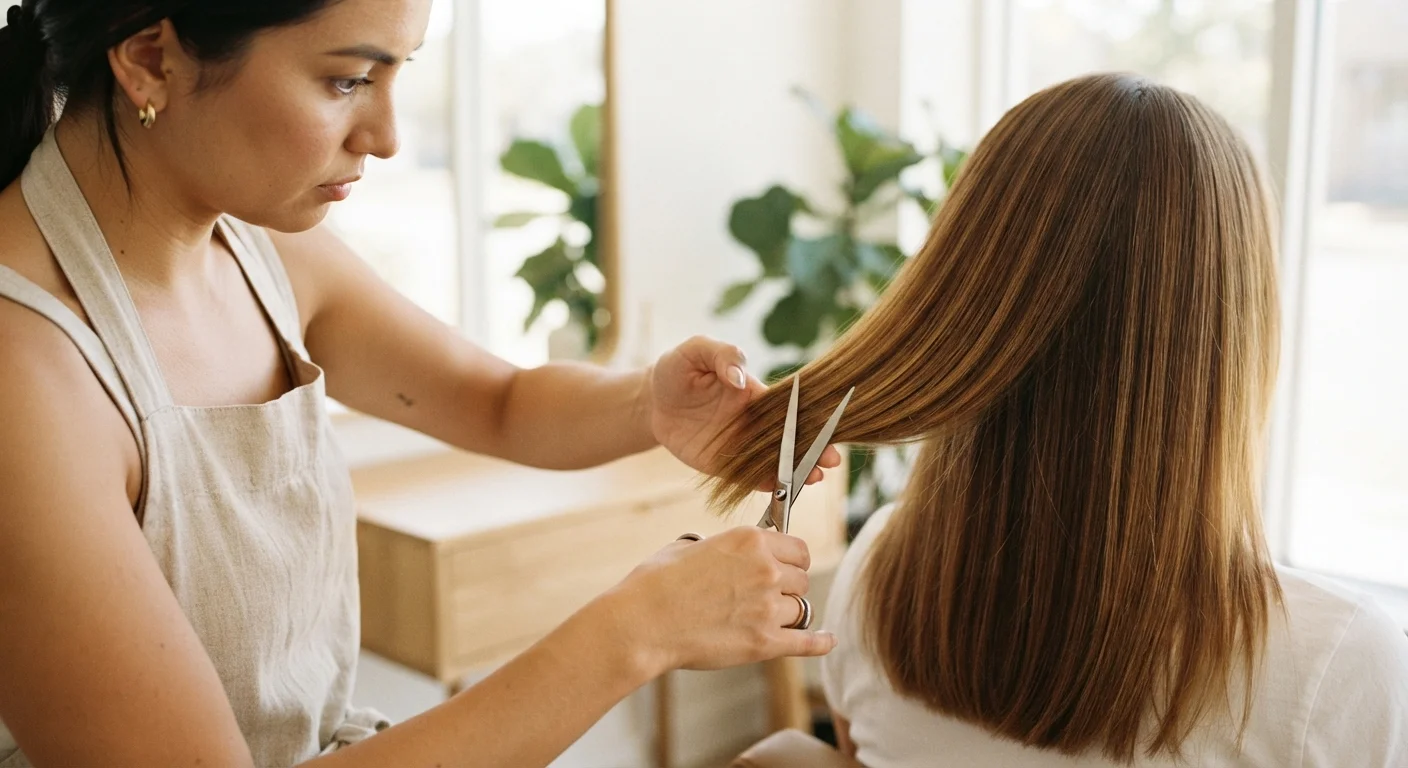
Photo: TargetReads.com | Explore Engaging Reads editorial
Key Takeaways
- The six-week trim rule is a general guideline, not a universal standard for all hair types.
- Regular trims prevent split ends from traveling up the hair shaft and causing more damage.
- People growing their hair out may benefit from stretching trims to 10–12 weeks.
- Hair texture, chemical treatments, and heat styling all influence how often a trim is needed.
- Listening to your hair's condition matters more than following a fixed calendar schedule.
Prevents split ends from traveling up the shaft
Trimming removes frayed ends before they split further, which protects more of your length over time and reduces overall breakage.
Keeps precision cuts looking polished and intentional
Short styles like bobs, pixies, and tapers lose their shape quickly; regular trims maintain the clean lines that make the cut work.
Reduces tangling and improves manageability
Damaged, split ends tend to catch and knot around each other. Fresh ends are smoother, making detangling easier and reducing daily friction.
Hair appears healthier and more lustrous
Smooth, intact cuticles at the ends reflect light more evenly, giving hair a noticeably shinier, more vibrant appearance.
Especially protective for chemically treated hair
Color, bleach, and chemical straightening weaken the hair's structure, making ends more vulnerable — and more in need of frequent attention.
Can stall length retention for those growing hair out
If you trim half an inch every six weeks, you're potentially removing close to the same amount hair grows, making meaningful length gains very slow.
Not necessary for all hair textures
Coarser and curlier hair types often have a naturally more resilient cuticle structure, meaning ends don't deteriorate as quickly and can go longer between cuts.
Cost adds up quickly over a year
At roughly eight to nine appointments per year, salon trim costs can be significant — especially for those whose hair simply doesn't require that frequency.
Calendar-based scheduling ignores actual hair condition
Booking automatically every six weeks means you might trim perfectly healthy ends — or wait too long on hair that needed attention sooner.
Where the Six-Week Rule Comes From
The six-week trim guideline has been repeated in salons and beauty magazines for decades — and it's not arbitrary. Hair grows roughly half an inch per month on average, and at that rate, ends begin to show wear, fraying, and splitting around the six-week mark for many people. Stylists developed the recommendation partly to keep haircuts looking intentional and partly to prevent damage from compounding.
But the rule was essentially built around short, precision cuts — think bobs, tapers, and layered styles that visually fall apart when they grow out. It was never designed to be a one-size-fits-all prescription for every hair type or growth goal. Understanding that context makes it much easier to decide whether it applies to you. For a broader look at building a routine that actually fits your life, see this streamlined head-to-toe grooming guide.
The Case For Trimming Every Six Weeks
For the right person, the six-week schedule genuinely delivers results. Here's why it earns its reputation:
Prevents split ends from traveling up the shaft
Trimming removes frayed ends before they split further, which protects more of your length over time and reduces overall breakage.
Keeps precision cuts looking polished and intentional
Short styles like bobs, pixies, and tapers lose their shape quickly; regular trims maintain the clean lines that make the cut work.
Reduces tangling and improves manageability
Damaged, split ends tend to catch and knot around each other. Fresh ends are smoother, making detangling easier and reducing daily friction.
Hair appears healthier and more lustrous
Smooth, intact cuticles at the ends reflect light more evenly, giving hair a noticeably shinier, more vibrant appearance.
Especially protective for chemically treated hair
Color, bleach, and chemical straightening weaken the hair's structure, making ends more vulnerable — and more in need of frequent attention.
Heat styling, chemical services like color or relaxers, and even environmental factors like sun and dry air accelerate the breakdown of hair's outer cuticle layer. The more compromised your ends, the faster split ends travel upward — which means you eventually need to remove more length than you would have with consistent maintenance. If your hair sits in any of those categories, a shorter trim interval can actually protect the length you're working to keep. Scalp health also plays a role in how your hair grows and holds up — learn how scalp health affects your hair from the roots.
~0.5"
Average monthly hair growth per person
The American Academy of Dermatology notes that scalp hair grows approximately half an inch per month on average, though this varies by individual.
6–12 weeks
Recommended trim interval range by hair type
Professional cosmetology guidance generally suggests trim intervals of 6–12 weeks depending on hair texture, chemical treatment status, and styling habits.
The Case Against a Strict Six-Week Schedule
Not everyone's hair tells the same story at six weeks. Here's where the rule starts to crack:
Can stall length retention for those growing hair out
If you trim half an inch every six weeks, you're potentially removing close to the same amount hair grows, making meaningful length gains very slow.
Not necessary for all hair textures
Coarser and curlier hair types often have a naturally more resilient cuticle structure, meaning ends don't deteriorate as quickly and can go longer between cuts.
Cost adds up quickly over a year
At roughly eight to nine appointments per year, salon trim costs can be significant — especially for those whose hair simply doesn't require that frequency.
Calendar-based scheduling ignores actual hair condition
Booking automatically every six weeks means you might trim perfectly healthy ends — or wait too long on hair that needed attention sooner.
If you're growing your hair out, frequent trims can feel like running on a treadmill — you're removing roughly what you've grown. For people with coarser, curlier, or more resilient hair textures, the cuticle naturally holds up longer between cuts. And if your budget or schedule doesn't allow for regular salon visits, forcing a rigid interval can create unnecessary stress without meaningful benefit. Checking in on your actual ends — running your fingers through them, looking in natural light — often tells you more than a calendar ever will.
For those comfortable doing light maintenance themselves, at-home trimming done carefully can stretch the time between professional appointments without sacrificing hair health.
A Note on Hair Porosity and Damage
Finding Your Personal Trim Schedule
Rather than defaulting to six weeks or ignoring trims entirely, a condition-based approach makes the most sense for most people. Look at your ends in natural light every few weeks. If you see fraying, visible splits, or your style has lost its shape, it's time. If your hair still looks clean and healthy, it can wait.
As a rough guide: fine or chemically treated hair often benefits from trims every 6–8 weeks; medium-textured hair that's minimally processed may do well at 8–10 weeks; thicker or naturally curly hair can often go 10–12 weeks between trims. These are starting points, not prescriptions. Just as your skin routine shifts with the seasons — as explored in our piece on seasonal skincare adjustments — your trim schedule can flex with your hair's changing needs throughout the year.
This article is for general informational purposes only and is not a substitute for advice from a licensed cosmetologist or dermatologist regarding your specific hair or scalp concerns.
The content on this site is for informational purposes only and is not a substitute for professional advice. Always consult a qualified professional for guidance specific to your situation.