
Seasonal Skincare Adjustments Worth Making

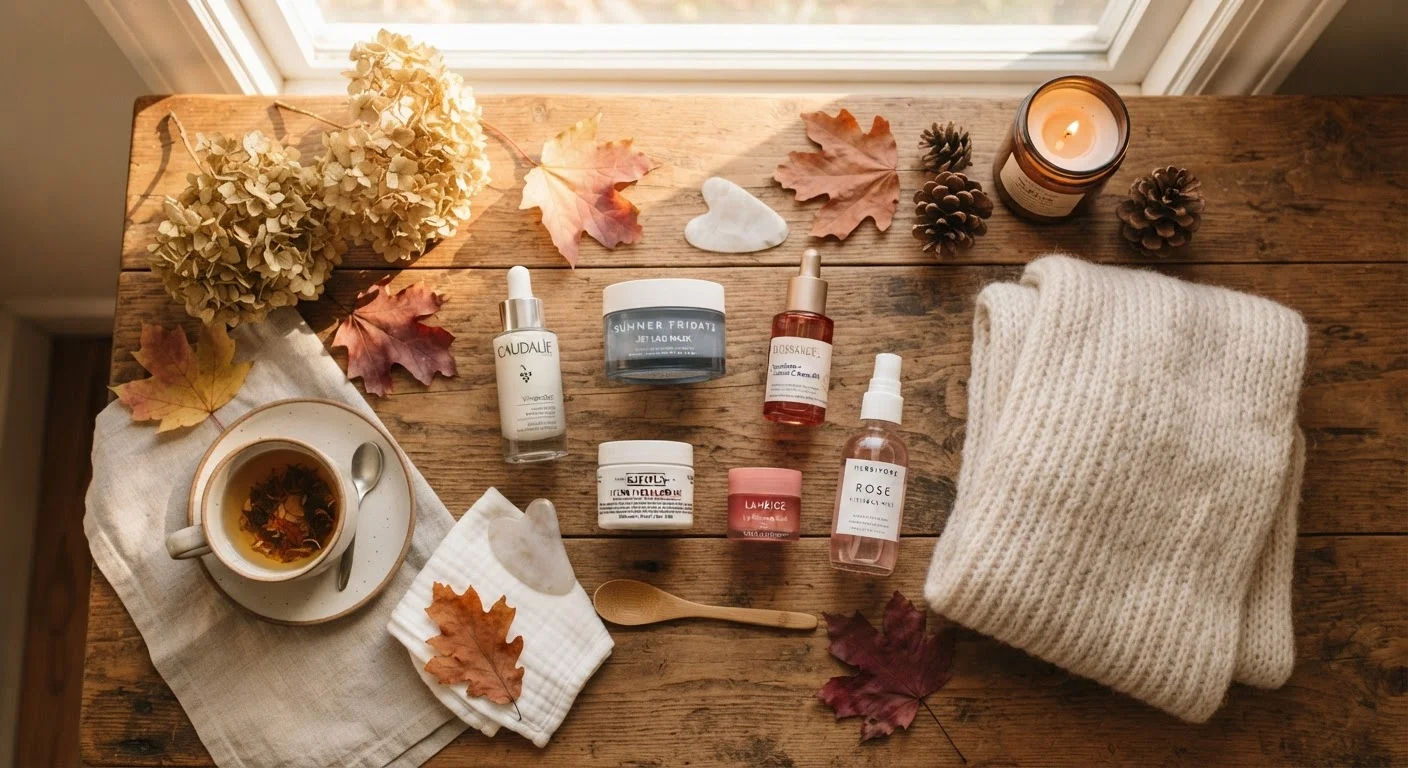
Photo: TargetReads.com | Explore Engaging Reads editorial
Key Takeaways
- Cold, dry air strips moisture faster — a richer moisturizer in winter is often a practical necessity.
- Summer humidity can trigger excess oil production, making a lighter formula worth trying.
- SPF remains essential year-round, not just on sunny summer days.
- Exfoliation frequency may need adjusting as temperature and skin sensitivity change seasonally.
- Ingredients like hyaluronic acid and ceramides behave differently depending on ambient humidity levels.
Why Seasons Actually Change Your Skin
Your skin doesn't operate in a vacuum — it responds to everything around it, including the air you're breathing. Shifts in temperature, humidity, wind exposure, and UV intensity all affect how your skin barrier functions, how much oil it produces, and how quickly moisture evaporates from its surface.
The good news: you don't need to overhaul your entire routine every three months. Most adjustments are small, targeted swaps that take into account what your skin is actually dealing with. If you're building your routine from scratch, our step-by-step morning skincare guide is a solid starting point before layering in seasonal changes.
Below are five practical adjustments worth considering as the seasons shift — each grounded in how skin biology responds to environmental change.
Swap Your Moisturizer Weight for the Season
One of the most impactful adjustments you can make is switching between lighter and heavier moisturizer formulas as conditions change. In winter, cold outdoor air and indoor heating both reduce ambient humidity, causing TEWL — the rate at which water evaporates through your skin — to increase. A richer cream with occlusive ingredients like shea butter or petrolatum can help seal moisture in.
Come summer, that same heavy cream may feel suffocating, especially in humid climates. A gel-based or water-gel moisturizer typically provides adequate hydration without contributing to congestion. The goal isn't necessarily using fewer products — it's matching the formula to what your skin barrier is actually dealing with.
If switching formulas causes unexpected reactions, common moisturizing missteps are worth reviewing before assuming the formula itself is the problem.
Matching moisturizer weight to the season is one of the simplest, most effective routine adjustments you can make.
Rethink Your Cleanser as the Weather Changes
Foaming or gel cleansers that feel refreshing in summer heat can become strip-happy in dry winter conditions, compromising your skin barrier over time. A cream or milk cleanser — which rinses clean without aggressively removing natural oils — is often a gentler choice when the air is cold and dry.
Conversely, if you're prone to excess oil in warm weather, a slightly more clarifying formula used once a day (typically in the evening) can help keep pores clear without over-drying. The key word is balance: cleansing should remove debris and sunscreen effectively, not leave your skin feeling tight or squeaky.
A cleanser that feels refreshing in summer can quietly damage your skin barrier during cold, dry winter months.
Adjust Exfoliation Frequency, Not Just Products
Exfoliation — whether chemical (like AHAs or BHAs) or physical (scrubs) — helps clear away dead skin cells and can support a smoother texture. But frequency matters as much as the method, and seasonal changes are a good time to reassess.
In winter, skin often becomes more sensitive and reactive due to barrier disruption from cold and wind. Dialing back exfoliation to once or twice a week (rather than daily or near-daily) can reduce the risk of irritation. In humid summer months, some people find they tolerate slightly more frequent exfoliation without issue — but this is highly individual and worth introducing gradually.
If you're using active ingredients like retinoids alongside exfoliants, be especially cautious during seasonal transitions when skin sensitivity tends to peak. A dermatologist is the right resource if you're unsure how to combine actives safely.
Skin is often more sensitive during seasonal transitions — pulling back on exfoliation frequency can prevent unnecessary irritation.
Keep SPF Consistent — and Consider the Formula
Sunscreen is genuinely non-negotiable in every season. UV radiation — particularly UVA rays, which penetrate clouds and glass — reaches your skin year-round, not just on summer beach days. Why dermatologists treat SPF as non-negotiable goes deeper into the science if you want the full picture.
What can reasonably change with the seasons is the sunscreen formula. A lightweight fluid or serum-based SPF may work beautifully in summer, while a creamier SPF formula can double as added moisturization in winter without requiring an extra layer. Some people also find that mineral formulas sit more comfortably under winter base makeup, while chemical formulas integrate better under sunscreen-challenged summer skin. Experiment to find what actually gets applied consistently — application consistency matters more than formula perfection.
UV exposure doesn't stop in winter — consistent SPF application matters every season, not just in summer.
Pay Attention to Hyaluronic Acid and Humidity
Hyaluronic acid is widely praised for its humectant properties — it draws moisture toward the skin. The catch is that it draws moisture from the nearest available source, which in very low-humidity environments (like a heated apartment in February) can actually be your own skin rather than the air.
In dry conditions, applying a hyaluronic acid serum and sealing it immediately with a moisturizer minimizes this risk. Skipping the sealing step in dry winter air may leave skin feeling drier than before. In humid summer air, hyaluronic acid tends to perform as expected with less risk of moisture pull.
This is one reason why product layering order matters — particularly during seasonal transitions when environmental conditions change how individual ingredients behave on your skin.
For a broader check on how your whole routine is functioning across seasons, a routine audit can help you identify gaps without starting from scratch.
In dry winter air, always seal hyaluronic acid with a moisturizer — otherwise it may draw moisture from your skin instead.
Putting It All Together
Seasonal skincare isn't about chasing trends — it's about reading your skin's actual signals and responding with proportionate changes. If your skin feels tight and flaky in January, that's useful feedback. If it's suddenly congested and shiny in July, that's feedback too.
Start With One Change at a Time
A good habit is to do a quick routine check-in at the start of each season. Our skincare routine audit checklist can help you spot what's working and what might need adjusting. And if you're unsure how to sequence any new products you introduce, layering skincare products in the right order breaks down the general principles simply.
This article is for general informational and educational purposes only. It is not a substitute for professional medical or dermatological advice. If you have a skin condition, persistent irritation, or concerns about a specific ingredient, consult a qualified healthcare provider or licensed dermatologist.
The content on this site is for informational purposes only and is not a substitute for professional advice. Always consult a qualified professional for guidance specific to your situation.