
Chemical Exfoliants vs. Physical Scrubs: What the Difference Actually Is

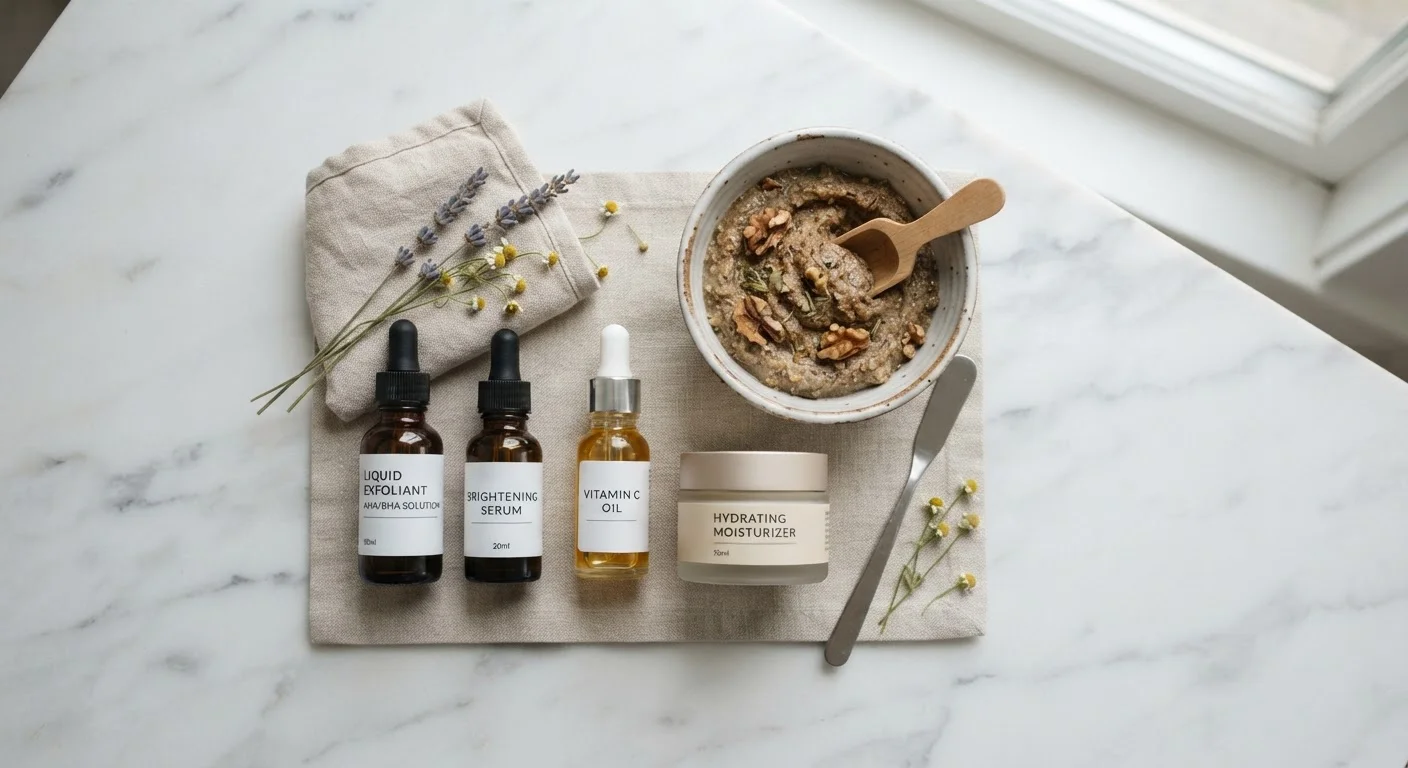
Photo: TargetReads.com | Explore Engaging Reads editorial
Key Takeaways
- Chemical exfoliants use acids or enzymes to dissolve dead skin cells without friction.
- Physical scrubs use gritty particles to manually buff away surface dead skin cells.
- Your skin type should guide which method — or which combination — makes sense for you.
- Over-exfoliating with either method can damage the skin barrier and worsen irritation.
- Chemical exfoliants such as AHAs and BHAs address different concerns at different skin depths.
How Each Method Actually Works
Exfoliation — the process of removing dead skin cells from the surface — comes in two fundamentally different forms. Understanding the mechanism behind each one makes it much easier to choose what's right for your skin. For a broader look at how ingredients behave on skin, see our Skincare Ingredient Glossary for plain-English breakdowns.
Chemical Exfoliants: Dissolve, Don't Scrub
Chemical exfoliants work by applying active compounds — typically alpha hydroxy acids (AHAs), beta hydroxy acids (BHAs), or enzymes — directly to the skin. These ingredients break the bonds that hold dead skin cells together, allowing them to shed more efficiently without any rubbing. AHAs such as glycolic acid and lactic acid are water-soluble and work mainly on the skin's surface, making them useful for dullness, uneven tone, and fine texture. BHAs, most commonly salicylic acid, are oil-soluble and can penetrate into pores, targeting congestion and breakouts. Enzyme exfoliants, often derived from papaya or pineapple, offer a gentler alternative with a slower action.
Physical Scrubs: Buff It Away
Physical scrubs use small particles — such as sugar crystals, finely ground oats, or synthetic microbeads — to manually slough away dead skin through friction. The action is immediate and tactile: you feel the result right away. The downside is that pressure and particle sharpness are hard to control. Coarse or irregularly shaped particles can create micro-tears in skin, particularly on the face, which is why dermatologists and skin professionals generally advise opting for finely milled formulas and keeping pressure light.
| Criterion | Chemical Exfoliants | Physical Scrubs |
|---|---|---|
| How it works | Acids or enzymes dissolve cell bonds | Particles manually buff away dead cells |
| Sensation during use | Minimal — slight tingle possible | Tactile, gritty, immediately satisfying |
| Penetration depth | Surface to moderate depth (BHAs reach pores) | Surface only |
| Best for acne or congestion | Yes — especially BHAs | Limited effectiveness |
| Sensitive skin suitability | Higher (low-concentration or enzyme options) | Lower — friction risk |
| Ease of overuse | Possible if concentration or frequency is too high | Easy to over-scrub without realising |
| SPF needed after use | Yes — AHAs increase photosensitivity | Standard SPF habits apply |
Matching the Method to Your Skin Type
Neither approach is universally superior — context is everything. Knowing your skin type is the single most useful piece of information here. Our guide Skin Types Explained walks through the core categories and what they mean for your routine choices.
2–3×
How often most dermatologists suggest exfoliating per week
General professional guidance suggests most skin types do well with two to three exfoliation sessions per week, with sensitive skin benefiting from less.
~30 days
Natural skin cell turnover cycle for most adults
The skin's natural renewal process slows with age; exfoliation supports this cycle by clearing dead cells that accumulate on the surface.
- Oily or acne-prone skin: BHA-based chemical exfoliants are generally considered the go-to, since salicylic acid's oil solubility allows it to work inside follicles.
- Dry or sensitive skin: A low-concentration lactic acid product — or an enzyme exfoliant — is typically gentler than a gritty scrub. Always patch-test and start infrequently.
- Normal or combination skin: Both methods can work well. Many people with combination skin rotate between a gentle AHA a few times a week and an occasional mild physical scrub.
- Skin of colour: Aggressive physical exfoliation may increase risk of post-inflammatory hyperpigmentation. Chemical exfoliants, used carefully, are often preferred by dermatologists for melanin-rich skin.
A Note on Combination Approaches
If you're putting together or reviewing a broader routine, the Skincare Routine Audit is a practical self-check worth working through.
Common Mistakes — and How to Avoid Them
The most frequent exfoliation error, regardless of method, is simply doing too much of it. Over-exfoliating strips away healthy skin cells alongside dead ones, disrupting the skin's natural barrier. Signs of an over-exfoliated barrier include redness, tightness, breakouts in new areas, and stinging when you apply normally gentle products.
With chemical exfoliants, using too high a concentration too quickly is the main risk. Starting with a lower percentage and a once- or twice-weekly frequency is the standard recommendation before increasing either. Always follow with SPF during the day — AHAs in particular can increase photosensitivity.
With physical scrubs, pressure is the variable most people underestimate. Light, circular motions are sufficient; hard scrubbing adds no exfoliating benefit and increases the risk of irritation or micro-damage. On the face especially, coarse scrubs with irregular particle shapes (like crushed walnut shells) are widely flagged by skin professionals as potentially damaging.
For anyone new to building a routine around exfoliation, the Skincare for Beginners guide offers a grounded, no-overwhelm starting point.
This article is for general informational purposes only and is not a substitute for professional skincare or medical advice. If you have a skin condition or concern, consult a qualified dermatologist or healthcare provider.
The content on this site is for informational purposes only and is not a substitute for professional advice. Always consult a qualified professional for guidance specific to your situation.