
Skincare for Beginners: Starting Simple and Staying Consistent

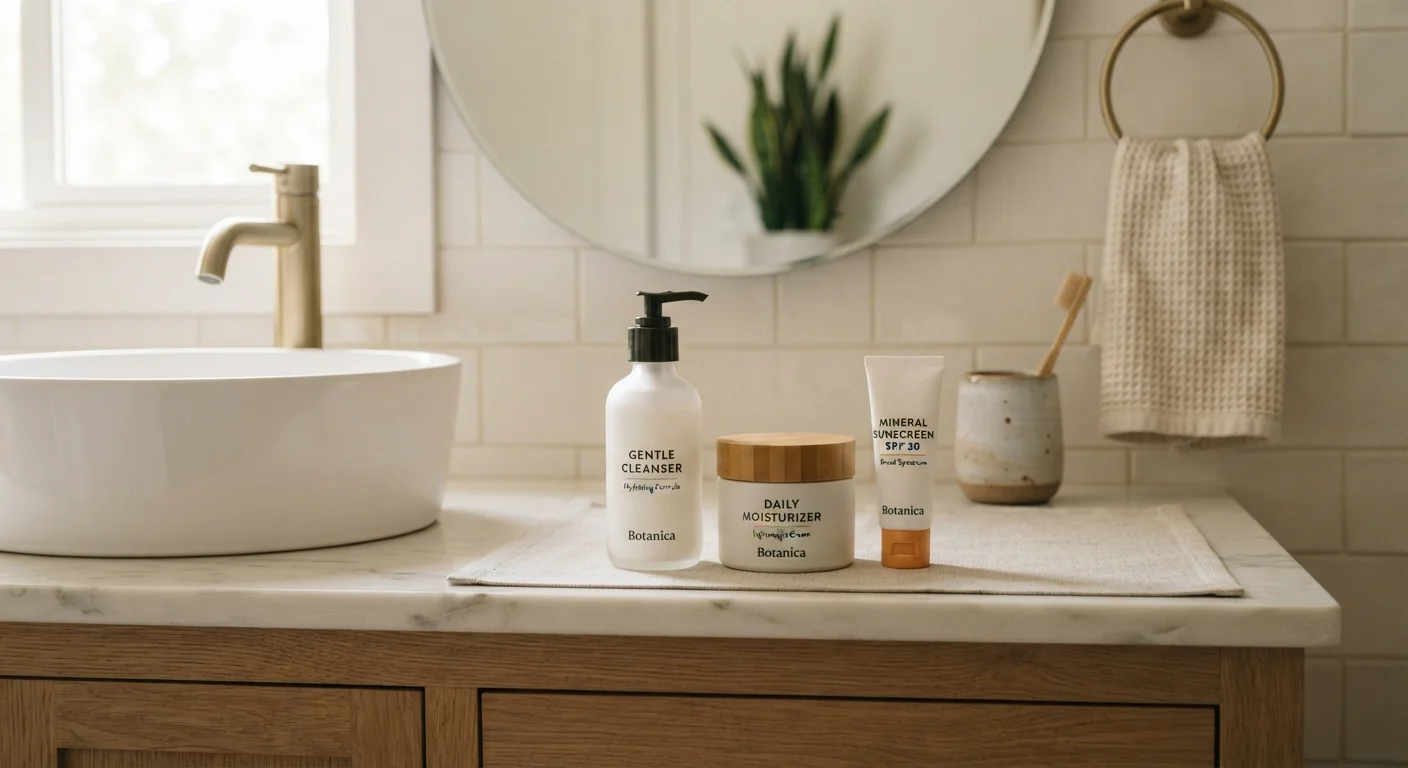
Photo: TargetReads.com | Explore Engaging Reads editorial
Key Takeaways
- A three-step routine — cleanse, moisturize, and protect with SPF — covers most of what beginners need.
- Consistency matters more than product quantity; doing less every day outperforms doing a lot occasionally.
- Knowing your basic skin type helps you choose products that work with your skin, not against it.
- Introduce new products one at a time so you can identify what helps — or what irritates.
- Most people don't need to spend a lot; drugstore formulas can be just as effective as expensive alternatives.
Why Simple Beats Complicated
Walk into any beauty aisle and it's easy to feel like you need a chemistry degree just to shop for face wash. Ten-step routines, serum stacking, actives, acids — the noise is real. But here's the honest truth: most beginners see their best results not from complexity, but from a handful of consistent basics.
Skincare research generally supports that the fundamentals — cleansing, moisturizing, and sun protection — do the heavy lifting for everyday skin health. Everything else is refinement. Starting simple also means it's far easier to spot what's working and what isn't, because you're not introducing five unknowns at once.
Think of building a skincare habit the same way you'd build any new habit: small, repeatable actions compound over time. A two-minute routine you actually do every day will always outperform a ten-step system you abandon by week two.
Start with What You Can Actually Commit To
The Three Products Every Beginner Needs
You genuinely don't need more than three products to get started. Here's what each one does and why it earns its spot:
- Cleanser: Removes dirt, oil, sweat, and environmental residue that accumulates on skin throughout the day. Choose a gentle, non-stripping formula — your skin shouldn't feel tight or squeaky-clean after washing. That tight sensation usually means the cleanser is too harsh.
- Moisturizer: Helps your skin maintain its moisture barrier, which is the protective layer that keeps hydration in and irritants out. Even oily skin types generally benefit from a lightweight moisturizer, since stripping skin of oil can actually trigger more oil production.
- Sunscreen (SPF 30 or higher): Daily sun protection is considered by dermatologists to be one of the most impactful steps for long-term skin health. UV exposure is a leading contributor to premature skin aging and other concerns. Apply it every morning as the last step before you head out.
Want to understand the science behind that SPF step? Our article on why dermatologists treat sunscreen as non-negotiable goes deeper.
Moisture barrier
The outermost layer of skin that holds water in and keeps irritants out. A healthy moisture barrier is the foundation of comfortable, resilient skin.
Non-comedogenic
A label indicating a product is formulated to avoid clogging pores. Useful for oily or acne-prone skin types, though it doesn't guarantee zero breakouts.
Humectant
An ingredient that draws water toward the skin, helping it stay hydrated. Glycerin and hyaluronic acid are common examples found in moisturizers.
SPF (Sun Protection Factor)
A measure of how much UVB radiation a sunscreen filters before it reaches the skin. SPF 30 is a commonly recommended minimum for daily use.
Active ingredient
The ingredient in a skincare product that produces the intended effect — such as an acid that exfoliates or a compound that reduces redness.
Emollient
An ingredient that softens and smooths skin by filling in gaps in the moisture barrier. Common in richer moisturizers designed for dry skin.
Understanding Your Skin Type
Knowing your general skin type helps you choose products that work with your skin rather than against it. Skin types are typically grouped into four categories:
- Oily
- Skin tends to look shiny, especially across the forehead, nose, and chin (the T-zone). Pores may appear larger. Lightweight, non-comedogenic (non-pore-clogging) formulas usually work well.
- Dry
- Skin can feel tight, rough, or flaky, particularly after cleansing. Richer moisturizers with humectants and emollients tend to help.
- Combination
- An oily T-zone with drier cheeks is the hallmark of combination skin. You may need to balance products accordingly.
- Sensitive
- Skin reacts easily to new products, fragrances, or environmental changes. Fragrance-free, minimal-ingredient formulas are generally a safer starting point.
If you're not sure where you fall, a simple at-home test: wash your face with a gentle cleanser, skip all products, and check in after an hour. How your skin looks and feels naturally can reveal a lot. For a fuller breakdown, see Skin Types Explained: What Yours Actually Means for Your Routine.
Patch-Test New Products First
How to Build the Habit (and Actually Keep It)
Starting a routine is easy. Sticking with it is where most people struggle. A few strategies that genuinely help:
- Anchor it to something you already do. Skincare fits naturally before or after brushing your teeth. Pairing a new habit with an existing one reduces the mental friction of remembering it.
- Keep products visible. If your moisturizer is buried in a drawer, it's easy to skip. A small counter setup you see every morning and evening is a low-effort nudge.
- Don't let perfect be the enemy of good. If you forget your evening routine, don't skip the morning one to compensate. Just resume normally. Consistency over time matters more than any single missed night.
- Give it time before judging. Skin changes slowly. Most dermatologists suggest evaluating a new routine after four to six weeks — skin cell turnover takes time, and quick conclusions lead to product-hopping, which resets the clock.
If you want to level up once you've got the basics down, Building a Morning Skincare Routine From the Ground Up walks you through structuring your AM routine with a bit more intention.
When to Add More (and What to Add Next)
Once your three-step routine feels effortless — meaning you've done it consistently for at least a month — you can consider adding one thing at a time. Common next steps include:
- A gentle exfoliant: Helps with texture and can improve how other products absorb. Not an everyday step — typically once or twice a week is enough for beginners. Curious about the difference between chemical and physical options? See Chemical Exfoliants vs. Physical Scrubs.
- A targeted serum: Serums address specific concerns like uneven tone or hydration. The ingredient list on any bottle can feel overwhelming — our Skincare Ingredient Glossary breaks down the most common ones in plain English.
When in doubt, apply products from lightest to heaviest consistency — that general principle keeps most routines on track. For a detailed look at sequencing, Layering Skincare Products in the Right Order covers the reasoning behind smart product ordering.
And if you're thinking about skin as part of a broader self-care approach, our streamlined head-to-toe grooming guide pairs well with everything here.
This article is for general informational and educational purposes only and does not constitute medical advice. For personal skin concerns, consult a licensed dermatologist or qualified healthcare professional.
Frequently Asked Questions
The content on this site is for informational purposes only and is not a substitute for professional advice. Always consult a qualified professional for guidance specific to your situation.