
Your Skincare Routine Audit: A Practical Self-Check

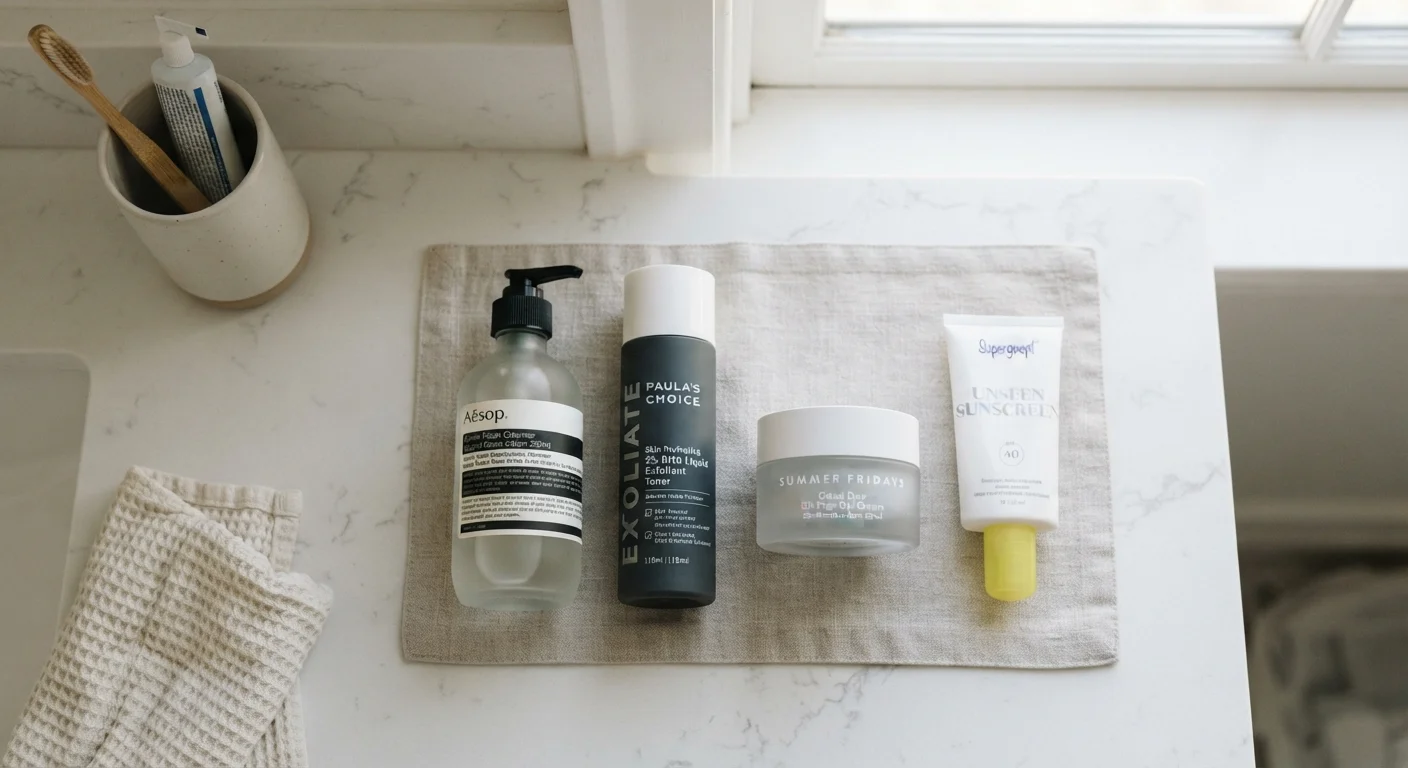
Photo: TargetReads.com | Explore Engaging Reads editorial
Key Takeaways
- Most routine problems trace back to a few fixable habits, not missing products.
- SPF is one of the most consistently skipped but evidence-supported daily steps.
- Layering products in the wrong order can reduce how well they work.
- Expiration dates and product storage genuinely affect skincare performance.
- Auditing your routine twice a year helps you adapt to seasonal skin changes.
Why Your Routine Deserves a Second Look
Most of us build a skincare routine gradually — a product added after a breakout here, a serum recommended by a friend there — until we end up with a shelf of bottles we're using mostly out of habit. An audit isn't about tearing everything down. It's a structured way to check whether what you're doing is actually working for your skin right now.
Think of this the way you might think about a preventive health check-in: catching small gaps before they become bigger frustrations. Skin changes with age, climate, stress levels, and seasons, so a routine that served you well last year may need a few thoughtful tweaks today. Our guide to seasonal skincare adjustments is a natural companion read once you've completed this audit.
Work through this checklist with your actual products in front of you. Honesty counts more than optimism here.
Your current product lineup
Gather every product you use on your face so you can check ingredients, expiration dates, and storage conditions in one go.
A magnifying glass or phone camera
Used to read period-after-opening symbols and expiration dates on small product labels.
A notebook or notes app
Record which checklist items you passed, which need attention, and any products flagged for replacement.
Ingredient-reading reference (e.g., a general cosmetic ingredient glossary)
Helps you identify active ingredients in your products so you can check for potential conflicts or overlaps.
The Checklist: Audit Your Routine Step by Step
The checklist below is grouped by routine phase. Mark items as you go — you may be surprised how many small wins you're already landing, and equally surprised by a gap or two worth closing.
Cleanser & Cleansing Technique
Moisturizer & Hydration
Sun Protection
Actives & Targeted Treatments
Product Storage & Hygiene
Routine Consistency
Don't Patch Test? Start Now.
If you've ever wondered whether the order you apply products matters, the short answer is yes — quite a bit. Our article on layering skincare products in the right order breaks down the general principles behind smart sequencing.
And if you use an exfoliant — physical scrub or chemical — the differences between chemical and physical exfoliants are worth understanding before you decide how often to include that step.
What to Do With Your Findings
Once you've worked through the checklist, take stock of your results. If most of your checks land in the must column, your foundation is solid — celebrate that. If you spotted gaps, resist the urge to fix everything at once. Introducing multiple new products simultaneously makes it nearly impossible to tell which one is helping (or causing irritation).
A practical approach: address one gap per week. Start with the highest-priority items — consistent SPF use and a correct cleansing technique tend to offer the broadest everyday benefit. Your evening routine is also worth its own attention; our piece on how evening hours work in your favor explains why the overnight window is particularly useful for repair-focused steps.
If fragrance sensitivity came up during your audit, it's worth reading our balanced look at fragrance trade-offs in skincare before swapping products.
See a Dermatologist for Persistent Concerns
This article is for general informational purposes only and is not a substitute for advice from a licensed dermatologist or other qualified healthcare professional. If you have a skin condition, persistent irritation, or concerns about a specific ingredient, please consult a professional.
The content on this site is for informational purposes only and is not a substitute for professional advice. Always consult a qualified professional for guidance specific to your situation.