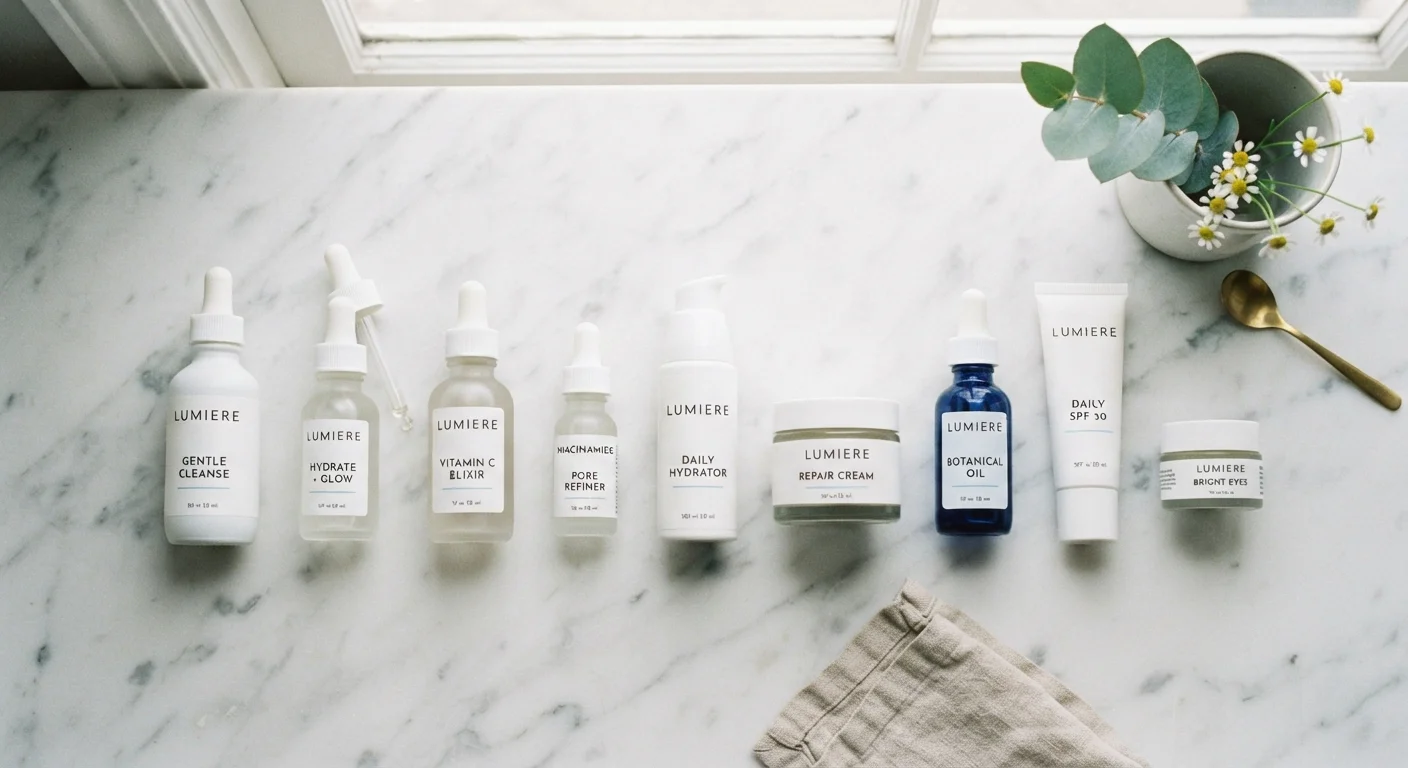
Applying products in the wrong sequence can reduce their effectiveness. Learn the general principles behind smart skincare layering.
Why Order Actually Matters
It's easy to assume that using good skincare products is enough — but the sequence in which you apply them shapes how well they actually work. Products applied out of order can block each other, dilute active ingredients, or prevent absorption entirely. The good news: the core logic is simple once you understand it.
The foundational rule is thinnest to thickest. Think of your skin as a series of doors — lightweight, watery formulas pass through easily, while richer creams create a seal. Once that seal is in place, thinner products can't get through. So the order you apply things directly affects how much of each product your skin actually receives.
If you're just getting started with a routine, starting simple and staying consistent is the most important move you can make before worrying about advanced layering.
This Is General Guidance, Not Medical Advice
The layering principles here are based on widely shared dermatological education, not a prescription for your specific skin. Everyone's skin is different, and reactions to ingredients vary. If you have a skin condition, sensitivity, or ongoing concern, consult a licensed dermatologist before making significant changes to your routine.
The Core Layering Principles
Here are the evidence-informed practices that dermatologists and skincare educators consistently recommend for effective product layering:
1
Always cleanse first, before any other products touch your skin.
Applying active ingredients or moisturizer to skin covered in sunscreen residue, pollutants, or sebum significantly reduces how well they work. A clean surface allows what follows to actually penetrate. Skipping or rushing this step is one of the most common reasons routines underperform.
Example: A gentle gel cleanser used for 30–60 seconds removes overnight buildup so that a vitamin C serum applied afterward can interact directly with the skin rather than sitting on top of grime.
2
Layer products from thinnest to thickest texture — watery formulas before creams.
Heavier products create a physical barrier on the skin's surface. If you apply a rich cream before a lightweight serum, the serum can't get through. Sequencing by weight ensures each formula reaches the skin effectively before the next layer seals it in.
Example: After cleansing, a hydrating toner goes on before a niacinamide serum, which goes on before a moisturizing lotion — each layer progressively thicker than the last.
3
Apply water-based products before oil-based ones.
Water and oil don't mix well, and oil creates a semi-occlusive layer that water-based formulas can't penetrate once it's in place. Following this principle keeps your actives and hydrating ingredients effective rather than trapped outside a lipid barrier.
Example: A hyaluronic acid serum (water-based) should be applied to slightly damp skin before a face oil, not after — otherwise the oil prevents the humectant from drawing moisture in.
4
Reserve sunscreen as the absolute last step in your morning routine.
Sunscreen needs to sit on top of skin and form an even, uninterrupted layer to work properly. Applying anything over it — even a light facial mist — can dilute or disrupt that protective film. Sunscreen layered under moisturizer is also less effective at reaching UV radiation.
Example: After moisturizer has absorbed, applying a broad-spectrum SPF as the final morning step ensures UV filters remain intact and undiluted throughout the day. See
why dermatologists treat SPF as non-negotiable for more on this.
5
Allow brief absorption time between layers — about 30 to 60 seconds.
Stacking products immediately one after another can cause pilling (products balling up on the surface) and reduces how well each layer sets. A short pause lets each formula begin absorbing so it doesn't just mix with or lift the next product you apply.
Example: After patting in a treatment serum, waiting about a minute before applying moisturizer prevents the two from physically mixing on the surface, which can reduce effectiveness and cause texture issues.
6
Be cautious when layering potent actives — some combinations can irritate skin.
Certain active ingredients — such as retinoids, exfoliating acids, and high-concentration vitamin C — can cause irritation or reduce each other's efficacy when used together in the same routine. Understanding which actives play nicely together (and which don't) is a key layering skill.
Example: Using a retinol at night and a separate exfoliating acid on alternate nights, rather than applying both in the same session, reduces the risk of barrier disruption and redness. If you notice your moisturizer making things worse,
layering incompatible ingredients may be a factor.
Doing a full audit of your current routine can reveal gaps you didn't know existed. This practical self-check walks you through the key areas to review.
Put It Into Practice Right Now
You don't need to overhaul your entire routine to improve it. A few small sequence adjustments can meaningfully change how your products perform. Start here:
high
Flip your current routine upside down mentally: write out your products in order and check whether each one is thinner than the one before it.
high
Move your sunscreen to the very last step if it isn't already — this single change can improve its effectiveness immediately.
medium
Set a 60-second timer after applying your serum before reaching for your moisturizer — it prevents pilling and helps absorption.
medium
Check whether any two of your active ingredients are known to be a problematic pairing, and separate them into AM and PM routines if so.
If you're building a full morning routine from the ground up rather than just tweaking one you already have, this step-by-step morning routine guide lays out a clear, manageable structure. And if your routine shifts with the weather, seasonal skincare adjustments are worth keeping in mind as conditions change.
This article is for general informational and educational purposes only and does not constitute medical or dermatological advice. Consult a licensed dermatologist or healthcare professional for guidance specific to your skin type or condition.
The content on this site is for informational purposes only and is not a substitute for professional advice. Always consult a qualified professional for guidance specific to your situation.