
Sunscreen Every Day: Why Dermatologists Treat It as Non-Negotiable

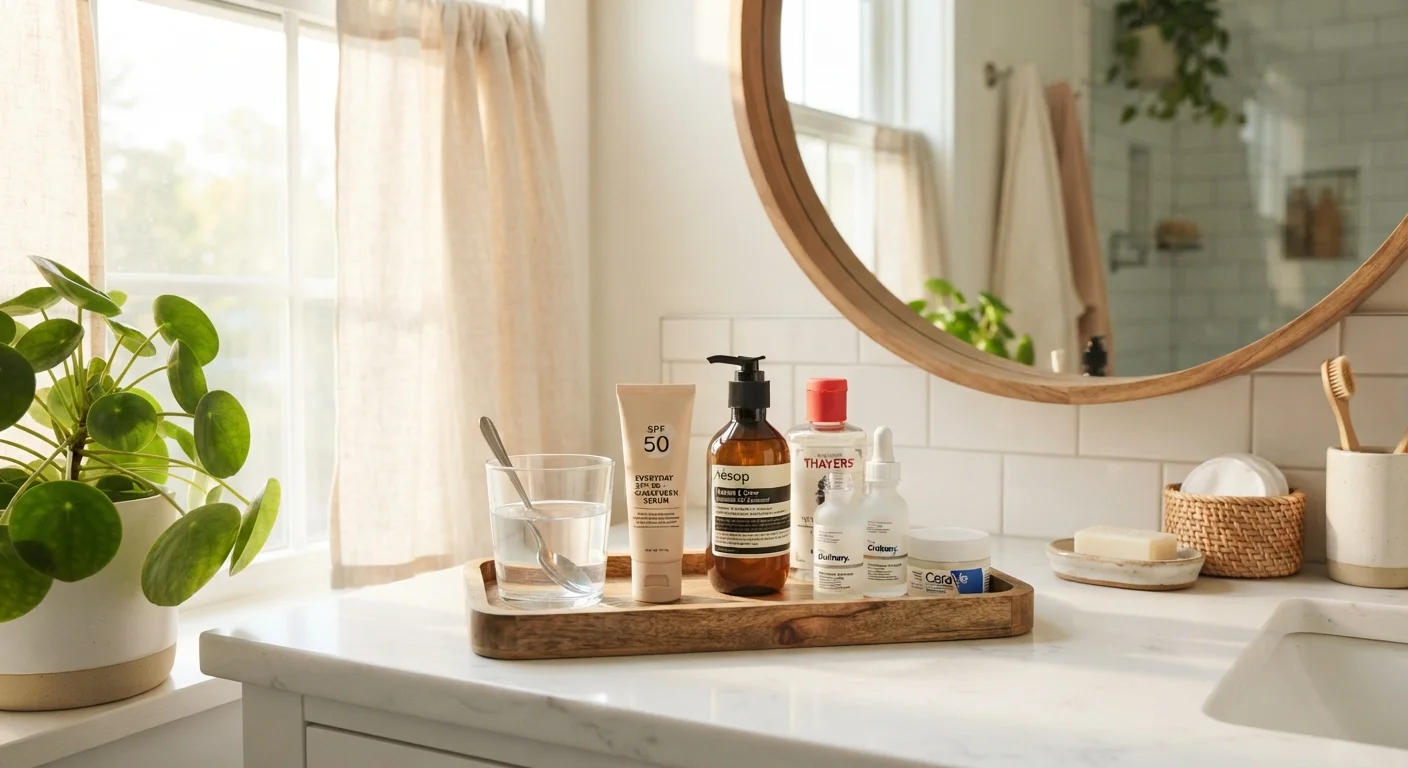
Photo: TargetReads.com | Explore Engaging Reads editorial
Key Takeaways
- UV exposure occurs year-round, not just during sunny summer days.
- SPF 30 blocks roughly 97% of UVB rays; higher numbers offer incrementally more protection.
- Broad-spectrum protection guards against both UVA and UVB damage.
- Reapplication every two hours during outdoor activity is essential for continued protection.
- Sunscreen is one of the most evidence-backed tools for reducing skin cancer risk.
Why Sun Damage Adds Up Over Time
Skin doesn't immediately show the effects of UV exposure — that's part of what makes it easy to skip sunscreen on an overcast Tuesday or during a quick grocery run. But UV damage is cumulative. Every unprotected exposure adds to a lifetime total that gradually affects skin texture, tone, and long-term health.
The sun emits two types of ultraviolet radiation that reach the skin: UVA and UVB. UVB rays cause visible sunburn and play a significant role in skin cancer development. UVA rays penetrate more deeply, accelerating collagen breakdown and contributing to visible aging — fine lines, dark spots, and uneven texture. Both types are present year-round, not only during peak summer months.
For a broader look at how UV protection fits into a complete routine, the skincare routine audit offers a useful self-check framework. And if you're building habits from scratch, skincare for beginners covers exactly where sunscreen fits in a simple, consistent routine.
97%
UVB rays blocked by SPF 30
According to the American Academy of Dermatology, SPF 30 filters approximately 97% of UVB rays under standard testing conditions.
80%
UV rays that penetrate cloud cover
The American Academy of Dermatology notes that up to 80% of UV rays can reach your skin even on overcast days.
1 in 5
Americans diagnosed with skin cancer by age 70
The American Academy of Dermatology estimates that 1 in 5 Americans will develop skin cancer in their lifetime.
How SPF Numbers Actually Work
SPF is commonly misread as a linear scale — as if SPF 50 is twice as powerful as SPF 25. In reality, the relationship is not proportional. SPF 15 blocks about 93% of UVB rays. SPF 30 blocks roughly 97%. SPF 50 gets you to about 98%. Beyond SPF 50, the incremental gain becomes very small.
What SPF technically measures is how much longer skin protected by the formula takes to redden compared to unprotected skin under controlled conditions. The number doesn't account for real-world factors like sweating, water exposure, or incomplete application — which is why reapplication matters just as much as the SPF rating itself.
Apply Generously — Then Reapply
The FDA requires that any sunscreen sold in the United States claiming broad-spectrum protection must demonstrate it filters UVA rays proportionally to its UVB protection. This is worth keeping in mind when reading labels — look specifically for the words "broad-spectrum" alongside the SPF number.
Choosing a Formula That Works for Your Skin
Sunscreen texture and formulation have come a long way, and there's genuinely something effective for every skin type. If sunscreen has ever felt greasy, pilled under makeup, or left a white cast, that's a formulation mismatch — not a reason to skip it.
- Oily or acne-prone skin: Lightweight, non-comedogenic gel or fluid formulas tend to wear comfortably without clogging pores.
- Dry skin: Cream-based formulas that double as a moisturizing step can simplify the routine.
- Sensitive skin: Mineral (physical) sunscreens with zinc oxide are often better tolerated and less likely to cause irritation.
- Darker skin tones: Many newer mineral formulas are designed to blend without leaving a chalky residue — worth seeking out if previous options felt unwearable.
Understanding your skin type more broadly helps narrow down what formulas will feel comfortable day to day. Our guide on skin types explained walks through how to identify yours and what it means for product choices.
Making Sunscreen a Habit That Actually Sticks
The most effective sunscreen is the one used consistently. Dermatologists point out that irregular use dramatically reduces real-world protection — applying SPF 50 only some days offers far less cumulative benefit than using SPF 30 every single morning.
A few practical approaches that help with consistency:
- Keep sunscreen on the bathroom counter right next to your toothbrush — visible placement reinforces the habit.
- Apply sunscreen as the last step in your morning skincare routine, before makeup. For guidance on product order, see layering skincare products.
- For days with extended outdoor exposure, set a reminder to reapply every two hours.
- Adjust your formula seasonally — a lighter formula may feel more comfortable in summer humidity, while a richer one suits dry winter skin. Seasonal skincare adjustments covers this in more detail.
Daily sun protection is one of the few skincare habits with a consistent, well-documented evidence base. It connects directly to broader preventive care — a small daily step with meaningful long-term payoff.
“Sunscreen is the closest thing we have to a fountain of youth. It is the single most important thing you can do to prevent skin cancer and premature skin aging.”
— Henry W. Lim, MD, Former President, American Academy of Dermatology
This article is for general informational and educational purposes only and is not a substitute for professional medical or dermatological advice. Consult a qualified healthcare provider with any questions about your skin health or conditions.
Frequently Asked Questions
The content on this site is for informational purposes only and is not a substitute for professional advice. Always consult a qualified professional for guidance specific to your situation.